Pomegra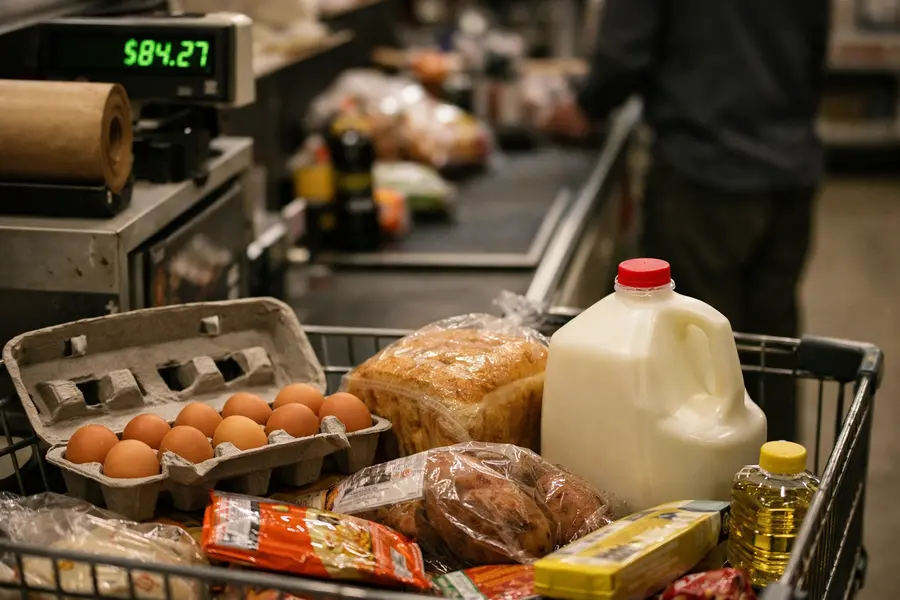
University of Michigan's consumer sentiment dropped 7.6% to 51.0 in August as Iran-war price surges hit households and retail sales post their worst slide since May 2025.
- Consumer sentiment fell to a preliminary 51.0 in August, its steepest one-month slide since 2024, snapping two consecutive months of recovery and landing 11% below year-ago levels.
- Long-run business condition expectations plunged 17%, while only 8% of households expect their income to outpace inflation, down from 18% in December 2024.
- Retail sales dropped 0.6% in July, the largest monthly decline since May 2025, led by auto dealers, gasoline stations, and electronics retailers.
Lead
The University of Michigan's preliminary consumer sentiment index fell to 51.0 in August 2026, a 7.6% decline from July's 55.2 reading, marking the sharpest one-month deterioration since 2024. The final August reading settled at 51.7, still representing a decisive reversal of a two-month recovery trend and placing the gauge 11% below its year-earlier level. The collapse reflects accelerating strain on household balance sheets as the Iran conflict continues to drive energy and food costs well above pre-war levels, tightening the grip on discretionary spending and darkening the outlook at a moment when equity markets are celebrating a record AI-driven earnings season.
Why Did Consumer Sentiment Collapse in August?
The Iran conflict is the principal driver. Consumer prices rose 3.4% year-over-year in July, up from 2.4% before hostilities began, as the near-closure of the Strait of Hormuz - described by the International Energy Agency as the largest supply disruption in the history of the global oil market - propelled energy costs sharply higher and transmitted those increases into food and transportation budgets. Both major sub-components of the Michigan survey deteriorated: the Current Economic Conditions Index fell to 51.9 and the Consumer Expectations Index dropped to 51.5.
The breadth of the decline was notable. Weakness was broad-based across political affiliations and income levels, with the sharpest drops concentrated among older, lower-income, and less-educated households - precisely those with the smallest financial buffers. The anxiety runs deeper than the headline: just 8% of consumers now expect their incomes to grow faster than inflation, down from 18% in December 2024, signaling that confidence in real wage growth has largely evaporated.
Retail Sales Post Their Worst Drop Since May 2025
Retail sales fell 0.6% in July, significantly missing the 0.1% gain forecasters had expected and reversing June's 0.2% advance - the first monthly decline since October 2025 and the steepest since May of last year. Auto dealers recorded a 1.8% revenue decline, gasoline stations fell 0.9%, and electronics and appliance stores contracted 0.5%. Iran-war-driven fuel costs are visibly cannibalizing spending elsewhere: households absorbing higher pump prices have less to allocate toward durable goods.
Walmart (WMT) reported a rare sales decline in the period, an unusual development for a retailer historically viewed as a trade-down beneficiary during consumer stress cycles, underscoring how pervasive the household squeeze has become. With interest rates still in restrictive territory, the credit buffer that might otherwise soften the consumer-spending drag is limited, removing one of the cycle's traditional shock absorbers.Long-Run Business Expectations Plunge 17%
Beyond near-term pain, consumers are revising their structural outlook downward. Long-run business condition expectations fell 17% from July, while expectations for business conditions over the next year dropped 11%. The magnitude of those declines is significant: they suggest households are not treating the current price surge as a transitory shock but rather as a durable shift in economic conditions.
That recalibration creates a feedback risk. If consumers retrench in anticipation of prolonged weakness, actual spending - which drives roughly 70% of U.S. gross domestic product - will likely follow, potentially converting pessimism into a self-reinforcing drag on output in the back half of 2026.
Why Are Markets Rising While Consumers Suffer?
Equity markets have staged a sharp divergence from household sentiment. The S&P 500 delivered its strongest earnings growth since 2021 in the second quarter, propelled by an AI-led surge in technology results. Nvidia (NVDA) catalyzed a tech rally that spread through the software and infrastructure stack. Micron Technology (MU) gained 241% over the quarter, and Marvell Technology (MRVL) added 200%, reflecting investor conviction in AI infrastructure buildout. SPY and QQQ significantly outperformed consumer-facing benchmarks.
Amazon (AMZN) and Meta (META) both exceeded quarterly estimates on advertising and cloud strength. Separately, energy sector earnings surged 147% in Q2 on elevated crude prices, completing a striking paradox in which the Iran conflict simultaneously crushes household sentiment and inflates corporate profits across two of the market's most dominant sectors. The bifurcation underscores a structural divide between the top-down corporate earnings cycle and the bottom-up consumer experience.Outlook
The macro picture heading into the second half of 2026 is increasingly split. Equity markets are pricing continued AI-driven earnings growth, while the Michigan survey and retail data point to a household sector under acute stress. With long-run business expectations down 17% and the share of consumers confident about real income gains near multi-year lows, the risk of a more pronounced pullback in consumer spending - and its downstream effect on GDP - is rising. The Federal Reserve faces a difficult balancing act: inflation driven by a geopolitical supply shock is not easily addressed through demand-side monetary tools, yet an extended pause on rate adjustments risks entrenching expectations of prolonged price pressure. The August data sets a challenging baseline for the fall policy season.