Pomegra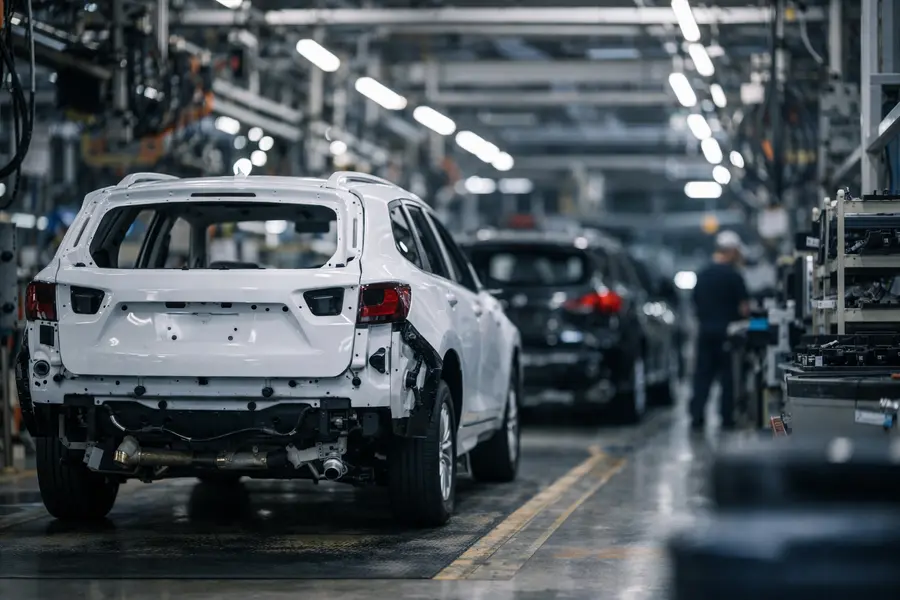
Trump's threat of 150-300% tariffs on firms that skip US factories within 18 months meets claims he leans on foreign CEOs to press their own governments.
- Trump said foreign firms that do not build US plants within about 18 months face tariffs of 150% to 300%.
- Chrystia Freeland, Canada's former deputy prime minister, writes that cabinet officials warn foreign CEOs to make their leaders "fall in line."
- The remarks gave no product list, legal basis or measure of plant progress, leaving the threat open-ended for exporters in Asia and North America.
Lead
President Donald Trump told a campaign rally in Vandalia, Ohio, on October 3, 2026, that foreign companies not investing in American manufacturing within roughly 18 months would face tariffs of 150%, 200%, 250% or 300%. He named South Korea, China, Japan and Canada as economies whose firms had been pushed to invest by his trade policy. Days later, Freeland's memoir added a second line of pressure: the administration works through corporate chiefs as well as through foreign capitals.
What Did Trump Say About Tariffs on Foreign Companies?
Trump said foreign companies must build US factories within about 18 months or "we charge them 150, 200, 250, 300% tariffs." The window runs to roughly April 2028, well beyond the November 3 midterm elections. He framed the tariff policy as the reason trillions of dollars of investment are flowing into the country.
The remarks did not specify which products or sectors would be covered. They also did not identify the statutory authority for rates of this size or explain how a company's progress on a plant would be judged. Existing sector actions, including earlier threats of 100% duties on drugmakers and foreign-made semiconductors, have used the same exemption logic: firms that commit capital to US plants are spared.
Why Does South Korea Face the Sharpest Pressure?
South Korea is under pressure because Trump says it has agreed to an Alaska liquefied natural gas project that Seoul says it has only agreed to review. Korea has pledged $350 billion of US investment, split between $150 billion for shipbuilding and $200 billion for strategic projects, in exchange for a cut in US tariffs on Korean goods from 25% to 15%.
Trump said that if South Korea did not want to proceed with the Alaska project, "I'll just charge them more." Cost estimates for the project range from $44.5 billion to $54.5 billion. Korea's industry minister has said the country should not fund commercially unviable ventures, while acknowledging that withdrawing risks renewed tariff pressure. A $22.3 billion gas-fired power plant in Encinal, Texas, is the confirmed project.
How Are Foreign CEOs Being Used as Leverage?
Freeland writes in her memoir, Unreliable Boyfriend, that "Trump's cabinet secretaries miss no opportunity to warn foreign CEOs of the dire consequences if their leaders don't fall in line." She describes the Trump team as "swaggeringly, rudely aggressive, even behind closed doors."
Her account centers on a dinner Treasury Secretary Scott Bessent hosted for business executives after Prime Minister Mark Carney's "middle powers" speech at the World Economic Forum in Davos in January. One guest later told her the administration wanted Canada "cut down to size." Freeland, who served as finance, foreign and trade minister, argues that allied concessions have often failed to deliver results. She cites Canada's June 2025 decision to drop its digital services tax on US tech firms, followed weeks later by higher US tariffs.
Strategic Context
The two developments describe one mechanism. A tariff schedule tied to factory construction converts trade policy into a corporate capital-allocation decision. Direct lobbying of chief executives then moves that decision into domestic politics abroad, where large employers carry weight with their own governments.
For exporters, the 18-month clock forces a choice between sunk US capital spending and exposure to duties that would price products out of the market. For governments, the cost of resistance is borne by their largest companies first.
Outlook
Over the next 3 to 12 months, the open questions are whether the threat becomes a formal tariff notice with product lists and a legal basis, and whether Seoul commits to the Alaska LNG project. Canada, Japan and China face the same logic of investment-for-relief. The November midterms and the April 2028 deadline define the window in which firms will decide whether to build, wait or negotiate through their governments.