Pomegra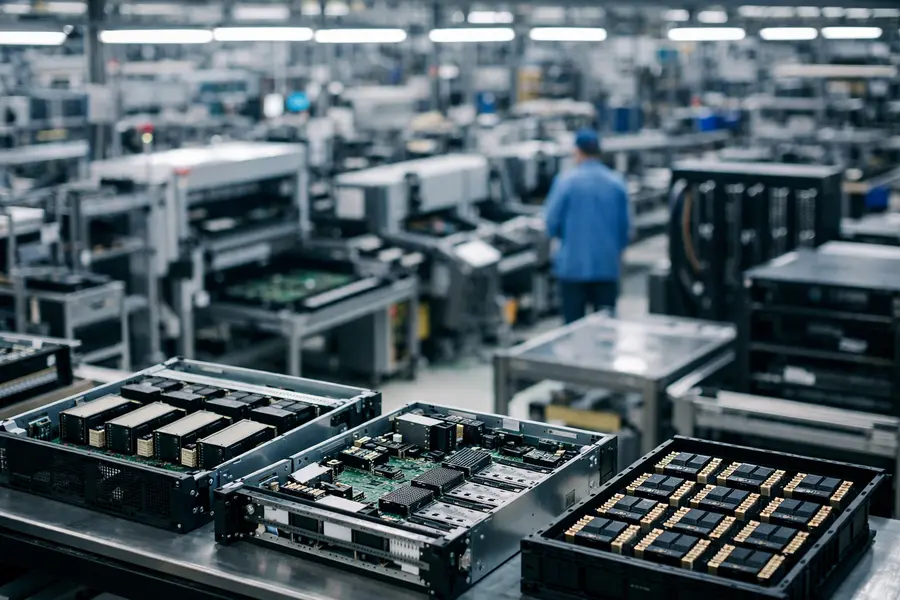
Jabil Inc. reports Q4 FY2026 before the open Wednesday as Wall Street focuses on $3.6B in quarterly AI revenue, a third hyperscaler ramp, and raised FY27 guidance.
- Jabil's FY2026 AI-related revenue is expected to total approximately $13.6B, up 50% YoY, with Q4 alone tracking toward roughly $3.6B.
- A third hyperscaler relationship disclosed in Q3 FY2026 is projected to scale from hundreds of millions in FY27 to $1B+ by FY28.
- FY27 guidance to be issued Wednesday, with consensus pointing to revenue above $40B and core operating margins exceeding 6%.
Lead
Jabil Inc. (JBL) enters Wednesday's pre-market earnings release as the session's most closely watched AI infrastructure manufacturing proxy. The St. Petersburg, Florida-based contract manufacturer is expected to report Q4 fiscal 2026 revenue near $9.69 billion - up roughly 16% year over year - and core earnings per share of approximately $4.06. Those figures would close a fiscal year in which Jabil's AI-related revenue reached approximately $13.6 billion, a 50% year-over-year advance off a $9 billion FY2025 base. Investors in ai stocks are focused on three specific catalysts today: quarterly AI revenue confirmation, the company's FY27 revenue and margin framework, and the first detailed ramp schedule for a newly secured third hyperscaler customer.What Is Wall Street Watching in Jabil's Q4 Report?
Three data points anchor institutional focus heading into the print. First, Q4 AI-specific revenue: analysts expect roughly $3.6 billion, consistent with the full-year $13.6 billion trajectory and implying a Q4 exit rate running well ahead of the year-ago comparison. Second, the scale and timing of the third hyperscaler ramp - management disclosed the relationship in June 2026, projecting several hundred million in FY27 contribution before scaling to $1 billion or more by FY28. Third, FY27 guidance: consensus models revenue above $40 billion and core operating margins above 6%, compared with FY2026's approximately 5.8%.
The Intelligent Infrastructure segment, which houses the bulk of AI-related programs, is guided to approximately $4.9 billion in Q4, up an estimated 32% year over year, with sequential acceleration driven by hyperscaler shipment schedules. Q4 core EPS guidance of $3.80 to $4.20 frames the quarter, and full-year adjusted free cash flow is targeted above $1.4 billion.
Why Do Investors Treat JBL as an AI Infrastructure Bellwether?
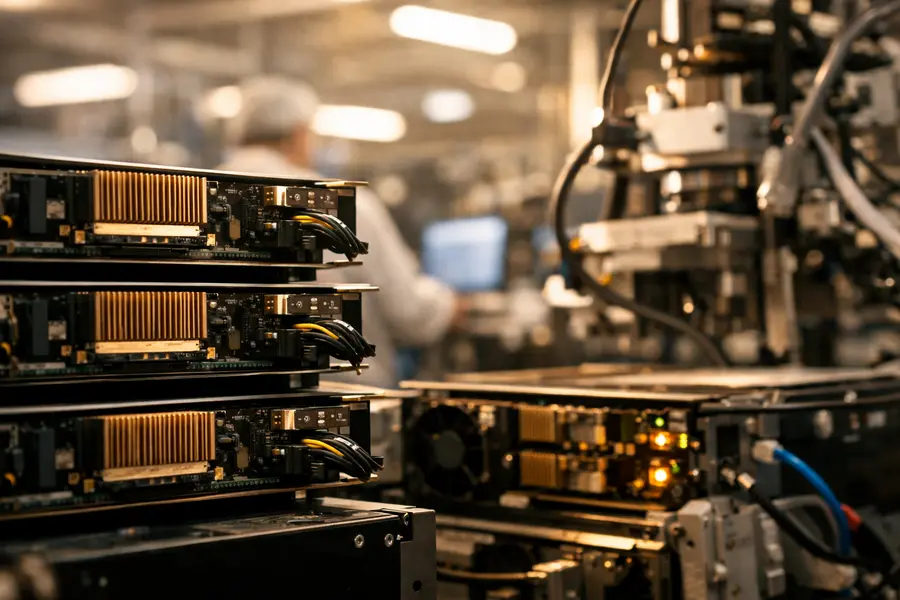
Jabil manufactures the physical layer of AI compute: custom-engineered rack assemblies, liquid-cooled server chassis, high-bandwidth interconnect modules, and power-delivery systems that large cloud operators require at volume. Unlike chip designers such as Marvell Technology (MRVL), Jabil occupies the contract-manufacturing layer, converting hyperscaler design specifications into finished systems at scale. That positioning makes JBL results a real-time indicator of whether capex commitments stated by Amazon (AMZN), Microsoft (MSFT), and Meta Platforms (META) on their own earnings calls are flowing into physical production orders.
CEO Mike Dastoor has described AI infrastructure demand as "extremely strong" across recent quarters, citing both deepening existing relationships and the addition of the third customer. For investors seeking to invest in AI through the infrastructure supply chain rather than through direct semiconductor exposure via names such as Nvidia (NVDA), Jabil represents a high-volume, margin-expanding proxy on aggregate hyperscaler build-out.
How Does the Third Hyperscaler Win Reshape Jabil's Revenue Outlook Through FY28?
The undisclosed third hyperscaler relationship is expected to generate a few hundred million dollars in FY27 before ramping toward $1 billion or more by FY28. Combined with existing AI programs, that trajectory supports management's informal guidance of AI-related revenue potentially exceeding $20 billion in FY27 - roughly 47% growth off the elevated FY2026 base.
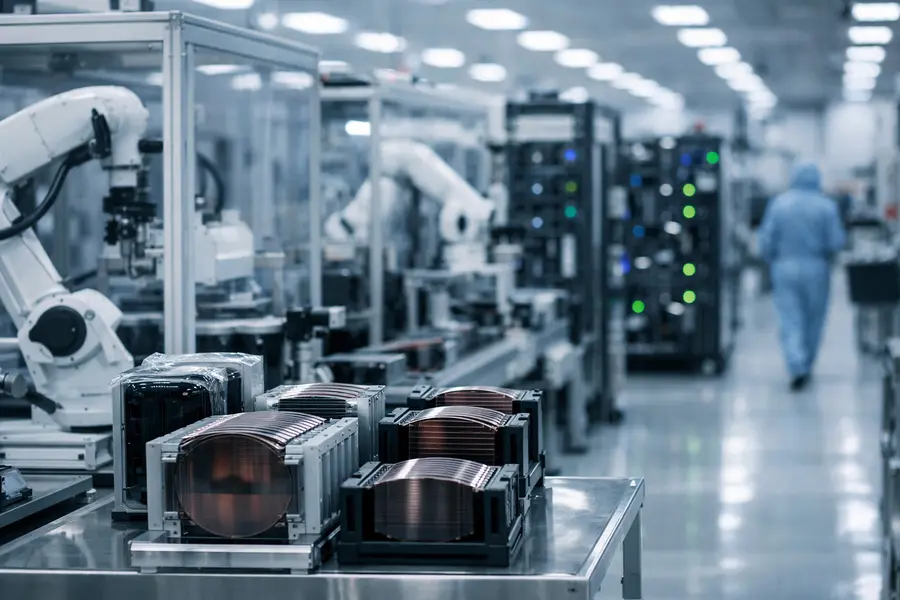
To support that ramp, Jabil is expanding its manufacturing footprint by approximately 10%, adding capacity in North Carolina, Memphis, and India. A strategic alliance with Adani Enterprises, announced in fiscal 2026, targets multi-gigawatt AI infrastructure capacity in India, with revenue contributions beginning around fiscal 2028.
JBL shares closed at approximately $299.57 on September 18, trailing into the print after a Goldman Sachs price-target revision introduced near-term uncertainty, though the stock has outperformed the S&P 500 year-to-date. Upward revisions from other analysts, including a UBS upgrade citing 50% AI-revenue growth extending into FY27, have sustained constructive positioning.
Outlook
Wednesday's report resolves whether Jabil's FY2026 AI revenue trajectory closes as guided and whether the FY27 framework can absorb a third major customer without margin dilution. If AI revenue lands at or above $3.6 billion for the quarter, FY27 guidance tops $40 billion, and management details a credible third-hyperscaler ramp, the stock's case as a structural beneficiary of the AI infrastructure build-out remains intact. A shortfall on AI revenue or a below-consensus margin outlook would test a valuation priced for continued 50%-plus AI growth rates heading into the highest hyperscaler capex year on record.