Pomegra
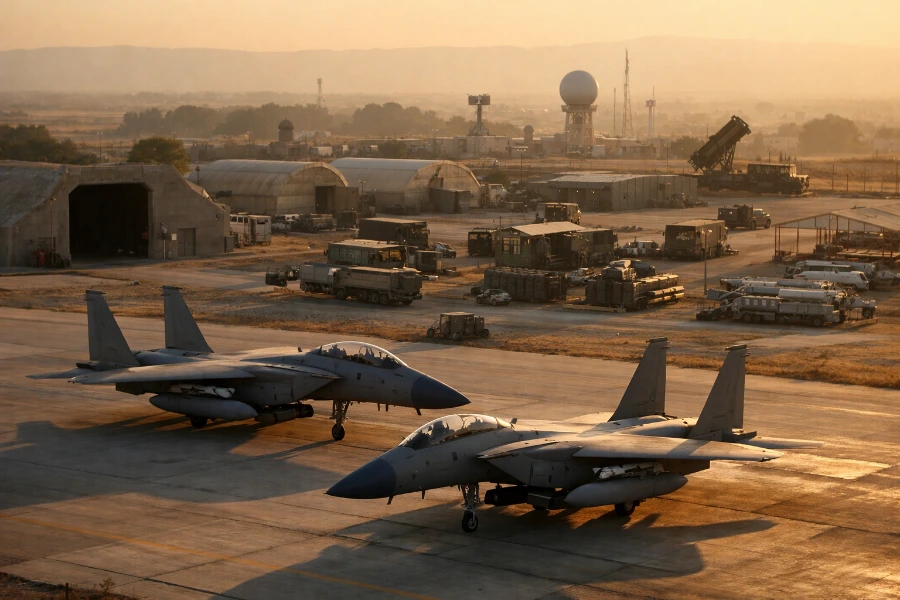
Israel's security cabinet meeting was reportedly cancelled amid Iran policy disputes, while European futures point to a 2% rebound after Wednesday's 1.9% drop.
- Israel's security cabinet meeting was reportedly cancelled amid disputes among officials over Iran policy.
- European futures pointed to a rebound of about 2% after Wednesday's 1.9% decline.
- Brent crude settled at $94.61 on Wednesday, up 3.5%, as Gulf attacks revived the war-risk premium.
Lead
An Israeli security cabinet meeting was cancelled on Thursday after disagreements among senior officials over how to handle Iran. The cancellation fed into a volatile start to the session in financial markets today. European equity futures pointed to a rebound of roughly 2% after Wednesday's 1.9% drop, which was driven by higher rate expectations, fresh US trade uncertainty and renewed doubts over artificial intelligence valuations.
The cancellation was first reported by Iranian state-affiliated media and has not been independently corroborated. Traders are treating it as a signal about the state of Israeli decision-making rather than a confirmed policy shift. The reported rift comes as Gulf security deteriorates and crude oil carries a clear risk premium.
Why Was Israel's Security Cabinet Meeting Cancelled?
The meeting was reportedly cancelled because of escalating disputes among Israeli officials over Iran policy, including how far to prepare for possible military action. The security cabinet is the body that authorizes major military and intelligence operations. A cancelled session can mean a procedural delay or a genuine deadlock over strategy.
The two readings point in different directions. A deadlock usually resolves into a decision within days. Procedural friction tends to fade without consequence. Market participants are watching whether the meeting is rescheduled, whether senior officials convene through narrower forums, and whether any diplomatic or military follow-up emerges.
Geopolitical Dimension
The reported rift comes at a tense moment for the Gulf. Yemen's Houthis said on Wednesday that they had attacked Saudi Arabia's Ras Tanura refinery and a financial district in Riyadh. A Saudi-led coalition spokesman said air defenses destroyed four drones over Ras Tanura. The facility is Saudi Arabia's largest refinery, processing about 550,000 barrels per day, or roughly 16% of the kingdom's refining capacity. It also anchors a major crude export terminal.
Separate reports of attacks on shipping in and around the Strait of Hormuz, and of Iranian strikes on Kuwait, have kept the region's energy infrastructure in focus. Roughly a fifth of global oil supply passes through Hormuz, so any threat to transit raises insurance and freight costs even when physical flows continue. Israeli political friction adds uncertainty about how Jerusalem would respond to further escalation.
How Are Financial Markets Reacting Today?
Markets are leaning toward a technical rebound rather than pricing in a new escalation. European futures pointed to a gain of about 2%, which would recover most of Wednesday's 1.9% fall. Banks and technology shares led Wednesday's declines as investors weighed higher interest rate expectations and concerns about the outlook for AI stocks.
Global equities have also found support from dip-buying after a sharp sell-off, with investors looking past tariff headlines and AI jitters. Energy is the main counterweight. The crude oil price moved higher on Wednesday, with Brent futures settling $3.21, or 3.5%, higher at $94.61 a barrel. US West Texas Intermediate rose 2% to $83.68. Both benchmarks edged lower in early trading as Wednesday's gains were partly digested.
Economic Channels
Three transmission routes link the Iran dispute to markets:
- Energy costs: Higher Brent prices feed through to fuel and petrochemical costs, which hurts European industry more than US producers.
- Inflation and rates: Sustained oil strength complicates the path of inflation and central bank policy at a time when markets already price higher rates.
- Risk appetite: Headline-driven swings in oil tend to spill into equities and safe-haven assets such as gold and government bonds.
What Comes Next for Oil Prices and European Stocks?
The next move in oil depends on whether Gulf attacks continue and whether Israeli leaders resolve their dispute. Without fresh strikes, the risk premium built into Brent has historically faded within days. Another successful attack on Saudi export infrastructure or on Hormuz shipping would likely push crude back toward recent highs and weigh on European equities, which are heavily exposed to energy costs.
For equities, the 2% rebound signal is largely a reaction to Wednesday's oversold conditions. Whether it holds depends on the direction of oil, rate expectations and the technology sector. A rescheduled cabinet session with a clear Iran decision would reduce uncertainty. A prolonged standoff would keep the geopolitical premium in place.
Outlook
The reported cancellation of Israel's security cabinet meeting adds a political layer to an already fragile Gulf security picture. In the near term, European futures point to a 2% bounce, while Brent near $94 reflects ongoing supply-risk pricing. Over the coming weeks, attention will turn to whether Israeli officials settle their Iran strategy, whether Houthi and Iranian-linked attacks on Gulf infrastructure continue, and whether central bank signals add to or ease pressure on equity valuations.
Mentioned tickers: None