Pomegra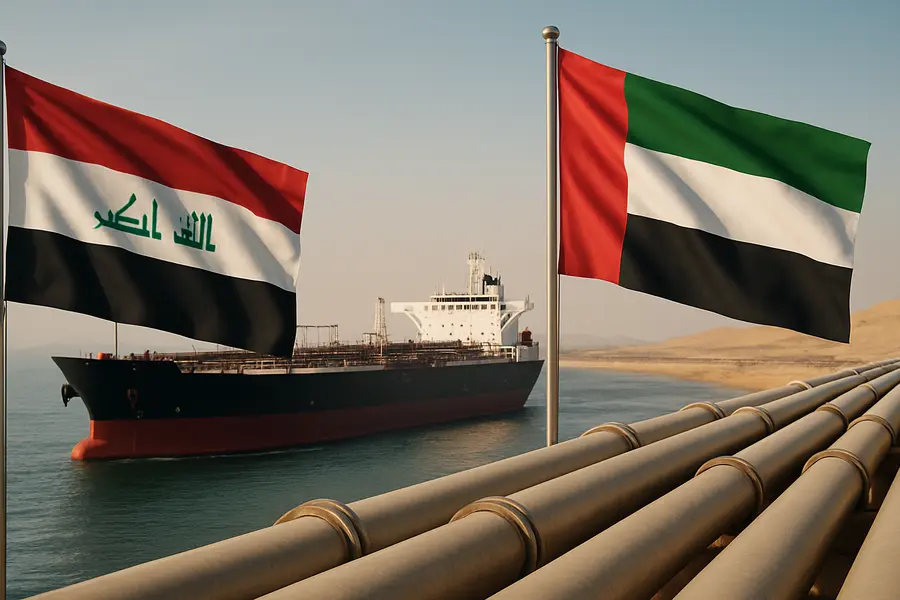
Iraq and the UAE are fast-tracking alternative oil pipeline routes as the Strait of Hormuz closure drives a near-total collapse in Gulf crude exports.
- Iraq approved plans to triple Kirkuk–Ceyhan pipeline throughput to 770,000 bpd as southern production collapses 70% to 1.3 million bpd.
- ADNOC's new West-East pipeline to Fujairah is 50% complete and will double UAE crude export capacity when it comes online in 2027.
- Combined alternative pipeline capacity across the region covers roughly 9 million bpd — less than half the 20 million bpd previously transiting Hormuz.
Lead
Three months after the effective closure of the Strait of Hormuz on March 4, 2026, Iraq and the United Arab Emirates are pressing ahead with overlapping infrastructure campaigns to carve alternative export corridors — one running north through Kurdish territory to Turkey's Mediterranean coast, the other cutting east across the Arabian Peninsula to the Gulf of Oman. The effort, framed by both governments as essential to sovereign oil revenue, reflects how durably the 2026 Iran conflict has reshaped the economics of Gulf crude. Brent surged past $120 per barrel at the strait's closure before settling near $94 on June 8. The pace of construction and diplomatic negotiation is accelerating precisely because neither country can afford prolonged export paralysis.
The Scale of Disruption
Roughly 20 million barrels of crude oil and petroleum products transited the Strait of Hormuz daily before the war — approximately one-fifth of global supply. The effective closure since early March has reduced that flow to a fraction. Iraq, which routes approximately 93% of its crude through the southern terminal at Basra and into the strait, has been hit hardest among non-Iranian producers. Production at the BP-operated Rumaila field — the country's largest at roughly 1.5 million barrels per day pre-crisis — was shut after storage tanks reached capacity and tankers could not load cargo. West Qurna 2 followed. Iraq's total southern output fell to as low as 800,000 barrels per day at the trough. By government figures, the country exported only 10 million barrels through the strait in April, compared with 93 million barrels in the months before the conflict — a collapse of nearly 90%.
Iraq's Northern Lifeline
Baghdad's immediate pivot has been the Kirkuk–Ceyhan pipeline, a dormant artery running from northern Iraq through the semi-autonomous Kurdistan Region to Turkey's Mediterranean port of Ceyhan. After the Iraqi federal government and the Kurdistan Regional Government agreed to coordinated use on March 17, initial flows resumed the following day at 150,000–250,000 barrels per day. The Iraqi cabinet has since approved an accelerated plan to raise throughput to 770,000 barrels per day — roughly a threefold increase — combining 250,000 barrels daily from federal northern fields with up to 400,000 from Kurdistan Regional Government-controlled assets.
The pipeline's physical infrastructure, comprising parallel 46-inch and 40-inch pipes with designed combined capacity above 1.6 million barrels per day, can in theory support those targets. The primary constraint is not steel but politics: the Iraq–Turkey pipeline agreement, signed originally in 1973, expires on July 27, 2026, and renegotiation is underway. Turkish officials have indicated a new deal could encompass capacity targets exceeding one million barrels per day, alongside gas integration and downstream investment concessions — giving Ankara considerable leverage in any final terms.
The UAE's Fujairah Strategy
The United Arab Emirates enters the scramble from a structurally stronger position. The Abu Dhabi Crude Oil Pipeline — a 400-kilometer Hormuz bypass completed well before the current conflict — already connects onshore ADNOC production at Habshan to the Fujairah export terminal on the Gulf of Oman, with current throughput capacity near 1.8 million barrels per day. What the crisis has accelerated is the second line: the West-East pipeline expansion, which ADNOC confirmed in late May was approximately 50% complete. The new line, rated at 1.5 million barrels per day, is scheduled to come online in 2027 and will effectively double the UAE's total Hormuz-bypass export capacity — aligning with ADNOC's stated production target of 5 million barrels per day by the same year. The UAE's exit from OPEC removes the quota constraints that previously capped how much of that capacity could be monetized.
The Capacity Gap and Structural Limits
Despite concurrent campaigns across the region, oil pipeline news this year has consistently highlighted a fundamental arithmetic problem. The combined alternative throughput available — Iraq's northern route, the UAE's existing and under-construction Fujairah lines, and Saudi Arabia's East-West pipeline to Yanbu — totals roughly 9 million barrels per day. That remains less than half the volume Hormuz once moved.
Iraq faces a particularly acute structural barrier. Its southern fields — Rumaila, West Qurna, Majnoon — produce the overwhelming bulk of the country's exportable crude and have no meaningful inland pipeline connection to the Kirkuk–Ceyhan corridor. Moving that oil north would require new intra-Iraq infrastructure across hundreds of kilometers of difficult terrain, a project measured in years. In the near term, Baghdad can ramp Ceyhan flows from what northern fields and Kurdistan can supply; the giant southern reservoirs remain largely stranded. A risk shared across both countries: all land-based pipeline routes remain within the operational range of Iranian missiles and drones, exposing them to the same category of threat currently affecting shipping lanes.
Geopolitical Dimension
The pipeline push is reshaping relationships well beyond the two principal actors. Turkey emerges as a pivotal transit state, with Ankara gaining leverage in negotiations over the Ceyhan renewal — leverage it is evidently prepared to deploy for concessions on gas, financing, and downstream investment. For the UAE, its accelerated infrastructure posture reinforces the strategic realignment that has characterized Abu Dhabi's foreign policy in recent years: reduced dependence on any single chokepoint, reduced reliance on collective Gulf production frameworks, and a bid to position itself as the Gulf producer of last resort for Asian refiners seeking reliable supply.
Global crude markets are monitoring Strait of Hormuz oil flows as the key indicator for second-half 2026 price trajectories. If northern Iraq flows approach the 650,000-barrel-per-day target and UAE continues expanding Fujairah throughput, meaningful downward pressure on the current Brent level becomes possible. If geopolitical escalation disrupts the land corridors or delays construction, the price floor could prove significantly higher.