Pomegra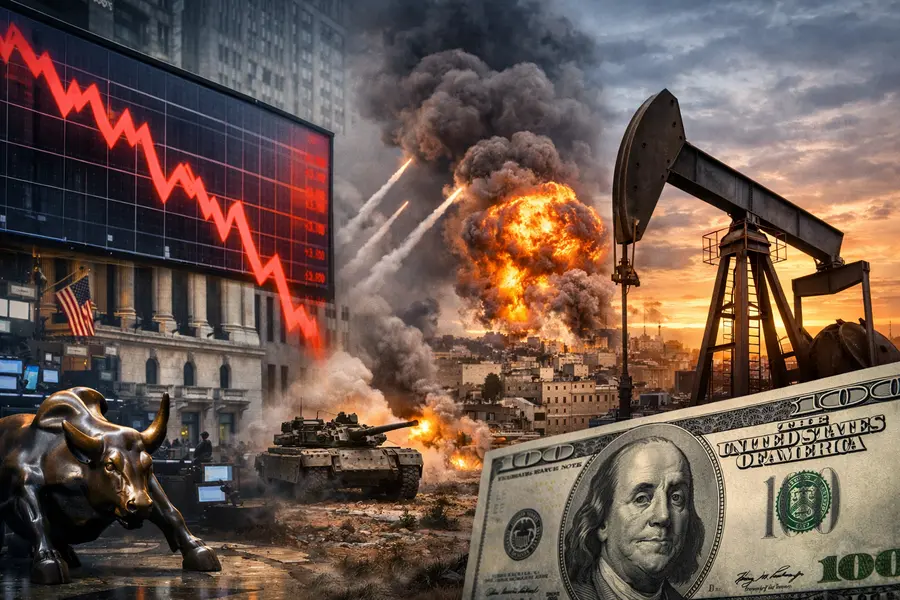
The Dow Jones shed 507 points Thursday as Brent crude breached $100 for the first time since May, after Houthi tanker strikes in the Red Sea amplified fears of a widening Middle East war and reignited the inflation debate on Wall Street.
- The Dow Jones fell 506.93 points (0.97%) to 51,711.65; the S&P 500 lost 1.21% and the Nasdaq dropped 2.15% in a broad stock market sell-off.
- Brent crude surged 7% to $100.69 a barrel, its highest close since May 22, extending a 40% rally in three weeks as Houthi forces attacked Saudi tankers.
- Alphabet slid 7% after raising its 2026 AI capital-expenditure target; Tesla dropped 15% on a second-quarter earnings miss, compounding selling pressure.
Lead
Wall Street posted one of its sharpest single-day losses of the year on Thursday, July 24, as the Dow Jones Industrial Average fell 506.93 points to close at 51,711.65 — a Dow 500 point drop driven by a confluence of surging energy costs, escalating Middle East war hostilities, and disappointing results from two of the market's most closely watched technology companies. Brent crude, the global benchmark, settled at $100.69 a barrel, a threshold that in prior cycles has reliably triggered recession fears and forced the Federal Reserve into a difficult trade-off between combating inflation and supporting growth.
What Happened
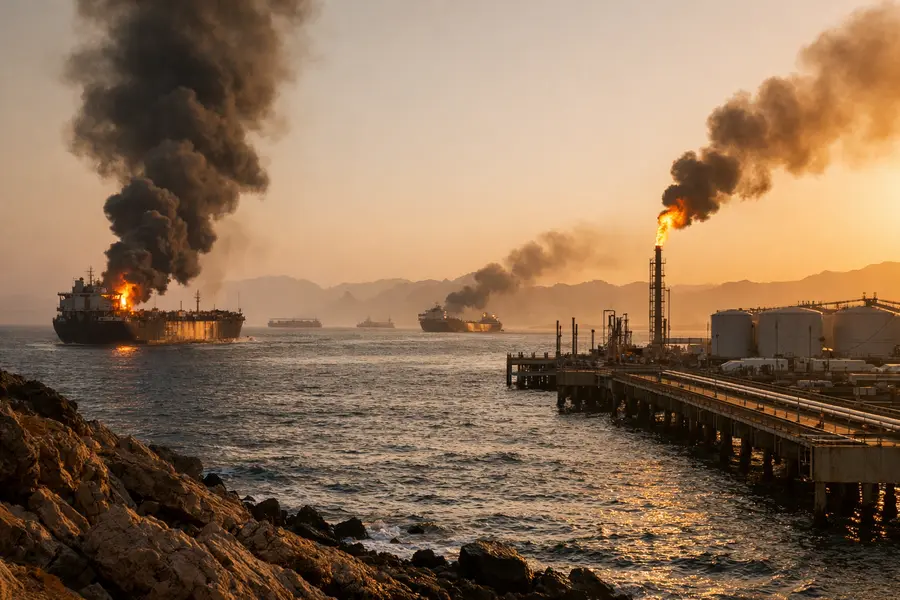
The day's catalyst arrived before U.S. markets opened: Yemen's Houthi rebels, backed by Tehran, announced missile and drone strikes on two Saudi Arabian oil tankers operating in the Red Sea, enforcing a maritime blockade of Saudi ports they declared on July 20. The attacks mark the latest escalation in a conflict that has drawn the United States into direct military engagement with Iran, now entering its eleventh day of U.S. airstrikes. The fragile ceasefire between Washington and Tehran, reported as near-finalization earlier in the month, was declared over by President Donald Trump at the NATO summit this week, removing a key floor beneath risk assets.
Oil markets reacted immediately. Brent crude rose approximately 7% on the day to $100.69, its highest settlement price since May 22, and has now climbed 40% from its July 1 level of $71.57. WTI crude tracked closely. The Strait of Hormuz, through which roughly 20% of global oil trade passes, along with the Bab al-Mandeb strait, are both subject to elevated disruption risk as the Houthi maritime embargo threatens Saudi Arabia's ability to route cargoes around conflict zones.
Market Reaction
The stock market sell-off was broad but not uniform. The Dow Jones today closed below 52,000 for the first time in three weeks. The S&P 500 fell 1.21% to 7,408.30, while the Nasdaq Composite dropped 2.15% to 25,137.69 — the steepest decline among the three major indices, reflecting concentrated pain in large-cap technology.
Alphabet (GOOGL) fell 7% after the Google parent raised its 2026 capital-expenditure guidance to a range of $195 billion to $205 billion, up from a prior forecast of $180 billion to $190 billion, citing accelerating artificial intelligence infrastructure demand. The upward revision rekindled investor anxiety about the payoff timeline for hyperscaler AI spending. Tesla (TSLA) shed 14–15% after reporting a second-quarter earnings miss, with operating expenses growing faster than revenue — a combination that reinforces concerns about margin compression at the electric vehicle maker.Together, Alphabet and Tesla accounted for nearly half of the Dow's point loss on the session.
Geopolitical Dimension
The Middle East war impact on global markets has intensified throughout July. The Houthi maritime embargo of Saudi Arabia, announced July 20, targets not only tanker traffic through the Red Sea but also Saudi Arabia's capacity to use the Petroline cross-peninsula pipeline as an alternative route — a workaround that had partially insulated markets during earlier phases of the conflict.
Energy analysts note that a sustained disruption to Hormuz traffic would remove roughly 20 million barrels per day of global supply from normal routing, a scenario with no near-term logistical substitute. Even partial disruption at current oil-price levels injects significant uncertainty into corporate cost forecasts across airlines, shipping, chemicals, and petrochemicals.
Strategic Context
The intersection of geopolitical shock and earnings disappointment makes the current sell-off structurally different from prior single-catalyst drawdowns. When energy costs rise sharply, consumer purchasing power contracts, corporate input costs increase, and central banks face a stagflationary dilemma: tighten to suppress inflation or ease to protect growth.
Federal Reserve officials have consistently flagged commodity prices as a key variable in their rate path. With Brent crude above $100 and Treasury yields at year highs, the probability of a September rate cut — which markets had priced as likely a month ago — has diminished materially.Outlook
The near-term trajectory for equities hinges on two variables that remain highly uncertain: the course of U.S.-Iran hostilities and the durability of Brent crude's move above $100. Any diplomatic breakthrough or ceasefire signaling would likely trigger a swift reversal in energy costs and a recovery in beaten-down sectors. Absent that, rising oil prices, elevated yields, and continued hyperscaler capex scrutiny create a challenging backdrop for the Dow Jones and broader stock market through August. Investors will watch weekly EIA crude inventory data and any NATO-level diplomatic communications for signals on whether the current Middle East war impact on markets deepens or stabilizes.
---
Mentioned tickers: DJIA, SPX, COMP, GOOGL, TSLA, BRK.B, XOM, CVX