Pomegra
Hong Kong's Hang Seng fell 226 points to 25,428 Monday as August payrolls reinforced September rate hike bets, while Seoul and Tokyo surged on AI semiconductor momentum.
- The Hang Seng dropped 1.1% to 25,428, led by Xiaomi's near-4% decline, as the Hong Kong dollar peg amplified the market's sensitivity to Federal Reserve rate expectations.
- South Korea's KOSPI surged 4.6% to 6,995 and Japan's Nikkei 225 gained 2.1% on AI chipmaker optimism, making Hong Kong the session's clearest divergence trade.
- China's August trade data, due Tuesday, is the immediate forward catalyst - a beat may narrow the Hong Kong-mainland split, while a miss could deepen it.
Lead
Hong Kong's Hang Seng Index closed Monday's Asia session down 226 points, or 1.1%, at 25,428 - the steepest single-session decline among major Asian benchmarks - after a blowout U.S. August payrolls print drove rate-hike probabilities above 60% for the Federal Reserve's September 15-16 meeting. While semiconductor-heavy indexes in Seoul and Tokyo surged on artificial intelligence momentum, Hong Kong equities bore the full weight of rising dollar funding costs tied to the city's currency peg, producing the session's sharpest regional divergence.
Why Did Hong Kong Stocks Fall Today?
Nonfarm payrolls rose 162,000 in August, roughly three times the consensus estimate of 53,000 and the strongest monthly gain since March. The release immediately repriced interest-rate futures, pushing odds of a Federal Reserve increase this month to approximately 62% from around 55% before the report.
Hong Kong equities are structurally exposed to this dynamic in a way that mainland Chinese and Northeast Asian markets are not. The Hong Kong dollar peg to the U.S. dollar compels the Hong Kong Monetary Authority to shadow Federal Reserve policy moves, raising local borrowing costs in near-lockstep. Higher short-term rates compress property valuations, widen funding costs for consumer and technology firms, and historically accelerate capital outflows from the city toward U.S.-dollar instruments. Treasury yields at the short end climbed sharply following Friday's jobs release, setting the macro tone before Monday's open.The AI Divide: Seoul and Tokyo Rally, Hong Kong Retreats
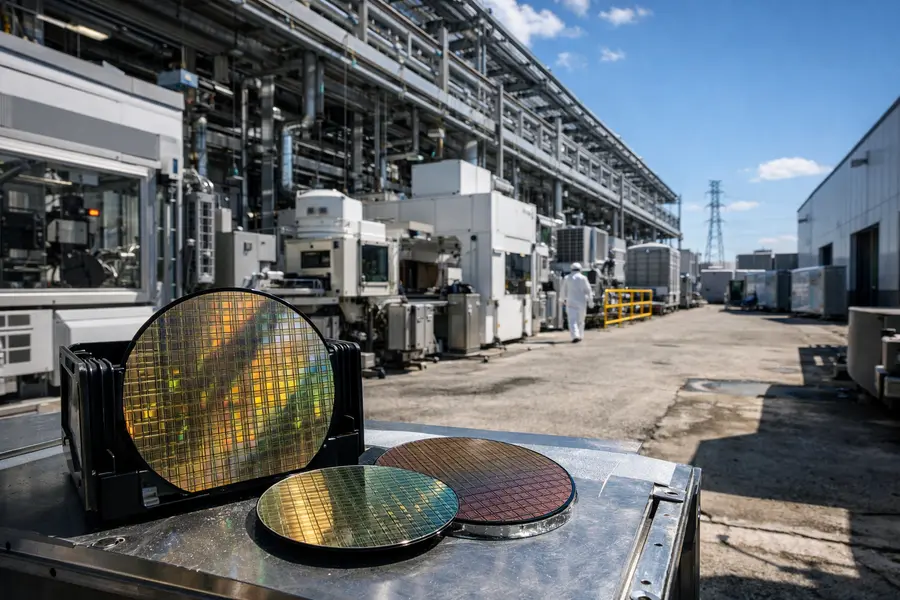
South Korea's KOSPI jumped 4.61% to 6,995.39, with Samsung Electronics (005930.KS) gaining 5.7% and SK Hynix (000660.KS) surging more than 8% as investors positioned for continued global artificial intelligence infrastructure buildout. Japan's Nikkei 225 added 2.1% to close at 66,399.84, also led by chipmaker strength.The contrast with Hong Kong was acute. The same AI-driven optimism lifting Tokyo and Seoul had no comparable transmission into the Hang Seng, whose sector composition skews toward consumer internet, financials, property, and energy rather than the semiconductor names driving gains elsewhere. The session laid bare a structural fault line in regional ai stocks: hardware beneficiaries concentrated in Northeast Asia, while Hong Kong-listed technology firms contend with their own rate and regulatory headwinds.
What Dragged Xiaomi and the Hang Seng Lower?
Xiaomi (1810.HK) fell 3.9% to HK$27.28, leading declines among Hang Seng components. Price increases on select smartphone models and ongoing Class B share buybacks offered no buffer against broad sector selling. Other notable decliners included Lenovo (992.HK, -1.9%), Meituan (3690.HK, -1.8%), China Construction Bank (939.HK, -2.1%), CNOOC (883.HK, -1.2%), China Mobile (941.HK, -0.7%), and Tencent Holdings (700.HK, -0.5%) to HK$439.00.The session was not uniformly negative. MiniMax advanced 6.9%, Kingboard Laminates (1888.HK) rose 5.7%, and Semiconductor Manufacturing International Corporation (981.HK) gained 1.2%, reflecting selective demand for locally-listed AI-adjacent names even as the index retreated.
Shanghai Holds Steady - A Second Divergence
The split ran within Greater China as well. The Shanghai Composite closed essentially unchanged at 3,919.06, with the CSI 300 holding at 4,549.54. Mainland equities operate under a managed-float currency regime and an independent monetary policy, insulating them from the direct transmission channel that Fed rate expectations open in Hong Kong.
The result is a three-way fracture across the Asia session: AI hardware exporters in Seoul and Tokyo rallying; mainland China holding flat on its own macro logic; and Hong Kong absorbing the full impact of rising U.S. rate expectations through its dollar peg. Among the session's clearest takeaways, Hong Kong was the divergence trade.
What Does China's August Trade Data Mean for Markets?
China's customs authority releases August trade figures Tuesday, September 8. Consensus estimates project exports rising approximately 25% year-on-year, extending July's 23.9% gain, while imports are forecast to climb around 30% year-on-year from 27.5% previously. A trade surplus near $119-120 billion is anticipated.
A beat would signal that external demand is holding despite elevated global trade friction, providing relief for Hong Kong-listed exporters and supporting commodity-linked currencies sensitive to China demand. A miss would reinforce concerns about decelerating trade momentum and compound the pressure evident Monday, potentially pushing the Hang Seng further below key technical levels. The release represents the week's clearest binary for whether the Hong Kong-mainland spread closes or extends.
Outlook
Monday's session confirmed Hong Kong as the region's sharpest barometer for Federal Reserve rate expectations, with the Hang Seng's 1.1% decline standing in direct contrast to the KOSPI's AI-driven surge and the Nikkei's advance. Two immediate catalysts will set the next direction: China's August trade data on Tuesday, which tests whether external demand can offset Hong Kong's rate headwinds, and the U.S. inflation report later in the week, which will either validate or temper the 62% September rate-hike odds now priced into futures markets. Until one of those readings shifts the calculus, Hong Kong equities remain the region's clearest divergence trade.
Mentioned tickers: 1810.HK, 005930.KS, 000660.KS, 992.HK, 3690.HK, 939.HK, 883.HK, 941.HK, 700.HK, 981.HK, 1888.HK