Pomegra
Brent crude settles above $100 for the first time since May after Houthi forces strike two Saudi oil tankers and declare a Bab el-Mandeb naval blockade.
- Brent crude settled at $100.68, up 6.45%, after Houthis struck Saudi tankers Encelia and Layla with ballistic missiles and drones on July 22.
- Bab el-Mandeb shipping traffic fell 34% as at least seven vessels diverted; Goldman Sachs sees Brent potentially reaching $120 in Q4.
- President Trump said Washington would hold Iran responsible and was close to deciding on a massive response.
Lead
Brent crude surpassed $100 a barrel on July 23, 2026 — its first triple-digit close since May — after Yemen's Iran-backed Houthi forces struck two Saudi oil tankers in the Red Sea and declared a naval blockade of the kingdom, triggering a 34% single-day collapse in vessel crossings at the Bab el-Mandeb strait and sending the oil price today to levels not seen in nearly two months.
What Happened
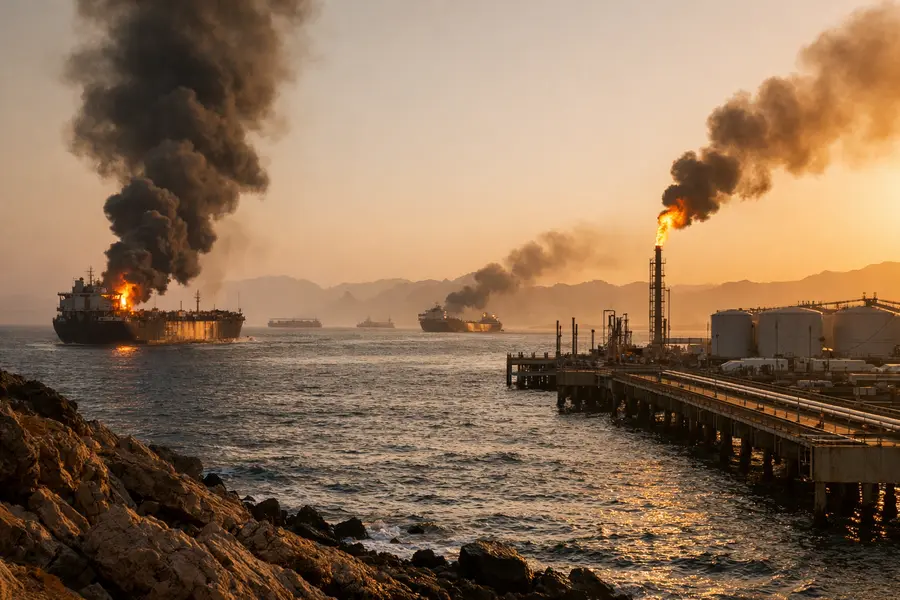
Houthi military spokesman Yahya Saree announced on July 22 that the group had struck the tankers Encelia and Layla using ballistic missiles, cruise missiles, and armed drones, accusing both vessels of violating a maritime blockade imposed by Houthi armed forces. The Encelia sustained a fire at the bow while transiting the Red Sea; Saudi Arabia confirmed the attack and said all crew members were safe. The Layla was struck in the same operation.
The Houthis framed the strikes as retaliation for a Saudi-linked attack on Sana'a's international airport and Riyadh's ongoing blockade of Yemen. The group simultaneously announced the closure of the Bab el-Mandeb Strait to Saudi-linked shipping — escalating a campaign that had previously focused on Israeli- and U.S.-linked vessels into a direct assault on Saudi Arabia's energy export corridor.
Market Reaction
The immediate response in oil markets was decisive. Brent crude settled at $100.68 a barrel, a gain of 6.45% on the session and the first close above the oil $100 barrel threshold since early May. WTI crude tracked at approximately $92.36. Brent has now risen roughly 40% since the start of July, as successive shocks — including U.S. military strikes on Iranian territory — compressed risk premiums back into the market.
The breach of the triple-digit level carried psychological and structural weight. Options desks reported a surge in call-option activity above $100 in the days preceding the tanker strikes, and the settlement above that level has reinforced market conviction that the region faces a sustained supply-disruption environment rather than a short-lived shock.
The Bab el-Mandeb Dimension
The Bab el-Mandeb shipping lane — a 29-kilometer-wide chokepoint between Yemen and Djibouti connecting the Red Sea to the Gulf of Aden — is among the world's most strategically sensitive maritime corridors. Approximately 9 million barrels per day of crude and petroleum products transit the strait alongside 12% to 15% of total global maritime trade, representing more than $1 trillion in annual cargo value.
Crossings at Bab el-Mandeb fell 34% on July 21 to just 29 vessels, while Strait of Hormuz traffic simultaneously declined 31% to nine ships. At least seven tankers diverted before reaching the strait following the Houthi blockade announcement. The European Union's naval mission in the region issued an advisory warning merchant vessels with Israeli, U.S., or Saudi links to avoid the Red Sea and Gulf of Aden until the threat level decreases.
Goldman Sachs estimated that roughly 4 million of the approximately 9 million barrels per day flowing through Bab el-Mandeb are difficult to reroute efficiently. Extended disruption would force shipments onto the Cape of Good Hope route around southern Africa, adding days to transit times, inflating freight costs, and tightening effective supply to European and Asian buyers.
Houthi Red Sea Attack in Strategic Context
The Houthi Red Sea attack campaign entered a qualitatively new phase with the July 22 strikes. Since late 2023, Houthi forces had directed their maritime campaign primarily at vessels with Israeli or U.S. ties. Expanding that campaign to Saudi Arabia's oil tankers — at a moment when Riyadh supplies a significant share of global crude exports — widens the potential economic and diplomatic fallout considerably.
The escalation also tightens the link between Iran's regional proxy network and the direct military confrontation now underway between Tehran and Washington. U.S. strikes on Iranian territory earlier in July had already driven Brent crude above $90; the tanker strikes have revived the question of scope and duration of the American response.
President Trump stated that the United States would hold Iran responsible for the Houthi attacks and indicated he was close to deciding on what he termed a massive response. Saudi Arabia condemned the strikes as a violation of international law.
Supply Chain Implications
The concurrent disruption at both Hormuz and Bab el-Mandeb represents the most serious simultaneous threat to Middle Eastern oil exports in decades. Together, the two chokepoints handle the bulk of seaborne crude leaving the Gulf. Importers in Europe and Asia now face a choice between drawing down strategic petroleum reserves, absorbing higher spot prices, or sourcing from alternative producers.
OPEC+ spare capacity — primarily concentrated in Saudi Arabia and the UAE — theoretically exists to offset physical disruption. Whether Gulf producers choose to accelerate output while tankers carrying their crude are under active fire remains an open question.Outlook
Brent crude's breach of $100 marks a structural shift in market psychology. Goldman Sachs projects Brent could exceed $120 in the fourth quarter if Bab el-Mandeb remains disrupted through year-end, with an average around $100 through 2027. The trajectory of U.S.-Iran diplomacy — negotiations had been described as near-finalized before the latest strikes — and the geographic and tactical scope of the Houthi campaign will be the primary variables determining whether the current oil price shock deepens or finds a ceiling.
Mentioned tickers: BZ=F, CL=F