Pomegra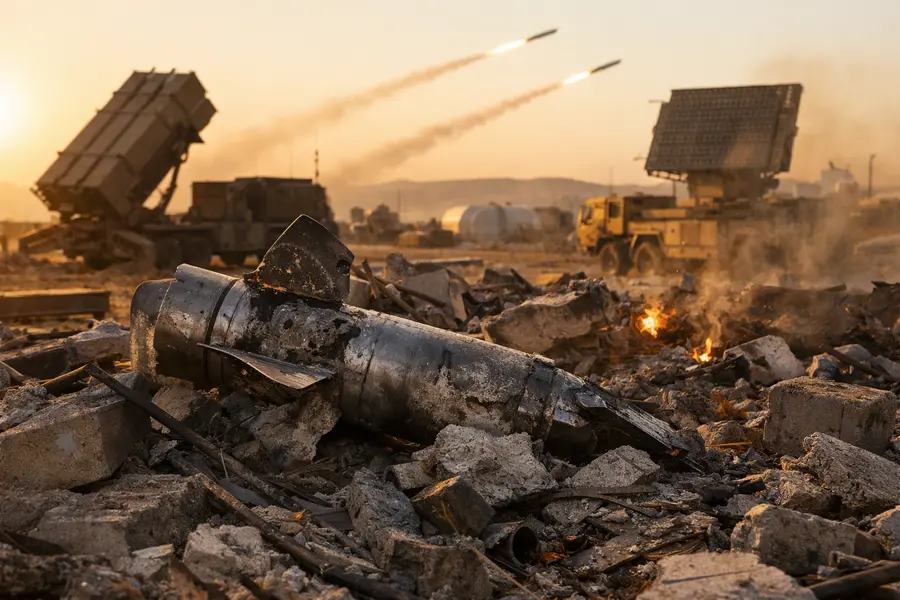
Iran's IRGC strikes U.S. military facilities in Jordan and the UAE with ballistic missiles and drones, marking the sharpest direct U.S.-Iran confrontation in seven months as crude oil prices surge Monday.
- Jordan's air defenses intercepted 8 inbound ballistic missiles; Al-Minhad Air Base in the UAE sustained minor perimeter damage from drone debris
- The IRGC retaliation followed U.S. strikes on Iranian radar and naval assets on Larak Island in the Strait of Hormuz hours earlier
- Brent crude surged more than 6% at the open Monday as markets priced in Strait of Hormuz disruption risk
Lead
Iran's Islamic Revolutionary Guard Corps launched coordinated waves of ballistic missiles and drones at King Hussein Air Base in northern Jordan and Al-Minhad Air Base in the United Arab Emirates in the early hours of Monday, Aug. 31, marking the most direct bilateral military exchange between U.S. and Iranian forces in seven months. Jordanian air defenses intercepted all 8 inbound ballistic missiles before impact. U.S. Central Command confirmed that defensive systems at Al-Minhad also engaged multiple incoming threats and that no U.S. personnel were killed, though drone debris caused minor structural damage to support facilities on the base perimeter. The strikes fulfilled a retaliatory vow the IRGC issued hours after U.S. forces struck Iranian military installations on Larak Island at the mouth of the Strait of Hormuz.
What Happened on Larak Island?
U.S. Central Command struck radar installations and fast-attack boat facilities on Larak Island -- an IRGC naval and missile base positioned at the eastern mouth of the Strait of Hormuz -- in a pre-dawn operation Sunday night, responding to a sustained pattern of Iranian harassment of commercial and naval vessels transiting the strait over the preceding weeks. The operation brought U.S. and Iranian forces into direct armed contact for the first time since January 2026. Within hours, the IRGC issued a statement vowing a "proportionate and decisive response," a pledge it carried out against the two Arab-hosted U.S. bases before Monday's market open.
Why Did Crude Oil Prices Surge This Sharply?
The crude oil price reaction reflects the structural vulnerability of global energy supply to Strait of Hormuz disruption. The waterway handles an estimated 17 to 21 million barrels per day -- roughly 20% of globally traded oil -- and Iran has repeatedly threatened closure during past military standoffs. Brent crude rose more than 6% in early Monday trading to above $105 per barrel, its highest level in five months. WTI crude gained nearly $6 per barrel in tandem. Even with the strait remaining operationally open as of Monday morning, vessel tracking services showed sharply elevated war-risk insurance premiums across the Lloyd's of London market, reaching levels last seen during the 2019 tanker attack wave. Energy majors ExxonMobil (XOM) and Chevron (CVX) each gained more than 4% in premarket trading.
Market Reaction
Risk assets repriced broadly at Sunday's electronic open. S&P 500 futures (SPY) fell 1.9% and Nasdaq futures (QQQ) dropped 2.1% before the cash session. Gold (GLD) climbed 1.8% to above $2,900 per troy ounce, reflecting a broad flight to safe-haven assets. Defense contractors outperformed across the board: Lockheed Martin (LMT), RTX (RTX), and Northrop Grumman (NOC) each added more than 3% in premarket trading, reflecting expectations of accelerated U.S. and allied air-defense procurement. The U.S. dollar strengthened against most peers, while Gulf-region emerging-market currencies came under modest selling pressure.
Geopolitical Dimension
The decision to target bases in Jordan and the UAE -- two Arab sovereign states with strong U.S. security partnerships -- carries a message that extends beyond the bilateral U.S.-Iran confrontation. Tehran demonstrated a willingness to involve third-party governments directly in any military exchange, raising the political and strategic cost of hosting U.S. forces in the region. Both Amman and Abu Dhabi now face pressure to calibrate their responses carefully, balancing their security commitments to Washington against economic ties across the Gulf and regional diplomatic relationships. Oman and Qatar, which have historically served as back-channel intermediaries between the United States and Iran, are expected to be the first diplomatic contact points if either side seeks de-escalation signaling.
Jordanian and UAE Air Defense Performance
Jordan's interception of all 8 inbound ballistic missiles validated Patriot missile battery performance under live operational conditions. U.S. Central Command's confirmation that defensive systems at Al-Minhad engaged multiple incoming threats without casualties adds a data point to ongoing allied debates over air-defense investment, particularly in the Gulf Cooperation Council states, which have accelerated procurement discussions over the past 18 months.
What Comes Next for Oil Prices?
The near-term crude oil price trajectory depends on whether either side conducts follow-on strikes in the coming 72 hours. If the exchange remains contained at current levels, the Brent range of $98 to $105 per barrel is broadly seen as the new equilibrium with a fresh geopolitical risk premium baked in. A second Iranian salvo -- particularly one targeting tanker traffic or Hormuz navigation infrastructure -- would push Brent through $115 per barrel. A rapid back-channel diplomatic signal, most plausibly through Muscat or Doha, could prompt a partial reversal. Airlines, shipping companies, and consumer-facing emerging-market equities face the most immediate headwinds.
Outlook
The Aug. 31 exchange represents the sharpest escalation in the U.S.-Iran military standoff since January 2026 and introduces a durable risk premium into energy, defense, and emerging-market assets. Brent crude price will serve as the primary real-time escalation barometer in coming sessions. Defense contractors and oil producers are the clearest near-term market beneficiaries. Diplomatic back-channels through Gulf intermediaries remain the most plausible off-ramp, but neither Washington nor Tehran has signaled readiness to engage. The Strait of Hormuz remains open -- for now.
Mentioned tickers: SPY, QQQ, GLD, LMT, RTX, NOC, XOM, CVX