Pomegra
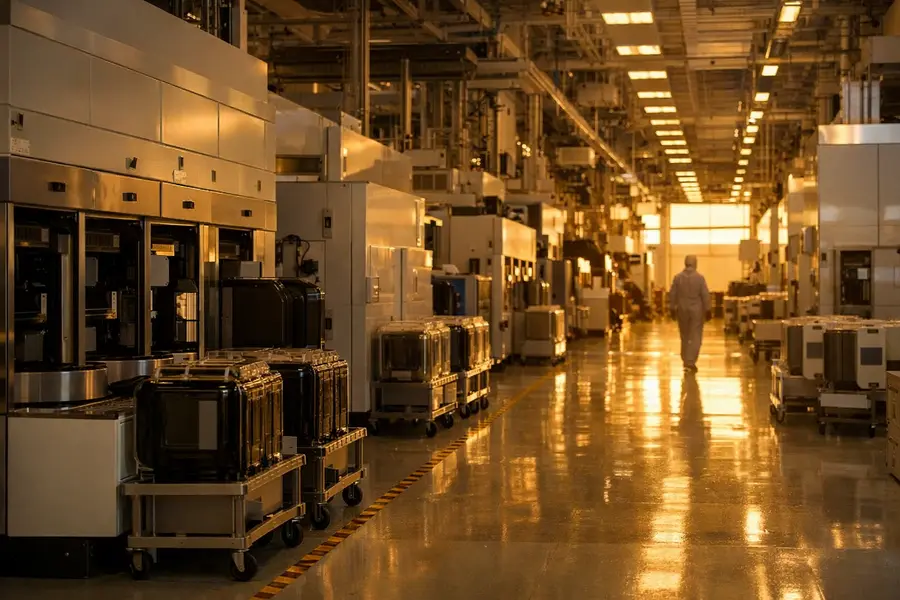
Intel fell another 8.8% on Monday after its worst day since 1974, and the Nasdaq-100 slipped into a correction as the chip selloff reached $3.7 trillion.
- Intel (INTC) fell 8.8% Monday after a 28.6% plunge Friday, the second-worst session in its history.
- Chip and memory stocks have lost about $3.7 trillion in market value since Oct. 6.
- The Nasdaq-100 closed more than 10% below its Oct. 6 record, confirming a correction.
Lead
Intel (INTC) shares fell a further 8.8% on Monday, Nov. 2, extending a collapse that began Friday when the company issued a fourth-quarter forecast far below expectations. The slide pushed the Nasdaq QQQ complex, the Nasdaq-100 index and the exchange-traded fund (QQQ) that tracks it, into correction territory, defined as a drop of 10% or more from a recent peak. Chip and memory stocks have now shed about $3.7 trillion in market value since Oct. 6, when the Nasdaq-100 set its record close of 31,224.47.What Happened to Intel Shares?
Intel shares dropped 28.6% on Friday to close at $65.76, down from $92.07 the previous session, the second-largest one-day fall on record behind the 29.9% decline on July 5, 1974. The move erased nearly $140 billion in market value. The U.S. government, which holds about 433 million Intel shares through the Commerce Department, saw its stake lose roughly $11 billion in a single session.
The trigger was guidance. Intel projected fourth-quarter revenue of $15 billion to $16 billion against consensus near $17 billion, and adjusted earnings of $0.25 per share against the $0.43 expected. The company cited weak personal computer demand, shortages of memory, substrates and other components, and an accident at its Kiryat Gat facility in Israel, which is expected to reduce revenue by about $600 million across the fourth quarter and first quarter of 2027.
On Monday, Intel opened higher in premarket trading before reversing, and closed down 8.8%, near $60.
Why Did the Chip Selloff Spread So Widely?
The selloff spread because Intel's warning exposed a shared vulnerability: component shortages and softer consumer hardware demand that reach well beyond one company. Advanced Micro Devices (AMD), Dell Technologies (DELL) and HP Inc. (HPQ) each fell roughly 10% on Friday. The Philadelphia Semiconductor Index dropped 7.2% that day and a further 3.4% Monday, a three-day decline of about 12%. The group lost more than $400 billion in market value in a single session.
The weakness in Intel's outlook contrasted with a strong third quarter. Revenue reached $16.5 billion, up 21% from a year earlier, and the Data Center and AI segment generated $7.3 billion, up 78%. Client computing revenue fell 5% to $8.1 billion. Investors focused on the forward guidance, not the quarter just reported.
The pressure was amplified by concerns over the cost of artificial intelligence infrastructure. Results from Amazon (AMZN) and Alphabet (GOOGL) last week renewed questions about how much capital is required to build out AI capacity and when returns will arrive. On Monday, Oracle (ORCL) fell about 8% after announcing a $10 billion stock offering to fund AI expansion.
How Did the Broader Market Trade?
The Nasdaq Composite fell 1.07% to 25,164.36 on Monday, following Friday's 2.86% drop, its worst session since June. The S&P 500 slipped 0.51% to 7,541.40, after losing 1.82% Friday. The Dow Jones Industrial Average gained 0.41% to 51,983.98, supported by industrial and housing-related names such as Sherwin-Williams and Home Depot.
Within semiconductors, Marvell Technology (MRVL) tumbled 12.72% and Micron Technology (MU) lost 5.78%. Nvidia (NVDA) and Apple (AAPL) each declined about 1% to 2%. The sector-focused fund SMH tracked the semiconductor index lower.
Oil fell about 7.6%, its sharpest drop in three months, on signs of diplomacy between the United States and Iran. Lower crude cushioned the broader market and helped value-oriented sectors, but it did not offset the weight of technology, which accounts for a large share of index capitalization.
What Does the Nasdaq Correction Mean for Markets?
A correction means the Nasdaq-100 has fallen more than 10% from its peak, and it is the third such episode of 2026. Before Monday's open, Nasdaq futures had already pointed to that outcome. The index ended the day down 1.4%, confirming the threshold, with AI and chip stocks accounting for most of the value lost.
The pattern of rotation is visible in the day's winners. Capital moved from AI-linked technology names toward cyclical and defensive sectors, a shift also seen in earlier chip-led drawdowns this year, when investors turned to bonds and other equities for safety.
Strategic Context for Intel
Intel's setback complicates a turnaround that had gained momentum under CEO Lip-Bu Tan. The data center business, which has nearly matched the PC division in revenue, is growing at its fastest pace in 15 years by the company's own account. But supply constraints are limiting how quickly that demand converts into shipments, and the memory shortage that is raising PC component costs is weighing on client sales at the same time.
For the broader industry, the guidance shows that the AI build-out is lifting some segments while squeezing others. Memory, substrates and advanced packaging capacity are the bottlenecks, and they affect both server and consumer hardware makers.
Outlook
Near-term direction for the chip sector depends on three variables: whether memory and substrate supply improves, whether upcoming earnings from AI-exposed companies, including AMD's report on Tuesday, confirm or contradict the demand picture, and whether capital spending plans at large technology companies hold steady. Intel's next test is delivery on its fourth-quarter targets and any update on the Israel facility. With the Nasdaq-100 now in a correction and U.S. midterm elections this week, volatility is likely to remain elevated.
Mentioned tickers: INTC, AMD, DELL, HPQ, MU, MRVL, NVDA, AAPL, ORCL, AMZN, GOOGL, QQQ, SMH