Pomegra
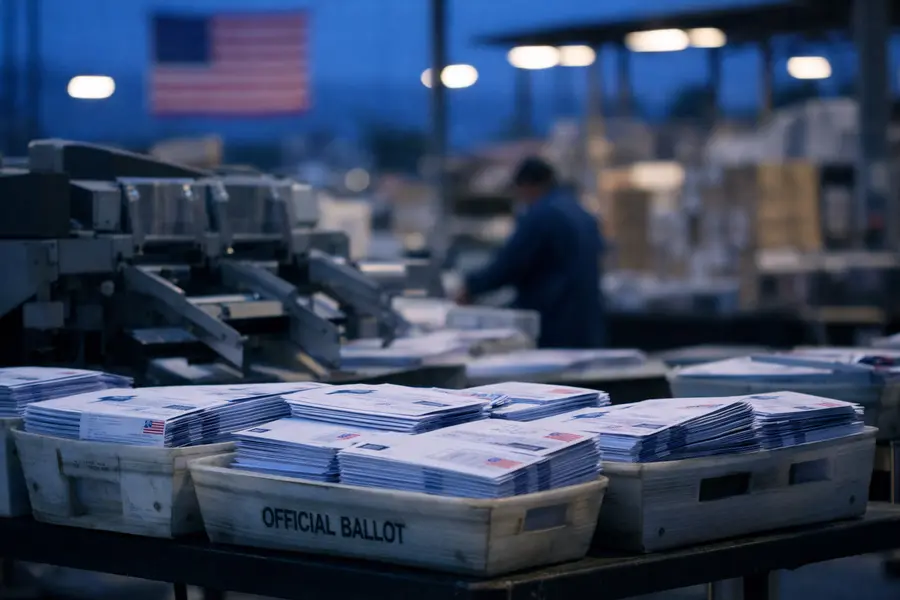
Stock market today: Wall Street holds its breath on midterm results as prediction markets favor a Democratic sweep and Friday's October jobs report looms.
- Dow rose 0.41% to 51,983.98 on Monday while the S&P 500 fell 0.5% and Nasdaq lost 1.07%.
- Prediction markets price a Democratic sweep of Congress at 74% to 78%.
- October payrolls, due Friday, are forecast at 45,000 to 65,000 with unemployment near 4.2%.
Lead
U.S. equities enter Election Day on a split footing. The Dow Jones Industrial Average gained 213.67 points, or 0.41%, to 51,983.98 on Monday. The S&P 500 slipped about 0.5% to roughly 7,541 and the Nasdaq Composite dropped 1.07% to 25,164.32. A morning rally faded as technology and AI-linked shares extended the prior week's selloff. Futures were mixed ahead of Tuesday's open, with investors holding positions until the midterm results and the October employment report on Friday.
What Are Prediction Markets Pricing for the Midterms?
Prediction markets price a Democratic sweep of Congress at between 74% and 78%. Kalshi showed a sweep at 74% late Monday, with a Democratic House and Republican Senate at 21%. Polymarket put a sweep at 78% and the split outcome at 18%. Decision Desk HQ's model gives Democrats an 84% chance of winning the House and 65% in the Senate.
Republicans hold a 53-47 Senate majority, with the vice president breaking ties, so Democrats need a net gain of four seats. The odds of a full sweep have risen from 39% in February.
Markets have largely absorbed a Democratic House. The open question is the Senate, because unified opposition control would shape the budget, appropriations and oversight of tariff and energy policy. Divided government has historically limited legislative change, which is one reason equity reaction to midterm outcomes has often been short-lived.
Why Did Tech Fall While the Dow Rose?
Capital rotated out of technology and into cyclical and value shares on Monday, which lifted the Dow while the Nasdaq fell. The move extended a sell-off in AI-related names that began late last week, as investors questioned the pace of AI infrastructure spending. Investors who track the nasdaq qqq complex saw the heaviest pressure, with the Invesco QQQ Trust (QQQ) lagging the SPDR S&P 500 ETF Trust (SPY).
Large-cap names diverged. Amazon (AMZN) and Tesla (TSLA) gained, while Nvidia (NVDA) was little changed in a weak semiconductor tape. Apple (AAPL) and Qualcomm report earnings this week, giving the sector another test.
Oil and Treasuries: The Macro Backdrop
Oil provided the largest cross-asset move. Brent crude fell more than 7% to settle below $105 a barrel, its lowest level in four weeks. West Texas Intermediate dropped about 7.4% to near $96. The decline followed signs of a diplomatic path in the U.S.-Iran conflict. Iran's leadership approved talks aimed at ending the months-long war, and President Trump said Tehran wants to make a deal.
Lower crude eases pressure on inflation expectations. Treasuries were mixed. The 10-year yield fell more than 2 basis points to 4.906%, while the 2-year yield rose more than 1 basis point to 4.594%. The correlation between oil and yields, which was strong earlier this year, weakened in October.
The federal reserve left interest rates unchanged at its latest meeting but showed deeper division among officials over the outlook, a divide sharpened by uncertainty from the Middle East conflict.
What Does the October Jobs Report Mean for Interest Rates?
The October jobs report, due Friday, will shape the interest rates outlook by showing whether hiring has stabilized after a weak September. Forecasts for nonfarm payrolls range from 45,000 to about 65,000, against 29,000 added in September. Private employers are expected to add about 50,000 jobs while the public sector sheds about 5,000. The unemployment rate is projected to hold near 4.2%, with average hourly earnings up 0.3% on the month and annual wage growth easing to about 2.9%.
A reading near forecast would keep the labor market in a low-hiring, low-firing pattern, which supports the case for a patient Fed. A sharp upside surprise would reinforce those worried about inflation, while a negative print would raise questions about the growth outlook.
The week also includes JOLTS job openings on Tuesday, ADP private payrolls on Wednesday, and productivity and jobless claims on Thursday.
Strategic Context: Why Midterms Matter Less Than Earnings and Rates
Election outcomes affect fiscal negotiations more than the macro trajectory. A Democratic Congress would likely seek to constrain spending and tariff policy, but a divided or narrowly held Senate limits what can pass. Longer-dated Treasury yields remain sensitive to deficit financing, and any perceived expansion of spending commitments can pressure the long end of the curve.
For equities, corporate earnings, AI capital expenditure, inflation and the rate path remain the dominant drivers. That helps explain why the S&P 500 sits near record territory despite the election uncertainty and why Monday's moves tracked tech and oil more than politics.
Outlook
Polls close across the country tonight, and a Democratic sweep is the base case in prediction markets. Wall Street will first watch whether results confirm that pricing, then whether Senate control stays in doubt, which would extend uncertainty into the week. Friday's payrolls report is the next scheduled catalyst and will test the labor market's resilience. Oil and the Iran talks remain the largest swing factors for yields and inflation expectations. The tech sell-off, set against the strength of cyclicals, will be tested by Apple and Qualcomm earnings.