Pomegra

Houthi strikes on Ras Tanura, Jeddah and Jazan lifted Brent toward $95 as Saudi Arabia said it intercepted most missiles and drones fired at the kingdom.
- Brent settled at $94.61 on Nov. 25, up 3.5%, and traded near $95.30 on Nov. 26.
- Saudi forces intercepted missiles and drones, but a projectile hit Jazan port and a Riyadh tower was struck.
- OPEC+ ministers meet Nov. 29 to set 2027 quotas, which adds to supply uncertainty.
Lead
Yemen's Houthis said they struck Saudi Arabia's Ras Tanura refinery and the Red Sea ports of Jeddah and Jazan on Nov. 25-26. The attacks pushed the crude oil price sharply higher. Brent settled at $94.61 a barrel on Wednesday, a gain of $3.21, or 3.5%. It traded around $95.30 on Thursday, up about 0.7%. U.S. West Texas Intermediate closed at $83.68 on Wednesday, up 2%, and rose to roughly $84.37 on Thursday.
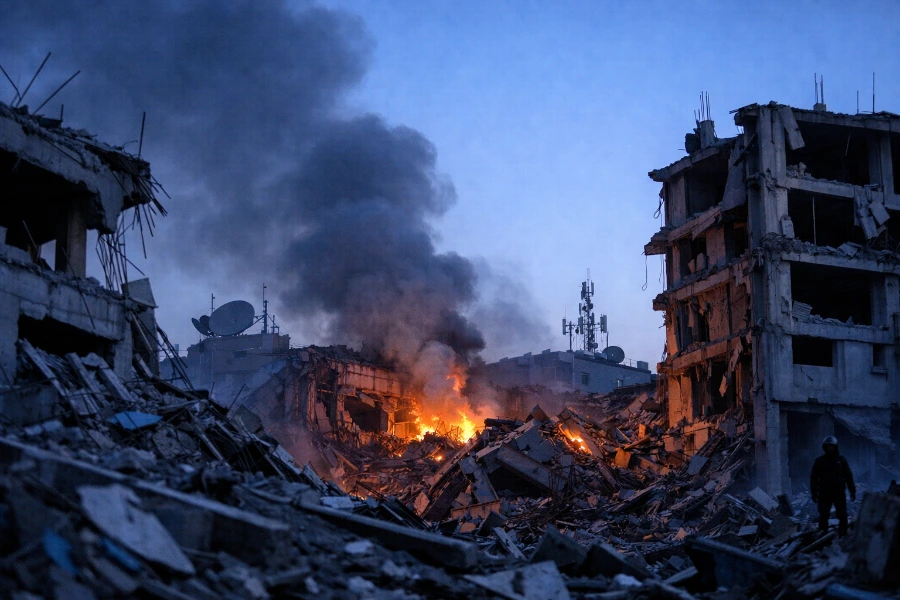
Saudi Arabia said its air defenses intercepted most of the incoming fire. The coalition said it destroyed four drones over Ras Tanura in the Eastern Province. It did not confirm damage to the facility, but satellite images showed thick black smoke over the site.
What Did the Houthis Attack?
The Houthis targeted three oil-linked sites and the Saudi capital's financial district. Military spokesman Yahya Saree said the strikes on Ras Tanura caused fires at the refinery. The complex has a refining capacity of about 550,000 barrels a day and sits beside one of the world's largest crude export terminals.
The group also said it hit the Red Sea ports of Jeddah and Jazan. Both are key outlets for western Saudi trade and fuel distribution. A projectile struck Jazan port and caused minor damage with no casualties. Saudi forces intercepted a drone near Jeddah port.
In Riyadh, a tower belonging to the Public Investment Fund was struck, and 11 people were wounded. The Houthis described the operation against the capital's financial district as a three-phase attack.
How Much Did Saudi Arabia Intercept?
Saudi air defenses intercepted most of the attacks. The coalition's account listed two ballistic missiles fired at Riyadh, two drones over the Eastern Province and a cruise missile heading for the western region. All were destroyed, along with the drone near Jeddah. Maj. Gen. Turki Al Malki gave the figures.
The interceptions limited physical damage, but they did not remove the risk. The Houthis have shown they can reach the kingdom's energy and financial centers on opposite coasts, more than 1,000 km apart.
Why Did the Crude Oil Price Jump?
The crude oil price rose because traders paid more to cover the risk of a supply disruption at Saudi Arabia's main refining and export hub. Ras Tanura handles a large share of the kingdom's seaborne crude. Any outage there would remove barrels from the market quickly. Reuters confirmed the refinery came under attack, though the effect on output was unclear.
Brent had already gained more than 2% on Nov. 24. The latest move extends a rally driven by security concerns rather than tight supply. The International Energy Agency's November report points to a global surplus, which has capped earlier rallies. Holiday-related short covering added to the move.
Shipping risk in the Gulf compounded the reaction. An oil tanker struck a naval mine and caught fire in a restricted zone of the Strait of Hormuz on Wednesday, and a container vessel was targeted nearby. Roughly a fifth of global oil consumption passes through the strait.
U.S. data offered little offset. Crude inventories rose by 1.1 million barrels to 418.9 million barrels in the week ended Nov. 20, less than expected. Exports fell by about 1.2 million barrels a day. Total products supplied averaged 20.8 million barrels a day, up 2.2% from a year earlier.
Geopolitical Dimension
The strikes were framed as retaliation for coalition attacks on Hodeidah port in western Yemen. They mark the sharpest escalation since Yemen's civil war reignited in July 2026. Hodeidah is the Houthis' main entry point for imports. Strikes there put pressure on the movement's supply lines and give it a stated reason to target Saudi ports in return.
The geography matters for energy flows. Saudi Arabia ships crude from the Gulf coast at Ras Tanura and from the Red Sea coast at Yanbu and Jeddah. The East-West pipeline lets Riyadh reroute some exports away from Hormuz, and that reroute depends on the Red Sea ports now under threat. Attacks on Jeddah and Jazan therefore narrow the kingdom's fallback options if Gulf shipping is disrupted.
The Houthis are aligned with Iran. This ties the Yemen conflict to wider Gulf tensions and raises the chance that insurers and shipowners will price more risk into tanker routes.
What Comes Next for Oil Prices?
Oil prices will turn on whether the attacks cause lasting damage or are contained. If Ras Tanura keeps operating normally, the risk premium may fade, because inventories are comfortable and forecasts show a surplus. A confirmed outage, or a further hit on export infrastructure, would test Brent's recent range above $90.
The next scheduled catalyst is the OPEC+ ministerial meeting on Nov. 29, which will set 2027 production quotas. Iraq and Kazakhstan are pressing for higher capacity estimates to improve their allocations. Russia has said capacity reviews should finish by year-end. A larger quota framework would add supply into a market that already expects a surplus. Against that, the security backdrop leaves less margin for error.
Over the next three to twelve months, the main variables are the tempo of coalition strikes on Hodeidah, the Houthis' ability to sustain long-range fire, and shipping conditions in Hormuz and the Red Sea. Higher war-risk insurance and rerouted cargoes would raise delivered fuel costs even if physical supply holds.
Outlook
The Nov. 25-26 attacks exposed Saudi energy and financial assets to Houthi long-range fire, and Brent moved toward $95. Saudi interceptions limited damage, but a hit on Jazan port and a struck Riyadh tower show that some fire is getting through. With a surplus forecast and OPEC+ talks days away, prices depend on whether Ras Tanura keeps running and whether the Hodeidah-Saudi exchange widens.
Mentioned tickers: 2222.SR