Pomegra
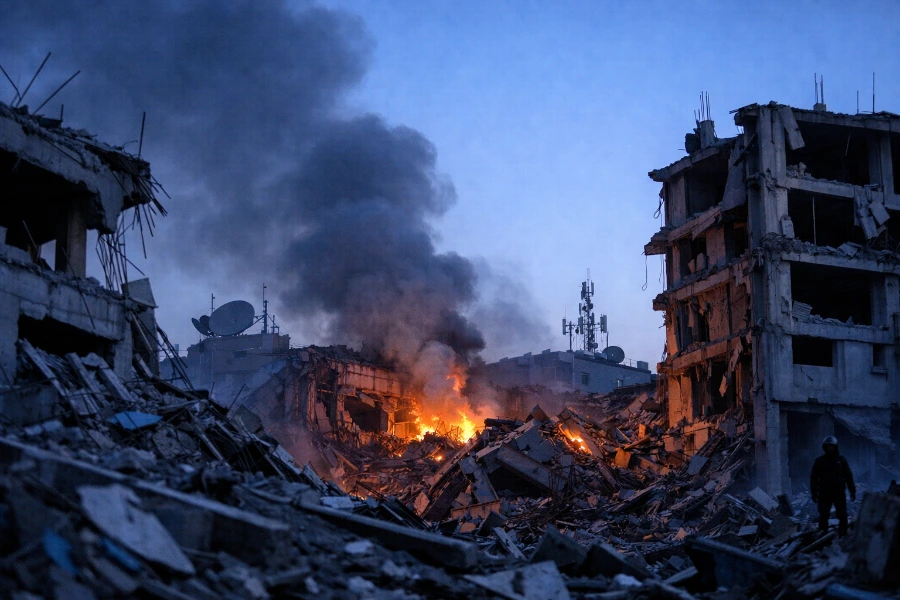
Israel's overnight strike on Khaled Abu Nada, who ran Hamas's economic portfolio, extends a string of targeted killings that is testing the stalled Gaza ceasefire.
- Israel said an overnight strike in Deir al-Balah killed Hamas economy chief Khaled Abu Nada and his wife.
- He is the third senior Hamas official killed in three days, after two internal security chiefs.
- Israel says it has killed about 80 Hamas operatives in a month, while the US presses Netanyahu to advance the ceasefire plan.
Lead
Israel said a strike overnight on Wednesday into Thursday, November 26, killed Khaled Abu Nada, the Hamas official responsible for the group's economic portfolio. The strike hit a residential apartment in Deir al-Balah, central Gaza, and also killed his wife. Prime Minister Benjamin Netanyahu and Defense Minister Israel Katz confirmed the operation, which the Israeli military and the Shin Bet security service carried out jointly. Netanyahu described it as part of a series of targeted killings. Israeli officials put the number of Hamas operatives killed over the past month at about 80.
Who Was Khaled Abu Nada?
Khaled Abu Nada was a senior member of Hamas's political bureau who headed its economy and education portfolios. Palestinian sources also identified him as deputy education minister in Gaza's Hamas-run administration. The Israeli military said he managed the group's banks and investment network and directed funds toward its military buildup. It said his death "deals a blow to the economic operations" of Hamas and to its ability to set economic policy.
Israel's targeting of a financial official reflects a view that Hamas's money channels, covering banking, investment and payments to fighters and civil servants, are as important as its weapons stockpiles. Cutting them would strain the group's capacity to govern and to rebuild its forces after the war.
Why Is Israel Killing Hamas Officials During the Ceasefire?
Israel is pursuing its stated goal of dismantling Hamas while the disarmament terms of the October 2025 ceasefire remain unresolved. The agreement, built on a 20-point US plan, has stalled on sequencing. Netanyahu has refused to move forward until Hamas is fully disarmed. Hamas refuses unilateral disarmament without a staged Israeli withdrawal. Israel holds more than half of Gaza's territory, and Katz has said Israeli forces will not withdraw until Hamas is dismantled.
The killing of Abu Nada followed those of Naim Abu Nahl, head of Hamas internal security across Gaza, on Tuesday, and Mohammed Abu al-Awf, who led internal security in northern Gaza, on Wednesday. Taken together, the three strikes point to a campaign aimed at the institutions through which Hamas administers the territory, not only its armed wing.
How Has Hamas Responded?
Hamas called the strikes "systematic assassinations" and a continuous breach of the ceasefire, and said they violate international and humanitarian law. It blamed Israel and also the US-backed Board of Peace, the body set up with UN Security Council backing to oversee the ceasefire plan, for failing to prevent them. Hamas has so far not announced a formal break with the truce.
Palestinian health authorities say more than 1,600 people have been killed in Israeli strikes since the ceasefire took effect last October. Israel says it acts against militants who pose an immediate threat or who rebuild military capacity.
What Is Washington Doing?
The Trump administration is pressing Netanyahu to meet Israel's obligations under the ceasefire plan. Jared Kushner has urged Israel to adopt "economic diplomacy" over a constant wartime posture. He has also warned that Israel faces a choice between emerging from the October 7 attacks stronger and drifting toward pariah status. The public pressure shows Washington's priority is reconstruction and a political track, and that the assassination campaign complicates both.
Regional and Economic Dimension
Reconstruction financing is the main economic channel at stake. Gulf and European donors have tied large pledges to a credible security arrangement and a governance structure that sidelines Hamas. Continued strikes raise the risk that mediators in Egypt and Qatar lose leverage over Hamas, and that donors delay disbursements. Insurers and shipping firms, already wary after prior regional escalations, price Gaza-linked violence into Eastern Mediterranean and Red Sea risk premiums, though no new market disruption followed the strike.
Outlook
Over the next three to twelve months, the central question is whether the targeted-killing campaign forces Hamas into concessions on disarmament or collapses the truce. Hamas is weighing its response. Israel has signaled the strikes will continue, and Washington is pushing for movement on the ceasefire plan's next phase. A Hamas retaliation or a formal suspension of the truce would raise the risk of full-scale fighting and push back reconstruction. A US-brokered sequencing deal on disarmament and withdrawal would be the main way to reverse the current direction.
Mentioned tickers: None