Pomegra
S&P Global placed Nvidia's AA credit rating on negative watch over governance gaps, while a halt on AI server shipments to four Southeast Asian states adds export-control risk.
- S&P put Nvidia's AA rating on CreditWatch negative on Nov. 25, with a one-notch cut to AA- possible within 90 days.
- Nvidia shares closed down 3.91% at $149.30 after falling as much as 9.1% intraday.
- Nvidia has told partners to stop AI server shipments to Malaysia, Singapore, Thailand and Indonesia.
Lead
Nvidia (NVDA) had its AA credit rating placed on CreditWatch with negative implications by S&P Global Ratings (SPGI) on Wednesday, Nov. 25. The agency cited board independence, oversight of senior executives and succession planning after CEO Jensen Huang's exit and rapid return this month. The same week, the chipmaker instructed manufacturing partners to halt AI server shipments to four Southeast Asian countries after Washington tightened export licensing. Together, the two developments give the world's most valuable AI chip supplier a governance problem and a trade-compliance problem at once.What Did S&P Say About Nvidia's Credit Rating?
S&P said the AA rating may be lowered by one notch, to AA-, within 90 days unless the concerns are resolved. The agency said recent events raised questions about the effectiveness of Nvidia's management and governance framework, including board independence and "key man" risk, meaning heavy reliance on one executive.
S&P identified four weak spots: board independence, oversight of senior executives, geopolitical risk management and the absence of a succession plan. It pointed to long-serving directors and said weak executive oversight leaves the company dependent on Huang. The action is a governance call, not a comment on demand. Nvidia's AI accelerator business remains the central driver of its earnings.
Moody's (MCO) took a different view. It kept Nvidia at Aa1 with a stable outlook and said Huang's return eases near-term uncertainty.
How Did Huang's Ouster and Return Unfold?
Huang resigned as CEO and director in mid-November, and Chief Financial Officer Colette Kress became interim CEO while remaining CFO. Harvey Jones was named the board's first chair. Nvidia did not give a detailed reason in its initial filing.
On Nov. 23 the board voted unanimously to reinstate Huang as president and chief executive. Nvidia said the board received input from senior levels of the US government and concluded his return poses no national security risk. President Donald Trump has said he spoke with the board about the decision. An independent committee investigation into foreign intelligence targeting of Huang continues. The board has also formed a National Security and Export Control Committee made up of independent directors and is recruiting a chief compliance officer.
How Did Nvidia Shares React?
Nvidia stock closed at $149.30 on Nov. 25, down 3.91%. Shares fell as much as 9.1% to $141.17 during the session before buyers returned. The move weighed on other ai stocks tied to data-center spending. It also showed how sensitive the company's valuation is to questions about leadership and policy.
Why Did Nvidia Halt Server Shipments to Southeast Asia?
Nvidia halted the shipments because new US rules now require export licenses for advanced chips going to several Southeast Asian countries. The Financial Times reported that Nvidia told manufacturing partners to stop shipping servers to Malaysia, Singapore, Thailand and Indonesia. Server makers such as Dell Technologies (DELL) and Super Micro Computer (SMCI) told customers in those markets that their orders would not be released.
The rules took effect the week before the halt. Their aim is to close routes through which Chinese firms are believed to obtain restricted AI chips, often by renting capacity from cloud and data-center operators in neighboring countries. The Commerce Department also moved to add Singapore-based Megaspeed International and affiliated entities in Malaysia and Thailand to its Entity List. Megaspeed is a Nvidia partner and has faced scrutiny over possible diversion of advanced chips to China.
It is not clear how long the halt will last. Nvidia, Dell and Supermicro did not immediately comment.
Geopolitical Dimension
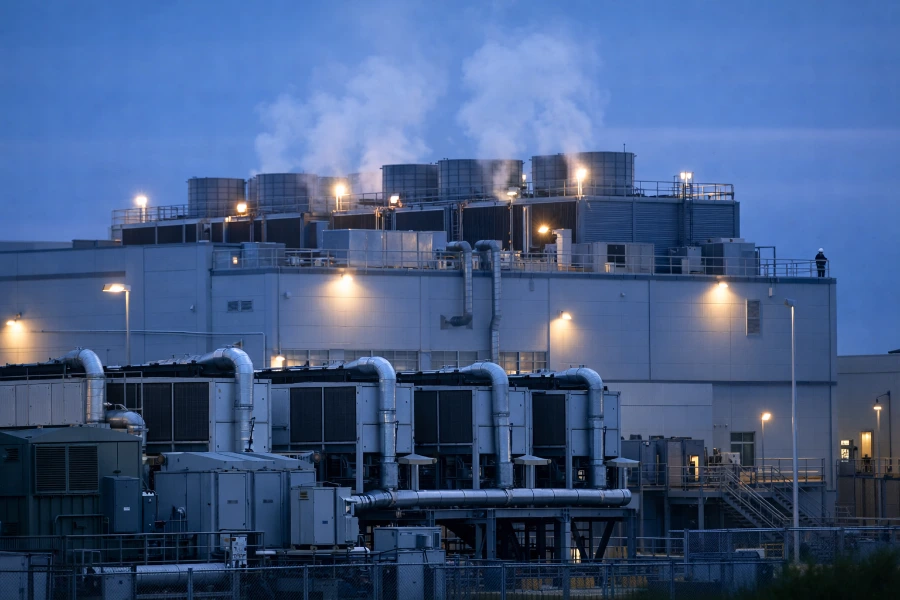
Southeast Asia has become a major location for AI data-center construction. Malaysia's Johor state and Singapore host large facilities. Thailand and Indonesia are expanding capacity to attract hyperscale tenants. A licensing regime moves those projects from routine procurement to case-by-case approval. That delays deployments and adds compliance costs for server makers and cloud customers.
The two stories are linked. S&P listed geopolitical risk management among its concerns, and Nvidia's new export-control committee and compliance hire respond directly to that. How quickly the company restores shipments under the license rules will show how well that framework works.
What Comes Next for Nvidia?
S&P's 90-day window runs to late February. Over that period the agency will assess whether the board strengthens independence, adopts a succession plan and improves oversight of executive conduct. Resolution could mean the rating is affirmed or lowered one notch. A downgrade to AA- would still leave Nvidia among the highest-rated corporate borrowers.
The near-term commercial question is the Southeast Asian shipments. A quick licensing path would limit revenue disruption. A prolonged pause would delay deliveries to customers in four markets and could push orders to rival suppliers or to other regions.
Outlook
Nvidia enters the final month of 2026 with strong demand for AI hardware, a CEO restored by the board with US government input and a rating on negative watch. S&P's decision turns on governance reforms over the next three months. The export-license rules for Southeast Asia will shape shipment timing and Nvidia's compliance posture into 2027.