Pomegra
Iran's IRGC says two tankers and a tugboat burned in the Strait of Hormuz, as Brent rose 2.6% to $97.09 and Trump denies immediate plans for new Iran strikes.
- Iran's IRGC said two tankers and a tugboat caught fire in the Strait of Hormuz, with one tanker striking a mine.
- Brent rose 2.6% to $97.09 and WTI gained 2.4% to $90.19 after both fell more than 8% the previous session.
- The WSJ reports officials are urging Trump to resume major combat operations; Trump says no new strikes are planned.
Lead
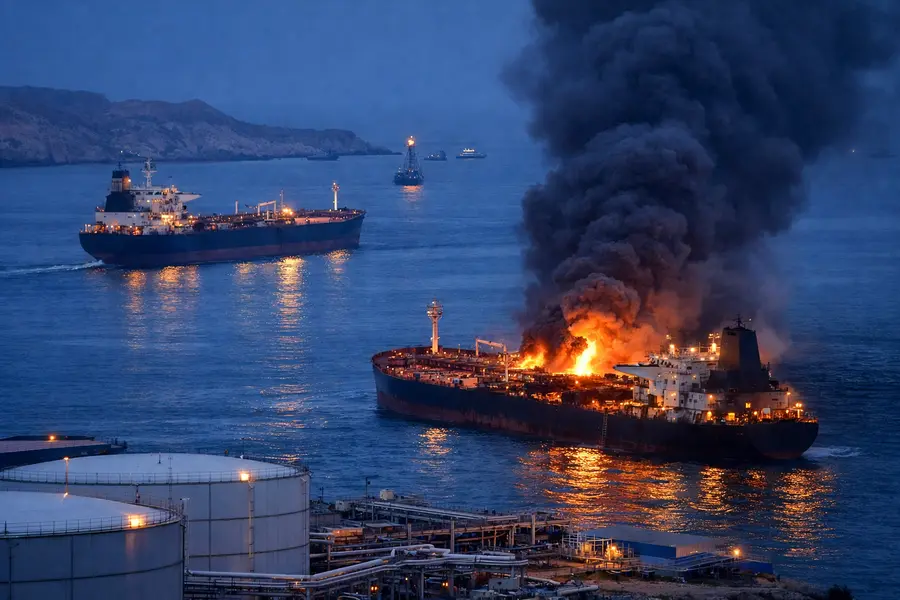
Iran's Islamic Revolutionary Guard Corps said on Thursday, November 5, that two oil tankers and a tugboat caught fire in separate incidents in the Strait of Hormuz, and that one of the tankers hit a mine. The report arrived as the crude oil price, followed on MarketWatch and other trading screens, was recovering from a steep sell-off. Brent futures rose 2.6% to $97.09 a barrel and West Texas Intermediate gained 2.4% to $90.19, after both benchmarks dropped more than 8% in the prior session to their lowest since August 31.
What Happened in the Strait of Hormuz?
The IRGC said the vessels caught fire after attempting to use unauthorized routes through the waterway. One tanker struck a mine while crossing a passage south of the strait. A second, larger tanker caught fire as it exited through the eastern part of the strait. A tugboat that approached the second vessel to help fight the blaze also caught fire.
The IRGC statement has not been independently verified, and no casualty figures were included in the initial account. The incidents fit a pattern of sea mines and restricted routing that has complicated commercial transit through the strait since the US-Israeli war on Iran began in late February. About a fifth of global oil consumption normally passes through the chokepoint, which is why even isolated incidents register in energy markets.
Why Is the Crude Oil Price Rising After a Sharp Drop?
The crude oil price rebounded because the tanker fires revived supply-risk concerns just after a historic sell-off, which had been driven by the US midterm elections. Republican losses in Congress this week led traders to bet that political pressure would reduce the odds of further escalation under the Trump administration. Brent fell below $100 for the first time since October 7 as that view took hold.
Brent is more sensitive to geopolitical risk than WTI, which is anchored to domestic US supply, and it led the rebound. The bounce was modest against the prior session's decline. Physical flows also limit the upside: Gulf crude shipments through Hormuz have recovered to close to pre-war levels, adding barrels to a market that has already tipped into surplus. JPMorgan (JPM) estimated the global oil market ran a surplus of 1.4 million barrels a day in October, though commercial inventories in major consuming nations remain near 15-year lows.
Is Washington Preparing to Resume Major Combat Operations?
The WSJ reported that administration officials are pushing Trump to resume major combat operations against Iran, and that the White House has told Gulf partners to prepare for a short, intense campaign, potentially after the elections. The report also described a series of limited US strikes in recent weeks, some framed as defensive operations meant to degrade Iran's ability to threaten shipping in the strait. One official said the campaign was kept quiet to avoid signaling an intent to resume full-scale war.
Trump said there are no immediate plans for new strikes. Asked whether he was considering action against Iran after the midterms, he answered "No," and he has also said Iran wants a deal and that one could happen. The gap between the public line and the reporting on internal deliberations leaves markets without a clear read on timing.
Geopolitical Dimension
The strait's geography explains why this dispute carries outsized economic weight. The navigable channel is narrow, bounded by Iran to the north and Oman to the south, and tankers have few alternatives for moving Gulf crude to Asia. Mines and restricted passages give Tehran a low-cost means of imposing risk premiums on insurers and shippers without a formal closure.
Washington and Tehran have signaled openness to negotiations, but both sides retain escalation options. The IRGC's description of "unauthorized routes" asserts Iranian control over transit rules, a position the US and its Gulf partners dispute. Each incident raises war-risk insurance costs and tests the fragile restoration of shipping volumes.
What Comes Next for Oil Prices?
Oil prices depend on whether the diplomatic track or the military track prevails. Eurasia Group puts the probability of renewed US strikes on Iran at 60%, down from 65%, and the firm has cut the odds of a deal to 10%. It says a significant escalation would push Brent into a $110 to $125 range. Without escalation, the surplus in physical supply and the recovery in Hormuz transit point to softer prices.
Near-term markers include confirmation of the IRGC account from shipping operators, any further mine incidents along the southern passage, and statements from the White House after the midterm results. A resumption of large-scale strikes would likely override the supply cushion quickly, while credible talks would extend the decline seen this week.
Outlook
The Hormuz incidents added a risk premium to a market that had been pricing in de-escalation. Brent near $97 reflects two competing forces: a physical surplus and recovering Gulf exports on one side, and a contested chokepoint plus reports of pressure inside the administration for renewed combat on the other. Trump's denial of immediate plans for new strikes keeps the near-term baseline calm, but the outcome over the next three to twelve months will hinge on negotiations and on whether shipping through the strait remains safe.
Mentioned tickers: JPM