Pomegra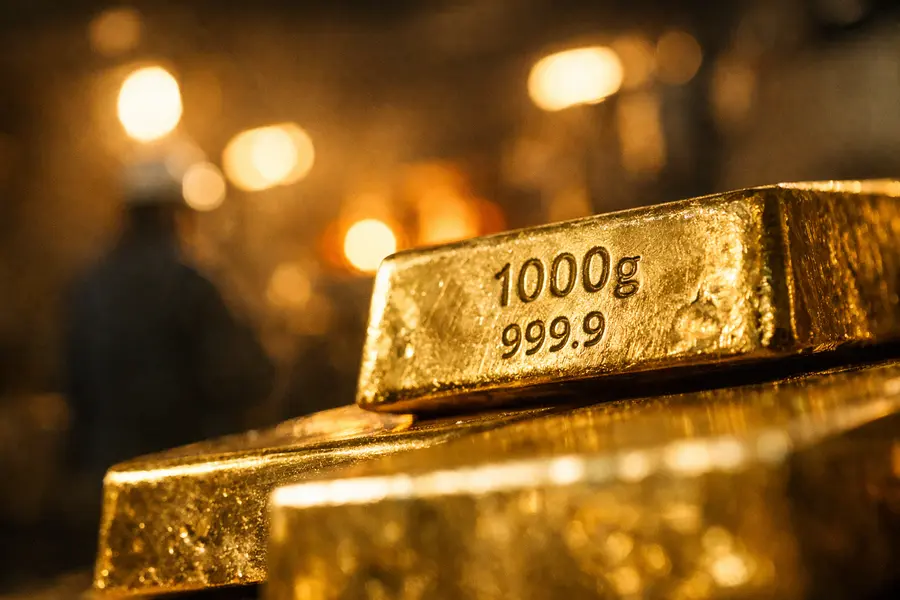
Gold tumbled to $4,358 per ounce and silver shed 3.73% on Tuesday as rising Treasury yields and a stronger dollar dismantled the geopolitical safe-haven premium built up during months of Strait of Hormuz tensions.
- Gold fell 1.86% to $4,358.74 on September 1, its sharpest single-session drop in weeks, as market-implied odds of a September Fed rate hike reached 70%.
- Silver (SLV) closed at $64.13 per ounce, an outsized 3.73% loss that exceeded gold's decline, as tightening expectations hit the dual-role metal harder.
- The 10-year Treasury yield reached 4.79-4.80%, the highest since January 2025, turning the rate-hike trade into the dominant force in precious metals pricing.
Lead
Gold settled at $4,358.74 per troy ounce on September 1 - a 1.86% one-day decline - as the 10-year Treasury yield closed at 4.79% and the U.S. Dollar Index rose 0.23% to 99.66, erasing the geopolitical risk premium that Strait of Hormuz disruptions had embedded in precious metals pricing across July and August. Silver compounded the retreat with a 3.73% loss to $64.13 per ounce. Market participants priced an approximately 70% probability of a Federal Reserve rate increase at the September meeting, making the tightening expectation the single most powerful variable in the precious metals equation for the first time in this cycle.
Why Did Safe-Haven Assets Fall Amid Active Geopolitical Tensions?
The Strait of Hormuz disruptions created a mechanism that ultimately worked against precious metals rather than supporting them. Rising energy costs driven by the standoff pushed inflation expectations materially higher, which amplified bets on Federal Reserve tightening. For non-yielding assets like gold (GLD) and silver, higher real interest rates represent a direct cost - the opportunity cost of holding metals against interest-bearing Treasuries widens as yields rise. The rate-hike trade, reinforced by the very geopolitical crisis that would historically have generated safe-haven inflows, proved dominant. Between February and May 2026, European natural gas prices rose 44%, Asian prices climbed 66%, and global oil prices advanced 50%, each increment adding pressure to inflation expectations and, through that channel, to rate pricing.
Dollar Strength and the Double Headwind for Precious Metals
The DXY held at 99.66 on Tuesday, extending its recovery from mid-year lows near 92, while the 10-year Treasury yield logged a four-week gain of 11.30 basis points and a twelve-month increase of 52.90 basis points. The combined effect on metals is compounding: a stronger dollar raises the effective cost of dollar-denominated gold for international buyers, compressing overseas demand, while elevated yields reduce the relative attraction of non-yielding stores of value. Both forces peaked simultaneously on September 1, producing the session's sharp selloff in what had been among the year's best-performing asset classes.
How Does This Change the Fed's September Calculus?
Market pricing moved decisively toward a September rate increase following commentary from Fed Chair Kevin Warsh, with implied probability settling near 70%. The current interest rates environment reflects an uncommon dynamic: the Hormuz conflict's inflationary output - through energy - has itself become an argument for tightening, inverting the conventional geopolitical playbook in which conflict drives safe-haven bids. Officials have signaled that supply-side inflation emanating from energy disruption carries the same policy implication as demand-driven price pressure, leaving the metals market caught between two hawkish inputs simultaneously.
Silver's Amplified Decline
Silver's 3.73% drop exceeded gold's 1.86% loss, consistent with the metal's dual monetary and industrial role. Rising rate expectations compress both the monetary premium and forward manufacturing demand projections, creating a layered selloff that pure monetary metals like gold do not face in the same form. December silver futures held at $64.69 per ounce as of September 2 trading, suggesting limited near-term recovery conviction.
Outlook
The rate-hike trade is positioned to remain the dominant force in precious metals as long as the 10-year Treasury yield holds near 4.80% and September Fed pricing stays above 60%. A de-escalation in Strait of Hormuz tensions that reduces energy prices could paradoxically support gold and silver by relieving inflation expectations and softening the rate-hike probability. Absent that shift, the dollar and real yields are likely to continue dictating price direction, with geopolitical risk functioning as a secondary variable rather than the primary safe-haven driver it occupied earlier in 2026. Gold and silver's extraordinary reversal against a backdrop of active conflict underscores how completely the tightening cycle has reordered the traditional hierarchy of macro forces.