Pomegra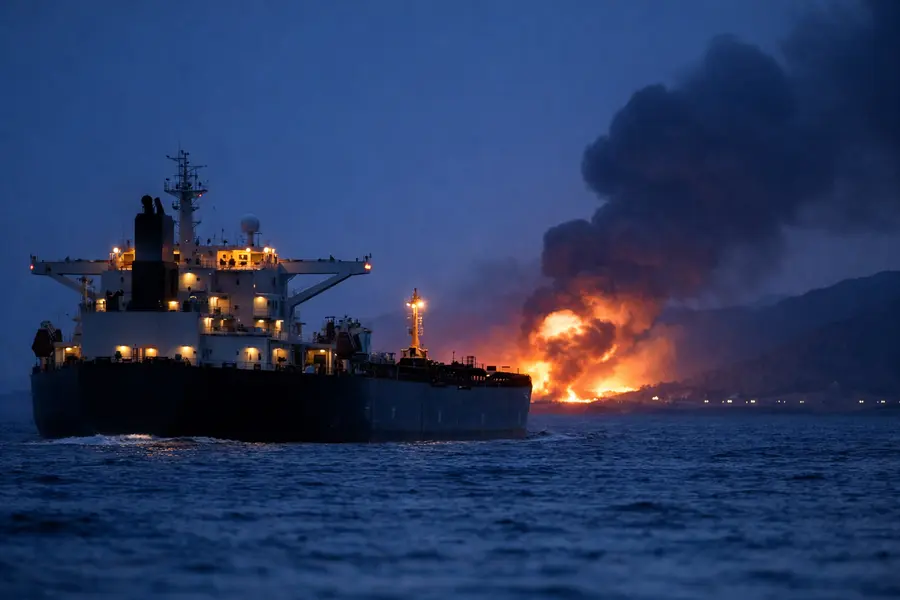
Projectile attacks in the Strait of Hormuz on September 1 drove tanker stocks FRO, NAT, and DHT sharply higher, each up roughly 60% year-to-date as sustained maritime disruption reshapes crude oil trade flows.
- Two oil supertankers were struck by projectiles near Khasab, Oman on September 1, 2026, hours after U.S. forces struck Iranian mine-launching positions on Larak Island.
- Frontline (FRO), Nordic American Tankers (NAT), and DHT Holdings (DHT) are up approximately 62.6%, 63.2%, and 59.1% year-to-date, ranking among the market's best-performing equities.
- Brent crude futures for October delivery reached approximately $89.53 per barrel, up more than 2% on the session following the attacks.
Lead
Two oil supertankers were struck by projectiles in the Strait of Hormuz on September 1, 2026, delivering a fresh shock to global crude oil markets and propelling tanker equities to new highs. The Very Large Crude Carrier Sidr, operated by Saudi Arabia's Bahri shipping company, was hit northeast of Khasab, Oman. The Senegal Prosperity, run by South Korea's Sinokor Group, was struck by three projectiles in the same corridor minutes later. The attacks came hours after U.S. forces targeted Iranian mine-laying infrastructure on Larak Island - a sequence that underscored how rapidly the conflict's tempo has re-accelerated since the U.S.-Israeli air campaign against Iran began on February 28, 2026.
Why Are Tanker Stocks 2026's Most Unlikely Top Performers?
The gains in Frontline (FRO), Nordic American Tankers (NAT), and DHT Holdings (DHT) rest on a simple freight-market dynamic: disruption in the Strait of Hormuz forces crude oil onto far longer routes around Africa's Cape of Good Hope, adding 30 to 40 days to key Middle East-to-Asia voyages and sharply increasing the number of vessel-days required to move the same volume of oil. More days at sea translate directly into higher utilization rates, elevated freight revenue, and stronger earnings for tanker operators - particularly those running Very Large Crude Carriers.
FRO, NAT, and DHT are up approximately 62.6%, 63.2%, and 59.1% year-to-date respectively, cementing their position as the market's top-performing group through the first eight months of 2026. VLCC rates from the Middle East to Asia reached their highest levels since at least November 2005 in the weeks following the outbreak of hostilities. Frontline reported 67% year-over-year revenue growth in the first quarter of 2026, with more than 80% of near-term voyage days locked under contract. DHT Holdings posted nearly 135% year-over-year revenue growth in the same period, aided by its lean balance sheet and low debt load.
What Has Happened Inside the Strait of Hormuz?
The waterway - through which roughly 25% of the world's seaborne crude oil and approximately 19% of global liquefied natural gas normally passes - has been effectively closed to standard commercial transit for the bulk of 2026. Iran's Revolutionary Guard Corps issued navigation warnings immediately after the air campaign began, deployed sea mines, and launched projectile and drone strikes against merchant vessels. Daily vessel crossings collapsed from more than 130 before the war to single digits by mid-year. The September 1 strikes on the Sidr and Senegal Prosperity represent the latest iteration of a sustained campaign that has already disabled dozens of commercial ships across five months of hostilities.
Attempts to reopen the strait have repeatedly stalled. Declarations in late August 2026 that the waterway had been demined were overtaken within days by fresh attacks, indicating that Iran retains sufficient operational capacity - through distributed projectile and fast-boat assets as well as remaining mine stocks - to deny safe transit even when specific launchers are destroyed.
Market Reaction
Brent crude futures for October delivery rose to approximately $89.53 per barrel on September 1 following news of the supertanker strikes. Energy equities broadly gained, but tanker stocks led the advance as investors recalibrated the probability of an imminent Hormuz reopening. NAT announced a cash dividend of $0.27 per share with an ex-dividend date of September 10, 2026, reinforcing the income argument that has drawn institutional capital into tanker equities throughout the year.
War-risk insurance premiums for vessels attempting to transit the strait have risen by multiples of pre-conflict rates, effectively pricing out most commercial operators even during brief windows of reduced Iranian activity and further concentrating cargo on longer routes that benefit tanker operators.
How Has This Reshaped Global Crude Oil Trade?
Asian refiners, which historically sourced roughly half their crude feedstock from the Middle East, have been the most acutely affected buyers, paying elevated spot premiums to secure barrels from West Africa, the Americas, and the North Sea. European buyers face parallel displacement dynamics. The net effect has been a structural lengthening of global trade routes that tightens the effective tanker supply without any change in fleet size - a condition that historically produces sustained rate strength for operators concentrated in the VLCC segment.
Outlook
The primary catalyst for a reversal in tanker freight markets is a durable ceasefire accompanied by verifiable mine-clearing operations sufficient to restore insurer confidence in Hormuz transits. Neither condition is imminent. As long as rerouting around Africa persists, ton-mile demand remains structurally elevated, and the freight-rate environment that has driven FRO, NAT, and DHT to roughly 60% year-to-date gains through September 1 remains intact. The September 1 attacks have reset expectations that had begun to price in a near-term diplomatic resolution, extending the timeline for any normalization of crude oil shipping patterns through the world's most critical maritime chokepoint.