Pomegra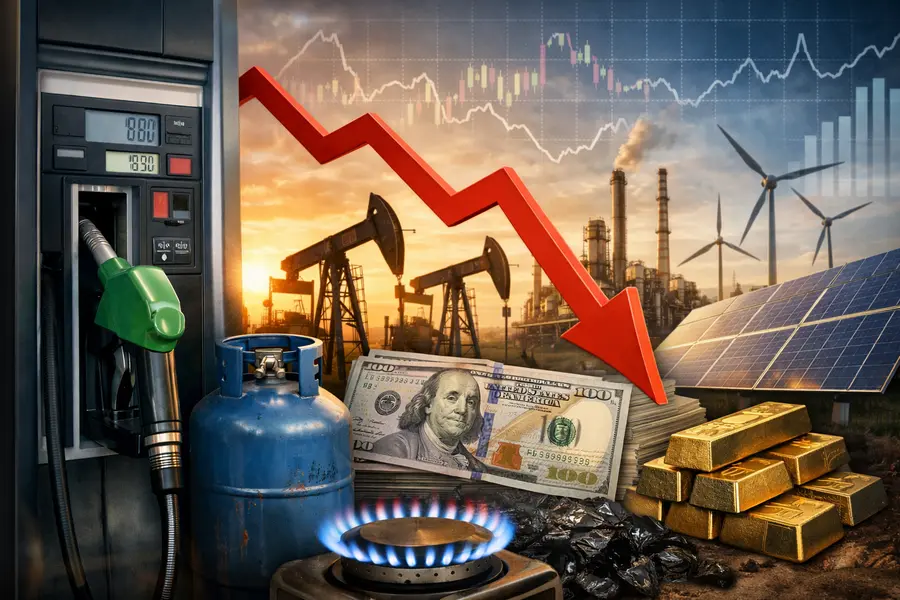
NY Fed President John Williams says falling US energy prices have improved his near-term inflation outlook, even as the Federal Reserve keeps rates on hold.
- Williams says energy cost declines make him "a little bit more positive" on the near-term inflation outlook.
- Brent crude has fallen roughly 20% from 2026 highs to around $72.68 a barrel as Middle East tensions recede.
- The FOMC held the federal funds rate at 3.50%–3.75% in June and stripped explicit forward guidance from its statement.
Lead
Federal Reserve Bank of New York President John Williams said Tuesday that a sustained US energy price retreat is making him incrementally more optimistic about the inflation outlook, suggesting headline price pressures could ease meaningfully in coming months even as the central bank holds its benchmark rate steady. Speaking on Fox Business on July 7, Williams tied the improved view directly to a sharp decline in global oil prices that has followed diplomatic progress toward a Middle East ceasefire.What Williams Said
Williams described himself as feeling "a little bit more positive about the near-term inflation outlook because of the energy price declines that we're going to see." He added that "we definitely have seen a big decline in oil prices" and expects energy costs to "come down quite a bit," which he said will pull headline inflation lower in the months ahead.
Despite the more constructive tone, Williams was measured: "Inflation is still too high." He described Federal Reserve interest rates as "well-positioned" to achieve the central bank's dual mandate of maximum employment and price stability, declining to signal whether the next rate move is up or down. Williams also characterized the labor market as stabilizing and economic growth as running at a steady, trend-like pace — framing the broader backdrop as consistent with continued patience.
Energy Markets Drive the Shift
The improved inflation calculus stems directly from a dramatic reversal in global energy markets. Brent crude futures fell to approximately $72.68 a barrel and US West Texas Intermediate (WTI) dropped to around $69.58, bringing both benchmarks to their lowest levels since late February. The moves represent a decline of roughly 20% from 2026 highs.
The catalyst has been growing confidence that a ceasefire framework between the United States and Iran will hold, raising prospects for the sustained reopening of the Strait of Hormuz — the critical shipping lane that had been effectively closed during earlier military hostilities. A durable restoration of normal tanker traffic through the strait would reintroduce a substantial volume of Middle Eastern crude to global markets, reinforcing the downward pressure on energy costs.
Federal Reserve Policy Backdrop
The FOMC held the federal funds rate at 3.50%–3.75% at its June 17 meeting, marking the fourth consecutive hold. The committee also removed explicit forward guidance on the future rate path from its post-meeting statement — a change Williams attributed to the high degree of uncertainty around both Fed Williams inflation projections and the broader economic outlook, noting there was "strong agreement" across members for the shift.
The committee's June projections raised the median forecast for core PCE inflation to 3.3% for 2026, up 0.6 percentage points from earlier estimates. The May Consumer Price Index showed overall prices rising 4.2% from a year earlier, while core CPI — which strips out food and energy — ran at 2.9%. Both measures remain well above the Fed's 2% target.
Federal Reserve Chair Kevin Warsh, in his June press conference, reinforced the committee's "unanimous and unambiguous" commitment to price stability, framing all future decisions as strictly data-dependent.What Comes Next
Whether the energy-driven disinflationary impulse translates into a policy shift depends on how durable the US energy price retreat proves. A lasting ceasefire and genuine reopening of the Strait of Hormuz would likely cement lower energy costs through year-end, compressing headline CPI and giving policymakers more room to maneuver. A breakdown in negotiations, however, could reverse commodity markets quickly, complicating the near-term inflation outlook and reinforcing the case for an extended hold.
Futures markets have moved rate-cut expectations into 2027 and 2028, in line with the FOMC's updated dot plot. Until core inflation demonstrates a sustained and convincing move toward the 2% target, the bar for a policy adjustment remains high.
Outlook
The Fed Williams inflation commentary marks a cautiously more optimistic turn at the New York Fed, grounded in a geopolitically driven collapse in energy costs rather than a fundamental improvement in underlying price dynamics. The US energy price retreat offers a genuine near-term tailwind, but core pressures remain elevated and Federal Reserve interest rates are anchored at a pause. With the FOMC now operating without forward guidance, each incoming data release — particularly CPI and PCE prints through the third quarter — will carry heightened weight in shaping the trajectory of Federal Reserve policy for the remainder of 2026.
Mentioned tickers: USO, BNO, XLE, XOM, CVX