Pomegra
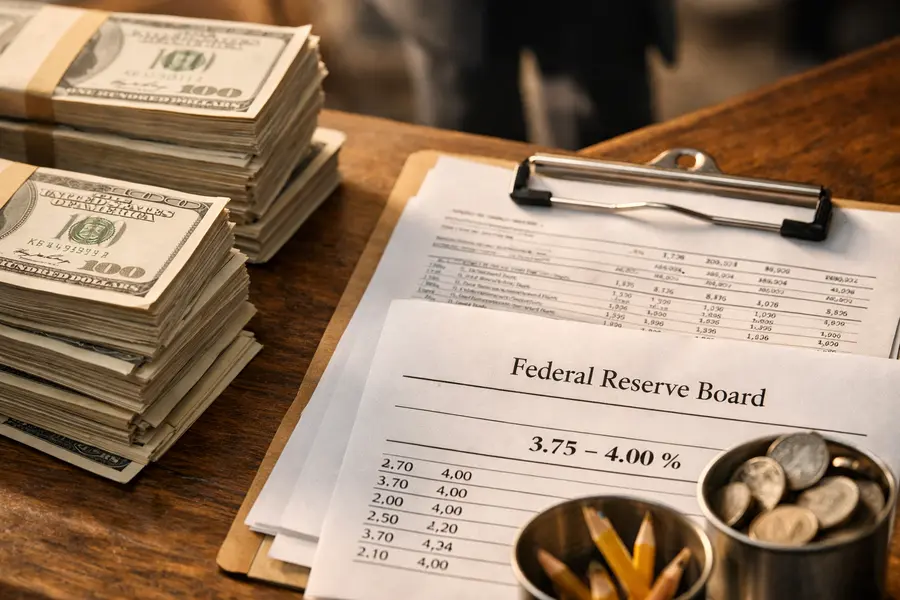
The Fed rate stays at 3.75%-4% after a 10-2 vote, as Lisa Cook and Beth Hammack dissented for a hike and Chair Kevin Warsh announced fewer meetings from 2027.
- The FOMC held the federal funds rate at 3.75%-4% in a 10-2 vote on October 28, 2026.
- Governor Lisa Cook and Cleveland Fed President Beth Hammack dissented in favor of a quarter-point hike.
- Chair Kevin Warsh said the Fed will hold fewer rate-setting meetings starting in 2027.
Lead
The federal reserve left its benchmark fed rate unchanged at 3.75%-4% on Wednesday, October 28, 2026, in a 10-2 vote of the Federal Open Market Committee. Governor Lisa Cook and Cleveland Fed President Beth Hammack dissented, both favoring a quarter-point increase. At his post-meeting press conference, Chair Kevin Warsh also said the central bank will hold fewer rate-setting meetings beginning in 2027. The decision came days before the midterm elections.
What Did the Fed Decide on Interest Rates?
The committee voted to hold interest rates steady, keeping the target range for the federal funds rate at 3.75%-4%. Ten of twelve voting officials backed the hold. The split was the most visible disagreement on the committee in recent meetings, and both dissents pointed in a hawkish direction, toward tighter policy rather than easing.
Warsh said the central bank's "monetary medicine" is starting to work, and he reiterated that 2% remains the inflation target. He also said politics played "no role" in the decision, a point that drew attention given the timing ahead of the November vote.
Why Did Cook and Hammack Dissent?
Cook and Hammack dissented because they judged a quarter-point hike, not a hold, to be the appropriate response to inflation that remains above the Fed's 2% goal. For Cook, it was the first dissent since she joined the Board of Governors in 2022.
The pairing is also historically unusual. It was the first time since October 1992 that a Fed governor and a regional bank president dissented on the same side. Governors are appointed by the president and confirmed by the Senate, while regional bank presidents are selected by their banks' boards, so a joint dissent signals concern that spans both parts of the system.
What Does Warsh's Fewer-Meetings Plan Mean?
Warsh's plan means the FOMC will meet less often from 2027, reducing the number of scheduled occasions on which the committee can change the policy rate. The Fed has traditionally held eight scheduled meetings a year. Fewer meetings would shift more attention to each decision and may reduce the cycle of market positioning that builds around every gathering.
The change alters the pace of communication more than the policy stance. Investors who price rate expectations around the meeting calendar will have fewer fixed dates to work with, and the committee will have fewer scheduled opportunities to adjust policy.
Market and Policy Context
The hold keeps borrowing costs elevated for mortgages, business loans and credit cards, which track the policy rate. The two hawkish dissents add weight to the view that the next move could be higher rather than lower if inflation fails to ease. Warsh's remark that policy is working suggests the majority sees the current range as sufficiently restrictive for now.
What Comes Next for the Fed Rate?
The next move in the Fed rate will depend on whether inflation moves toward 2%. The majority has chosen to wait and assess the effect of current policy, while a vocal minority has shown it is prepared to vote for a hike. Another dissent on the hawkish side at the next meeting would reinforce the case that the committee is drifting toward tightening.
Outlook
The Fed held rates at 3.75%-4% in a 10-2 vote, with Cook and Hammack calling for a quarter-point hike. Warsh described policy as working, restated the 2% target and announced a smaller meeting calendar from 2027. The forward path hinges on inflation data, and the dissents show that the risk on the committee is tilted toward tighter policy.
Mentioned tickers: None