Pomegra
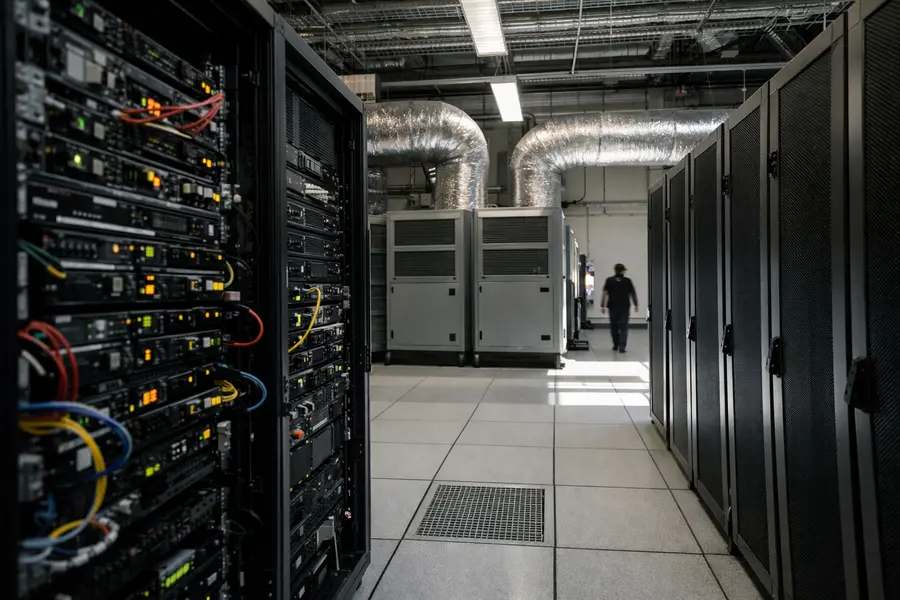
F5 (FFIV) shares fell about 19% after a fiscal Q4 beat, as FY2027 guidance of 8% to 9% revenue growth pointed to a fading networking hardware refresh cycle.
- F5 shares fell about 19% on Oct. 28 to roughly $370, despite fiscal Q4 revenue of $917 million, up 13%.
- FY2027 guidance of 8% to 9% revenue growth compares with 11% in FY2026, with legacy hardware replacement bookings expected to decline in the second half.
- The stock had gained nearly 80% in 2026 before the drop, and the board approved an additional $1.5 billion buyback.
Lead
F5 (NASDAQ: FFIV) lost about 19% of its market value on Wednesday, Oct. 28, 2026, falling from about $459 to the high-$360s. The drop came the session after the application delivery and security company reported fiscal fourth-quarter results that beat Wall Street estimates. Revenue reached $917 million against a consensus of about $884 million, and adjusted earnings per share of $4.42 exceeded the roughly $4.30 expected. The broader market rose about 0.2% on the day, so the decline was specific to the company.Why Did F5 Stock Drop Despite Beating Estimates?
F5 stock fell because fiscal 2027 guidance indicated slower growth, tighter margins and a hardware upgrade cycle that has likely peaked. The company projected revenue growth of 8% to 9% for the year, down from 11% in fiscal 2026 and in line with consensus. It guided adjusted earnings per share of $18.00 to $18.30, compared with $17.49 in fiscal 2026.
Management said legacy hardware replacement bookings will decline year over year in the second half of fiscal 2027. That cohort of customers replacing older appliances contributed 11% in fiscal 2026 and will contribute less in the coming year. The outlook also reflects higher component costs and added investment in sales capacity, both of which weigh on gross margin and operating leverage.
For the first quarter, F5 guided revenue of $875 million to $895 million and adjusted earnings per share of $4.25 to $4.37. The earnings range sits slightly below what the market had expected.
What Did F5 Report for the Fiscal Fourth Quarter?
F5 reported fourth-quarter revenue of $917 million, up 13% from $810 million a year earlier, led by a surge in hardware.
- Product revenue rose 23% to $510 million.
- Systems revenue (hardware appliances) climbed 29% to $239 million.
- Software revenue increased 19% to $271 million.
- Services revenue grew 3% to $408 million.
- GAAP net income was $186 million, or $3.23 per diluted share, against $190 million, or $3.26, a year earlier.
- Adjusted net income was $255 million, or $4.42 per share, against $257 million, or $4.39.
For the full year, revenue rose 11% to $3.42 billion. Product revenue grew 19% to $1.79 billion, with systems up 31%. Net income was $722 million, against $692 million in fiscal 2025.
Why Was the Reaction So Severe?
The reaction was severe because the shares had already priced in a strong cycle. F5 had gained nearly 80% in 2026 before the report, leaving the stock exposed to profit-taking on any sign of deceleration. The systems segment drove much of the year's outperformance, and guidance that ties part of next year's growth to a shrinking replacement cohort raised questions about how durable that momentum is.
Margins added to the concern. Higher component costs squeeze hardware profitability, while added sales capacity raises operating expenses ahead of revenue. Together they limit earnings growth even as the top line expands at a high-single-digit rate.
Brokerage reaction was split. At least one firm downgraded the stock to neutral from overweight. Others, including Evercore ISI, Barclays and Morgan Stanley, raised price targets after the print. The consensus target of roughly $457 sits well above the post-drop share price.
Strategic Context
F5 has repositioned from a hardware-centric load balancer vendor into a provider of application delivery, security and multicloud networking software and services. Software revenue grew 19% in the quarter, and the company is pitching its platform as infrastructure for AI workloads, where traffic management and application security demand rises with model deployment.
The hardware cycle remains the near-term swing factor. Customers upgrading aging appliances lifted systems revenue sharply in fiscal 2026, and the fading of that effect is the central question for fiscal 2027 and beyond. The sustainability of software and security growth will determine whether the company can sustain high-single-digit expansion once replacement demand normalizes.
What Comes Next for F5?
F5's next test is the fiscal first quarter, with revenue guided to $875 million to $895 million. Investors will track systems bookings, gross margin trends and any change in the pace of legacy hardware replacement, particularly into the second half when management expects the cohort to decline.
Capital returns offer partial support. The board approved an additional $1.5 billion share repurchase authorization, on top of about $322 million remaining under the existing program. Buyback pace will matter for earnings per share as revenue growth moderates.
Outlook
F5 delivered a clean fiscal fourth quarter, but the shares reset sharply on guidance that points to 8% to 9% growth, margin pressure and a smaller contribution from hardware refresh. The stock now trades well below its recent highs and below the consensus target, while the company's ability to offset the fading upgrade cycle with software, security and services growth will define the fiscal 2027 outcome.
Mentioned tickers: FFIV