Pomegra
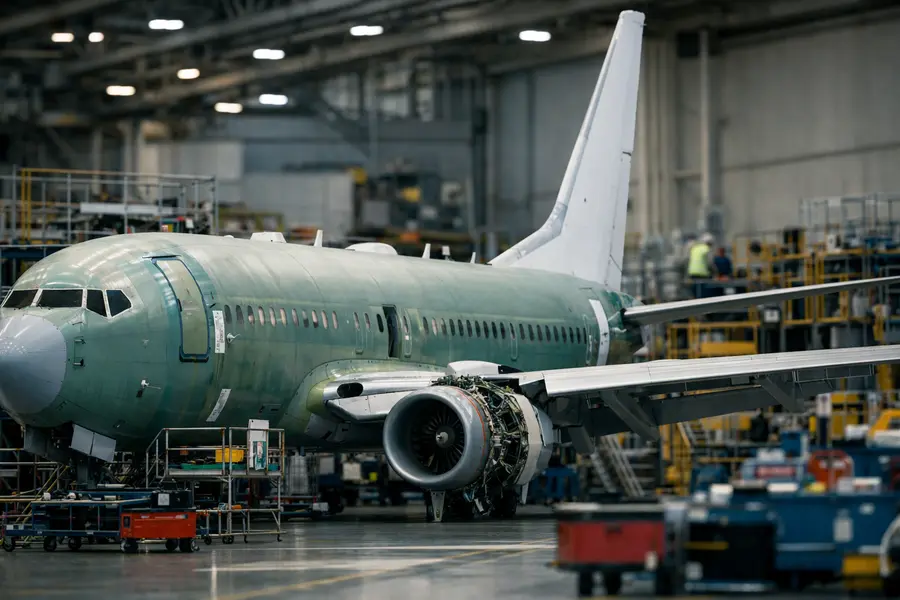
Boeing (BA) stock fell 10.7% after a Q3 2026 core loss of $0.34 a share missed forecasts and the 737 ramp to 52 a month slipped into the second half of 2027.
- Boeing posted a Q3 core loss of $0.34 a share versus the $0.21 loss expected; shares fell 10.7% to $168.18.
- Commercial Airplanes lost about $700 million, roughly twice forecasts, on a 6.5% negative operating margin.
- The 737 stays at 47 a month through 2027's first half; 52 a month is now targeted for the second half of 2027.
Lead
Boeing (NYSE: BA) shares closed at $168.18 on Tuesday, October 27, 2026, down $20.13 or 10.7% from $188.31 the previous session, after the planemaker reported a wider-than-expected third-quarter loss. It was the stock's worst single-day performance since June 2020. Shares settled at their lowest level since April 2025, a new 52-week low, on volume more than four times the usual daily level. The stock is down more than 20% so far this year.The company reported a core loss of $0.34 per share against a consensus loss of $0.21. The GAAP loss was $0.26 per share, or $116 million, compared with a loss of $5.34 billion, or $7.14 per share, a year earlier. Revenue rose 4% to $24.2 billion and slightly exceeded estimates.
What Happened in Boeing's Third Quarter?
Boeing's quarter combined stronger cash generation with weaker-than-forecast commercial aircraft profitability. Operating cash flow was $1.5 billion and free cash flow was $464 million, up from $238 million in the third quarter of 2025 and ahead of expectations.
The Commercial Airplanes unit delivered 161 aircraft. Its revenue fell 3% to $10.7 billion, and its operating margin was negative 6.5%, about 280 basis points weaker than forecast because of cost growth. The unit has posted losses in 17 of the past 18 quarters.
Defense, Space & Security revenue rose 15% to $7.9 billion with a 6.2% operating margin. Global Services revenue rose 4% to $5.6 billion with an 18.3% margin. The company ended the quarter with $20.7 billion in cash and investments against $45.9 billion in debt. Its backlog reached a record $745 billion, covering more than 6,300 commercial aircraft.
Why Did Boeing Shares Fall So Sharply?
Shares fell because the 737 production timeline moved out, which pushes back the earnings and cash recovery investors had priced in. Boeing said it will not reach its target of roughly 500 deliveries of the 737 family in 2026. Production will hold at 47 aircraft a month, the rate the company had aimed to stabilize, through the first half of 2027. A step up to 52 a month is now planned for the second half of 2027.
CEO Kelly Ortberg said it is taking longer than expected to demonstrate performance at rate 47. Boeing said it is focused on safety and quality and on lean, disciplined execution. The 777X remains on track for a first delivery in 2027, and engine availability continues to limit 787 output.
The reaction reflects how much of Boeing's valuation depends on cash flow from higher volumes. A record backlog does not generate revenue until aircraft leave the factory, and each quarter at a lower rate extends the period in which fixed costs weigh on margins.
How Does the Delay Affect Boeing's Strategy and Cash Outlook?
The delay defers the point at which volume growth begins to absorb cost pressure in the commercial unit. Higher production rates spread overhead across more aircraft, and the revised schedule leaves that benefit about two quarters later than previously signaled.
Balance sheet flexibility is the counterweight. Cash and investments of $20.7 billion and positive free cash flow in the quarter give the company room to fund the ramp without a near-term financing event. Net debt remains elevated at roughly $25 billion, which keeps deleveraging a priority for capital allocation.
The defense and services units are the offset. Defense revenue growth of 15% and an 18.3% services margin cushioned consolidated results, though neither is large enough to offset commercial losses of this size.
Market Context
The sell-off placed Boeing among the weakest large-cap industrial stocks this week. The shares have shed about 12% over five sessions. The move also affects the aerospace supply chain, because a slower 737 rate means lower volumes for suppliers tied to the program.
Outlook
Boeing's Q3 2026 results showed improving cash flow, a record backlog and a growing defense business. They also showed a commercial unit still losing money and a 737 ramp that has slipped again. The next checkpoints are monthly delivery figures, evidence that rate 47 is holding without disruption, and fourth-quarter cost trends in Commercial Airplanes. Until production stabilizes and the move to 52 a month is on a firm schedule, the margin recovery remains tied to the factory floor rather than the order book.
Mentioned tickers: BA