Pomegra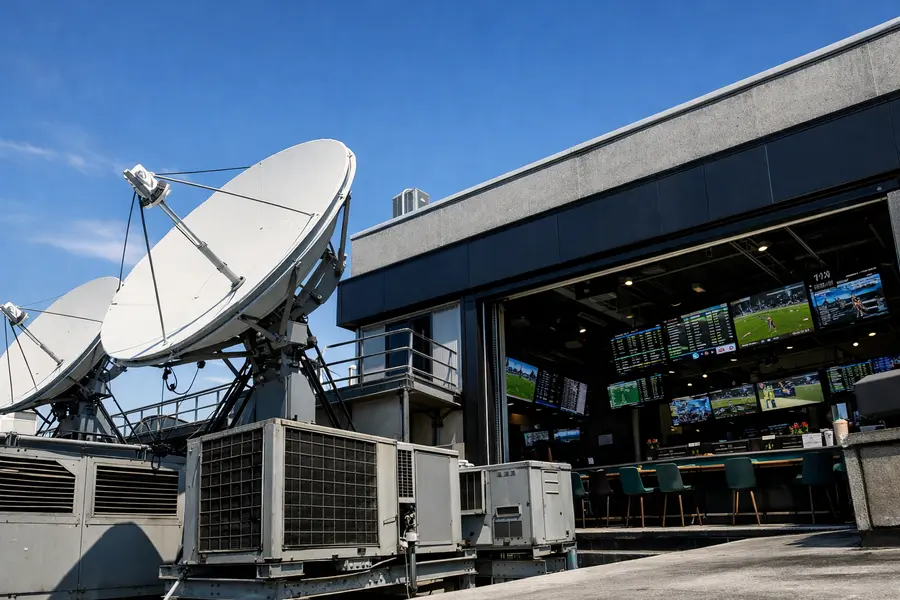
DraftKings posted second-quarter 2026 revenue of $1.44 billion, missing the $1.52 billion Wall Street consensus as bettor-friendly sport outcomes and higher promotional spending offset record user growth for the leading sports betting app.
- Q2 revenue of $1.44B fell roughly 5% year-over-year and came in below the $1.52B consensus, pressured by customer-favorable sport outcomes.
- Monthly unique payers rose 9% to 3.6 million, well above the 3.1 million analyst estimate, while sportsbook handle climbed 15% to $13.1 billion.
- DraftKings maintained its full-year 2026 guidance of $6.5B–$6.9B revenue and $700M–$900M in adjusted EBITDA.
Lead
DraftKings (NASDAQ: DKNG) shares slipped 1.5% after the company reported second-quarter 2026 results on August 6 that fell short of revenue expectations. The online and in-stadium sports betting operator posted revenue of $1.44 billion for the three months ended June 30, against a Wall Street consensus of approximately $1.52 billion, as unusually favorable outcomes for bettors and a deliberate step-up in promotional reinvestment eroded gross gaming revenue. The results place renewed focus on the company's ability to convert surging handle growth into consistent top-line performance.What Happened
The quarter's shortfall was structural rather than demand-driven. Sportsbook handle — the total value of bets accepted — reached $13.1 billion, up 15% from the same period a year earlier, signaling continued strength in the underlying sports betting app ecosystem. Average revenue per monthly unique payer, however, fell 13% year-over-year to $132, reflecting the twin drag of bettor-friendly sport outcomes and elevated customer acquisition incentives tied to DraftKings' expansion into prediction markets.
Adjusted earnings per share came in at $0.09, against a Street consensus of approximately $0.02. The net loss for the quarter was $67.6 million.
Monthly unique payers (MUPs) — a key metric for the platform's engagement health — climbed 9% to 3.6 million, beating the 3.1 million analyst estimate by a wide margin. Management pointed to accelerating adoption within its Predictions product as a primary driver of new-user growth, with CEO Jason Robins stating on the earnings call that prediction-market engagement is "growing faster than we anticipated."Market Reaction
DKNG shares initially fell in after-hours trading following the report before recovering sharply in the subsequent session as investors weighed the user-growth outperformance against the top-line miss. The stock's initial 1.5% decline reflected near-term concern over monetization efficiency, a recurring theme in the online gaming sector after Flutter Entertainment — parent of rival FanDuel — cut its own full-year revenue guidance weeks earlier, casting a sector-wide shadow ahead of DraftKings' print.
DraftKings commands roughly 34% of U.S. gross gaming revenue, trailing FanDuel's approximately 44% share but maintaining a commanding lead over BetMGM and newer entrants. Competition has intensified as standalone prediction-market platforms such as Kalshi and Polymarket attract sports-adjacent volume, prompting traditional sportsbooks to accelerate their own offerings in the category.
Strategic Context
Beyond the digital sports betting app, DraftKings has expanded its physical footprint through licensed retail locations inside stadiums and arenas — a distribution channel that reinforces brand presence and drives cross-sell into mobile platforms. Stadium sportsbooks have become an increasingly contested battleground, with regulators in Illinois and other jurisdictions granting dedicated on-site licenses. DraftKings holds one of the earliest such licenses in the state and continues to build out its venue-level infrastructure.
The company's multi-year advertising collaboration with NBCUniversal, spanning premium sports properties including NFL, NBA, and Olympics coverage, anchors its media strategy ahead of the coming football season. Management has characterized the NFL calendar as the critical revenue-generation window and expressed confidence that Q2's hold-rate headwinds are unlikely to persist at current intensity.
Outlook
DraftKings reaffirmed full-year 2026 revenue guidance of $6.5 billion to $6.9 billion and adjusted EBITDA of $700 million to $900 million, a signal that management views the quarterly shortfall as transitory rather than structural. The maintained guidance aligns with analyst expectations for a stronger second half driven by NFL season volume, growing prediction-market penetration, and improving hold rates as promotional intensity normalizes.
Near-term execution risk centers on whether rising user counts translate into sustainable revenue-per-payer recovery, and whether DraftKings' prediction-market positioning can offset competitive pressure from dedicated platforms ahead of the NFL opener. The company's stadium infrastructure and broadening media partnerships provide structural distribution advantages that rival apps are only beginning to replicate.