Pomegra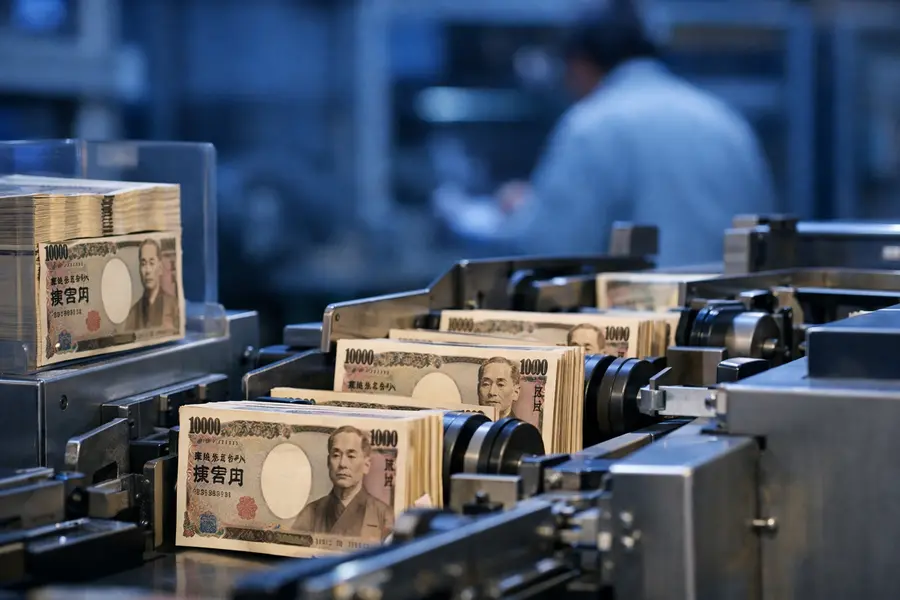
The Japanese yen fell past 157 per dollar heading into a three-day national holiday, placing the Bank of Japan on maximum intervention alert after the July US-Japan coordinated currency defense fully unwound.
- USD/JPY broke above 157 after the Bank of Japan's rate hike to 1.25% failed to arrest yen selling, with two board dissenters signaling a slower tightening path.
- Japan's Silver Week holiday strips the market of domestic liquidity, a condition Tokyo has historically exploited to maximize intervention impact.
- The July US-Japan coordinated defense, which cost an estimated $59 billion, has fully reversed, renewing fears that a yen carry-trade unwind could transmit volatility across global equities, bonds, and credit.
Lead
The Japanese yen slipped past 157 per dollar on Monday as Japan's financial markets closed for Silver Week, stoking fears that thin-liquidity conditions could trigger the most consequential currency intervention since July's unprecedented coordinated US-Japan currency defense. The Bank of Japan lifted its policy rate 25 basis points to 1.25% - the highest level since April 1995 - at its September meeting, but two board members dissented and policymakers offered no explicitly hawkish forward guidance. That was enough to send the yen lower even as interest rates moved higher, leaving Japan's Ministry of Finance currency desks on maximum alert before the holiday blackout began.
Why Did the Yen Weaken Despite the BOJ Rate Hike?
A rate hike ordinarily supports a currency, but the yen's decline after the BOJ decision reflected deep trader skepticism about the pace of further tightening. The two dissenting votes on the nine-member board signaled internal resistance to near-term follow-through moves, and the absence of a clear forward schedule reinforced that caution. The US-Japan interest rate differential remains historically wide - the Federal Reserve's policy rate sits more than three percentage points above Japan's 1.25% - keeping the arithmetic of the yen carry trade firmly positive for global leveraged funds. The yen erased modest post-announcement gains within hours of Friday's decision and extended losses over the weekend, a trajectory that placed intervention desks on heightened alert before Tokyo markets even closed for the week.
What Is Silver Week and Why Does It Matter for Intervention?
Silver Week - the cluster of Japanese national holidays around the autumnal equinox in late September - drains domestic liquidity from the Tokyo session, leaving the yen trading in thin, offshore markets for multiple consecutive days. Reduced volume amplifies price moves in both directions, meaning a smaller yen purchase by the Ministry of Finance can shift the exchange rate by a larger margin than in normal conditions. Japanese authorities have historically favored intervening in precisely these liquidity windows, when the impact per deployed dollar is highest. The three-day closure concentrates that risk, placing currency traders on alert for sudden yen surges even in the absence of active Tokyo market participants.
The July Coordinated Defense: What Failed to Hold?
The July 2026 intervention was the most ambitious currency operation in a generation. Japan's finance ministry sold approximately $59 billion in dollar reserves to support the yen, while the US Treasury - in a historically unusual move - simultaneously deployed an estimated $5 billion to $10 billion in a parallel yen-buying operation. US Treasury Secretary Scott Bessent publicly confirmed the joint action, describing it as countering "disorderly yen movements" consistent with a bilateral framework agreed between the two finance ministers in September 2025. Both sides stated explicitly that "further coordinated interventions" remained on the table.
By August the yen had surrendered most of its post-intervention gains. By mid-September, USD/JPY had returned to the 156-to-157 range that originally triggered Tokyo's alarm. The failure to sustain momentum illustrates the structural constraint facing both governments: coordinated intervention can impose short-term losses on carry-trade speculators but cannot override the fundamental interest rate differential that makes borrowing yen and recycling proceeds into higher-yielding assets profitable over time.
Is a Carry-Trade Unwind the Next Cross-Asset Shock?
The yen carry trade has for years functioned as one of the largest pools of cheap leverage supporting global risk assets, with borrowed yen recycled into equities, credit, and commodities across both emerging and developed markets. A rapid, disorderly unwind - driven by a sudden yen spike, a BOJ rate surprise, or a global risk-off event - forces leveraged investors to simultaneously sell assets and buy yen to repay loans, creating a self-reinforcing loop that transmits yen volatility into equity, bond, and commodity markets simultaneously.
The conditions for such a shock are incrementally building. The BOJ is in an active tightening cycle, the Federal Reserve is expected to pivot toward rate cuts later this cycle, and the narrowing rate gap that would follow makes holding yen-funded long positions progressively less attractive. A coordinated intervention during Silver Week, if large enough to push USD/JPY sharply lower in illiquid conditions, could itself act as the catalyst for an accelerated unwind. Markets are therefore watching not just whether Tokyo acts, but how fast and how far any resulting yen appreciation travels - and whether global equity markets, where leveraged carry positions concentrate, respond with synchronized selling.
Outlook
The yen's return to 157 per dollar, despite a BOJ rate hike that brought Japan's policy rate to its highest level in three decades, underscores the limits of monetary tightening against a deeply entrenched interest rate gap with the United States. With Silver Week removing the domestic market as a stabilizing force, the probability of unilateral or coordinated intervention is at its highest since July. The critical variables are whether the Ministry of Finance moves during the holiday window, whether the Federal Reserve's easing path softens the dollar, and whether a sustained yen depreciation beyond 158-to-160 triggers the broader carry-trade unwind that markets have flagged as the most significant near-term systemic risk in global currency markets.
Mentioned tickers: none