Pomegra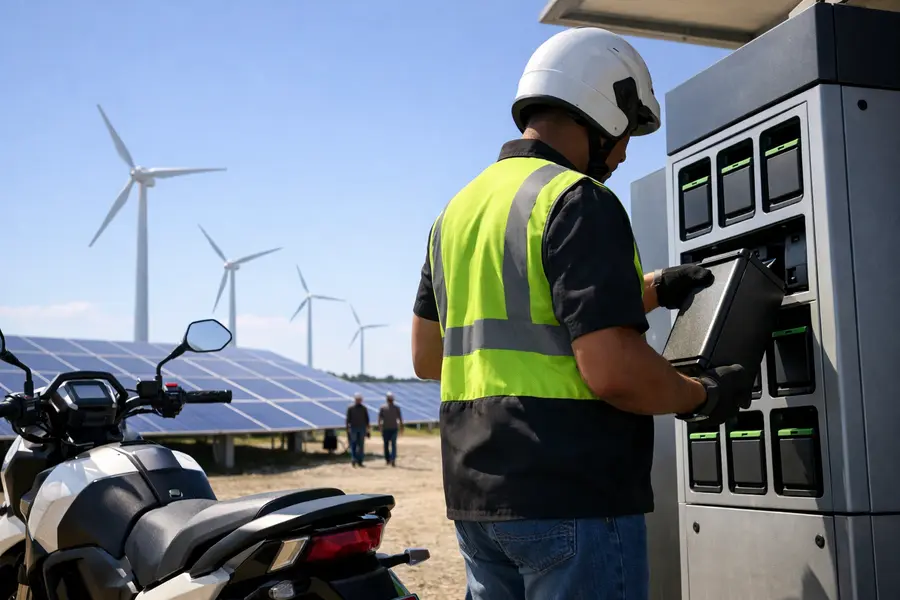
Africa Go Green Fund doubles its total commitment to the East African EV motorcycle operator to $36 million, directing new capital at Uganda and Rwanda battery-swap expansion.
Key Takeaways
- AGG's additional $18M brings its total commitment to Spiro to $36 million, nine months after an initial tranche closed in December 2025.
- Spiro operates 135,000+ electric motorcycles and 2,500+ battery-swap stations, completing over 50 million swaps across seven African countries.
- Proceeds will finance new large-format swapping hubs along commercial transit corridors in Uganda and Rwanda.
The Deal
Spiro, the pan-African electric motorcycle and battery-swap operator, secured an additional $18 million in debt financing from the Africa Go Green Fund (AGG) on September 21, 2026. The capital doubles AGG's total commitment to $36 million, building on an initial tranche of the same size closed in December 2025, when Nithio contributed a further $7 million to the same facility. Proceeds are earmarked for Uganda and Rwanda, where Spiro plans to add large-format battery-swapping hubs on high-traffic commercial corridors.
What Does Spiro Actually Build?
Spiro runs a battery-as-a-service model: riders buy or lease a motorcycle frame and rent the battery pack separately, swapping depleted units for charged ones at automated stations in minutes. The company does not manufacture bespoke vehicles; it deploys standard e-motorcycle frames paired with proprietary swap infrastructure. As of September 2026, Spiro operates more than 2,500 swap stations, has put 135,000 electric motorcycles on roads across Benin, Kenya, Nigeria, Rwanda, Togo, and Uganda, and records over 50 million completed battery exchanges. Assembly facilities run in Uganda, Kenya, Nigeria, and Rwanda.
The model rests on one calculation: the battery is both the most expensive and the least differentiated component of an EV. Separating it from the frame drops the upfront purchase price sharply, a meaningful factor in markets where riders are predominantly self-employed and buying on thin margins.
Why Uganda and Rwanda Again?
Both countries were already focal points in Spiro's December 2025 deployment. Directing the second AGG tranche to the same two markets suggests deepening rather than broadening. Uganda hosts one of Sub-Saharan Africa's largest boda-boda sectors, with Kampala alone accounting for hundreds of thousands of daily commercial rides. Rwanda's tightly regulated transport environment has made it a proving ground for EV policy; the government has set explicit electrification targets for two-wheelers.
The new capital targets large-format swap hubs specifically. That is a departure from the smaller distributed stations Spiro operated in earlier phases. Denser, higher-throughput hubs reduce per-swap cost and cut rider wait times, addressing two friction points that have historically slowed EV adoption among commercial operators.
Who Is Financing This and Why Does It Matter?
Africa Go Green Fund is a climate-focused debt facility managed by Cygnum Capital. Its repeat commitment reflects a pattern now common in African climate finance: staged deployments tied to performance milestones rather than single large checks. AGG doubling its exposure in nine months indicates Spiro's December-to-September operational metrics cleared whatever benchmarks the fund required. No statement on whether co-lender Nithio participates in this second round has been confirmed.
The $18 million sits inside a much larger capital stack. Spiro's cumulative raise has reached $215 million, including a $100 million round in October 2025 - Africa's largest-ever electric mobility investment at the time, led by FEDA, Afreximbank's impact arm, which contributed $75 million. A $50 million facility from Afreximbank, Nithio, and AGG followed in February 2026. The September tranche layers on top of all of it.
Outlook
Spiro enters the final quarter of 2026 as the best-capitalized EV two-wheeler operator on the continent. The live questions are execution ones: converting $215 million in raised capital into profitable swap-station density at scale and managing hub deployment in markets where grid reliability is uneven. Additional tranches from existing lenders carry less dilution risk than equity rounds, which matters as implied valuation rises with each capital event. Whether Spiro can translate its infrastructure lead into defensible unit economics remains open as competition in African e-mobility sharpens.