Pomegra
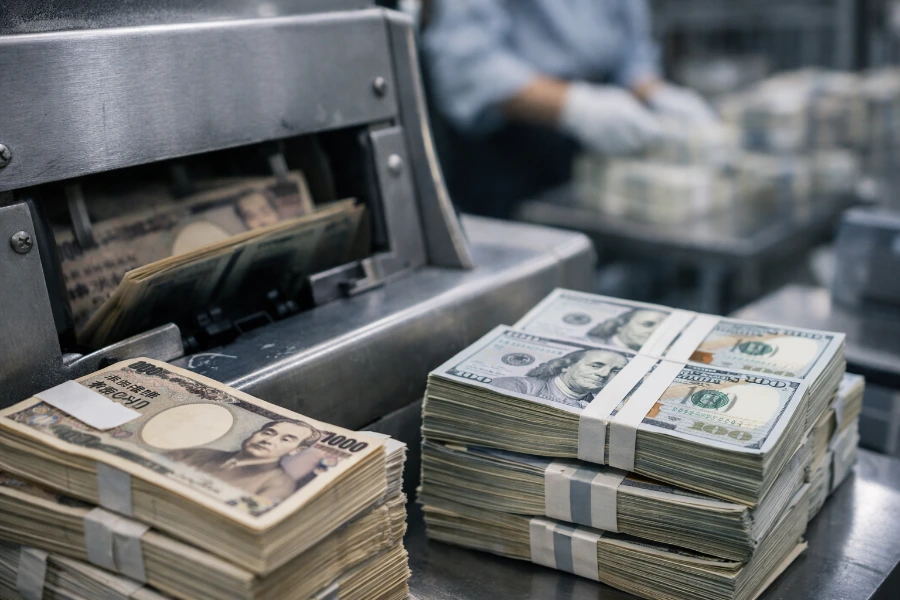
The dollar held near 159.5 yen, just below the 160 line that has drawn Tokyo intervention, as traders priced an 80% chance of a Bank of Japan hike on Dec. 18.
- The dollar traded between roughly 159.00 and 159.50 yen, a step from the 160 level that has triggered past Japanese intervention.
- BOJ board member Naoki Tamura said faster rate hikes may be needed, including a 50 basis point move.
- Markets price about an 80% chance the BOJ lifts its policy rate to 1.5% from 1.25% on Dec. 18.
Lead
The dollar steadied near 159.5 yen on Friday, Nov. 27, a fraction below 160, the level at which Japanese authorities stepped into the currency market in 2024. The yen drew support this week after Bank of Japan board member Naoki Tamura said the central bank must respond swiftly to signs of an inflation overshoot, including by accelerating the pace of interest rates increases. Futures and swaps markets now price roughly an 80% probability of a quarter-point hike at the Dec. 17-18 policy meeting.
What Did the BOJ Board Member Say?
Tamura, one of the board's most hawkish voices, said on Thursday that inflation risks could justify faster tightening, including a 50 basis point increase in a single step. He put Japan's neutral rate, the level that neither stimulates nor restrains the economy, at around 2%. That is 75 basis points above the current policy rate of 1.25%.
The remarks pushed the dollar to about 159.00 yen at the session low before it recovered into the 159.00 to 159.50 range. The comments also lifted December hike pricing, which sat near 71% in some measures before climbing toward 80%.
Why Is 160 Yen Such a Sensitive Level?
The 160 level matters because Japanese authorities sold dollars to support the yen when it weakened past that mark in 2024. Traders now treat the area as a de facto line for official action. A move through 160 would raise the risk of a repeat, and the threat of intervention has capped dollar gains in recent sessions.
The yen's weakness reflects a wide gap between Japanese and U.S. borrowing costs. Even with the BOJ at 1.25%, real returns on yen assets remain thin next to dollar assets, and the federal reserve's policy stance continues to anchor the other side of that gap. Rate hikes narrow the differential, but only gradually.
Does Inflation Data Support a December Hike?
Tokyo inflation data points toward a December move, though not decisively. Core consumer prices in the capital rose 2.9% from a year earlier in November, a 16-month high and up from 2.6% in October. The reading came in just below the 3.0% forecast. An underlying gauge that strips out more volatile items eased to 2.5%.
The mixed detail leaves room for debate on the pace of tightening. The headline figure supports a hike at the December meeting, while the softer underlying measure argues against moving by more than 25 basis points.
Market Reaction
The yen has recovered modestly from its weakest levels of the week, while the dollar has held a tight range. Currency traders are positioned for event risk around the BOJ decision and the next set of Japanese price data. Dollar-yen has stayed below 160 despite the large rate gap, a sign that intervention risk and BOJ hike expectations are restraining speculative selling of the yen.
Outlook
A 25 basis point hike to 1.5% on Dec. 18 is the market's central expectation, and a larger move would likely strengthen the yen sharply. A hold would probably send the dollar through 160 and bring Tokyo's response into focus. Until the meeting, the 159 to 160 range is likely to define trading, with Japanese inflation data and further BOJ commentary the main drivers.
Mentioned tickers: None