Pomegra
The Trump administration urged Venezuela and Iraq to consider leaving OPEC, a Reuters report said, while OPEC+ is set to hold first-quarter 2027 output targets steady.
- The US blocked Venezuela's OPEC dues payment, and Saudi Crown Prince Mohammed bin Salman persuaded Washington to stop pressing.
- OPEC+ has agreed in principle to keep Q1 2027 output targets unchanged ahead of its Sunday, November 29 meeting.
- Brent traded near $96 a barrel on Friday, with a projected 2027 surplus of about 5 million barrels per day.
Lead
The Trump administration encouraged Venezuela and Iraq, two founding members of OPEC, to consider leaving the group earlier this year, a Reuters report published November 27 said. The report added that Washington prevented Venezuela from paying its annual membership dues. The disclosure comes two days before OPEC+ ministers meet, with the group poised to roll over its first-quarter 2027 production targets.
What Happened Between Washington, Caracas and Baghdad?
The administration pressed both countries to weigh an exit because it saw OPEC quotas as an obstacle to higher output. President Donald Trump wanted US oil majors to revive Venezuela's production, which he described as a matter of energy security in the Western Hemisphere. He has attacked OPEC for decades as a cartel and a monopoly.
In Venezuela, the pressure took a concrete form. After US forces captured Nicolas Maduro in early January, the country's state funds were held in a US-controlled account. That arrangement stopped Caracas from paying its OPEC membership dues, a step that put its standing in the group at risk.
In Iraq, Prime Minister Ali Faleh al-Zaidi raised the idea of leaving after meetings with US officials. The Iraqi oil ministry opposed an exit and persuaded him to stay and argue for a higher quota instead.
How Did Saudi Arabia Stop the Pressure?
Crown Prince Mohammed bin Salman intervened this summer and persuaded the administration not to press the issue further. Riyadh has a direct interest. OPEC's cohesion underpins Saudi Arabia's ability to coordinate supply, and another defection would follow the exit of the United Arab Emirates from OPEC and OPEC+ months ago. The UAE left to pump more oil after years of arguing that its quota did not reflect its investment in capacity.
Why Is OPEC+ Keeping Targets Unchanged?
OPEC+ is rolling over targets because disputes over capacity estimates have made a new allocation impractical. The group planned to use its first review of members' production capacity to set 2027 targets. Iraq disputes its assessed capacity of 4.9 million barrels per day and wants recognition of roughly 6 million. Kazakhstan has also sought a higher assessment. Iraq has warned it could leave if its quota is not raised, and its push has intensified since September.
A rollover postpones those arguments. In November, seven producers led by Saudi Arabia and Russia held December output at September levels, and the first-quarter decision extends that stance. The Sunday agenda includes four ministerial meetings, and the formal decision comes at that session.
What Comes Next for the Crude Oil Price?
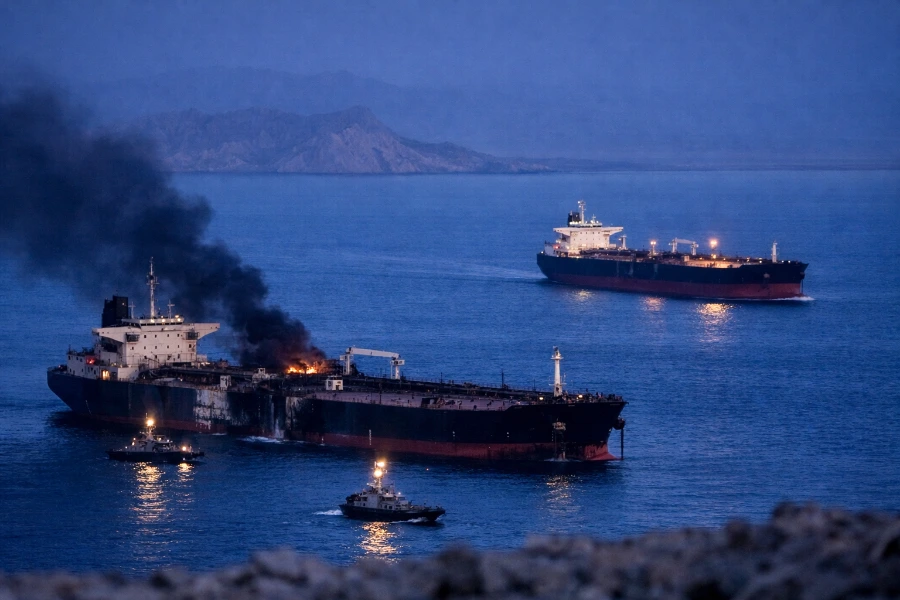
The crude oil price faces competing forces: Gulf supply risk on one side and a large projected surplus on the other. Brent for January delivery traded at $96.30 a barrel on Friday, down 0.28% on the day but about 4% higher on the week from $92.57. Its session range was $96.08 to $98.06. US benchmark West Texas Intermediate stood at $85.05, up 1.64% from Wednesday, as NYMEX was closed for Thanksgiving. Brent remains well below its 52-week high of $126.41, set on April 30.
Rystad Energy forecasts a global surplus of about 5 million barrels per day next year, roughly 5% of world demand. The International Energy Agency has warned that fourth-quarter supply could exceed demand. Uncertainty around the Iran war and its effect on regional output and exports adds to the volatility.
Geopolitical Dimension
The episode shows Washington testing how far it can reshape a producer group it has long criticized, using financial leverage over Venezuela rather than public diplomacy. For Saudi Arabia, it shows both the limits of OPEC's autonomy and the value of its relationship with the White House.
The economic channel is supply. A Venezuelan or Iraqi exit would free two producers from quotas. Iraq pumps close to 5 million barrels per day and says it can produce about 6 million. Venezuela's output is well below its historical peak, and a recovery depends on US investment, including from companies such as Chevron (CVX). Added volumes would deepen a surplus that the group is already struggling to manage.
Outlook
OPEC+ is expected to confirm unchanged first-quarter 2027 targets on Sunday, which defers the capacity dispute rather than resolving it. In the next three to twelve months, Iraq's demand for a higher quota, the UAE's departure and Venezuela's unresolved dues will test the group's cohesion. With a projected surplus of about 5 million barrels per day, any further defection would put pressure on prices and on Saudi Arabia's leadership of the group.
Mentioned tickers: CVX