Pomegra

CoreWeave raised 2026 revenue guidance to $13.0-13.3B after Q3 sales of $3.66B beat estimates, sending shares up about 20% as backlog reached $132.5B.
- Q3 revenue rose 168% to $3.66B, ahead of the $3.55B consensus.
- Full-year revenue guidance is now $13.0B-$13.3B; backlog grew to $132.5B from $104B.
- Shares rose roughly 20% on Wednesday after a decline of more than 40% over the prior month.
Lead
CoreWeave (NASDAQ: CRWV) reported third-quarter revenue of $3.66B on Tuesday, up 168% from $1.36B a year earlier, and lifted its 2026 outlook. The AI cloud provider's shares jumped about 20% on Wednesday, trading near $58 against a prior close of roughly $48.70. Volume reached about 46.4 million shares, well above the 32.4 million daily average. The move gave ai stocks a lift after a month in which investors rotated out of companies tied most closely to AI infrastructure spending.What Happened in CoreWeave's Third Quarter?
CoreWeave beat on revenue and narrowed its loss against expectations, while raising guidance on revenue, profit and capital spending. Revenue of $3.661B compared with a consensus of $3.55B. Operating income was $207M, a 6% margin, against $52M a year earlier. Adjusted operating income was $379M, a 10% margin, down from 16% in Q3 2025 as depreciation and costs from new capacity weighed on profitability. The net loss was $709M, or $1.27 a share, versus a $110M loss a year earlier. Adjusted EBITDA was $2.26B, a 62% margin.
The company now expects 2026 revenue of $13.0B-$13.3B, up from $12.4B-$13.2B. It lifted its adjusted operating income outlook to $1.275B-$1.375B from $960M-$1.15B. It also guided to an annualized revenue run rate of $20B-$21B at year-end.
How Big Is the CoreWeave Backlog, and What Is Driving It?
The revenue backlog stands at $132.5B, up from $104B at the end of the second quarter. The figure represents contracted revenue yet to be recognized, and it is now more than ten times the revenue the company expects this year.
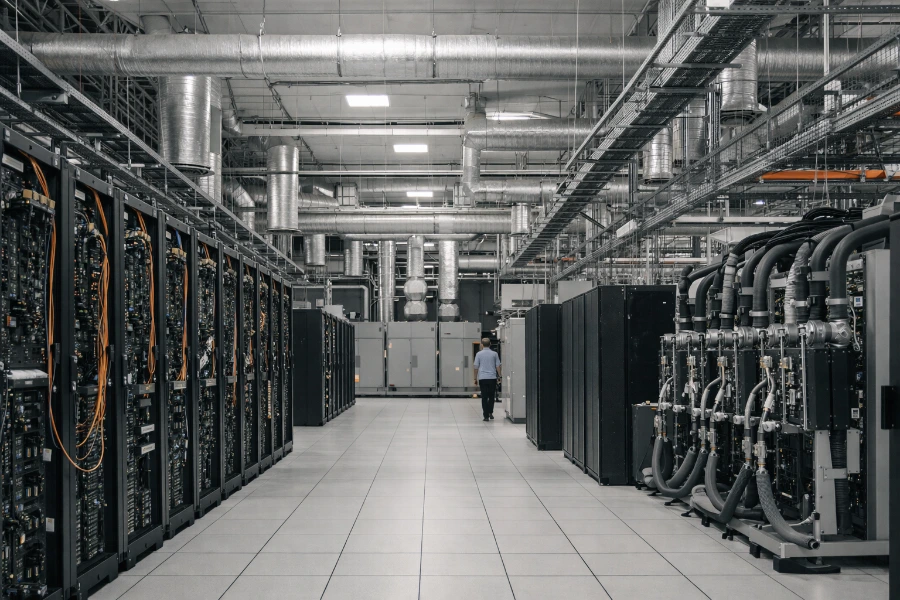
Capacity is the constraint. Active power exceeded 1.7 gigawatts, double the level at the start of the year, with 1.85 gigawatts targeted by year-end. Contracted power rose by more than 900 megawatts to over 4.6 gigawatts, of which more than 1.3 gigawatts is outside the United States. Pricing is also firm. CEO Michael Intrator said rates for older Nvidia (NASDAQ: NVDA) Ampere and Hopper chips rose 30% to 50% quarter over quarter, at levels above original contract terms.
Why Is Demand "10x Oversubscribed"?
Qualified demand outstrips what CoreWeave can build. Intrator said the company has ten times as much qualified demand as available capacity through the end of 2027. He added that 2028 demand is already several times larger than capacity, before it has been formally marketed. The company could sell all of its capacity to buyers in the queue, he said, but is choosing not to, which keeps pricing power and contract terms in its hands.
The first production workloads on Nvidia's Vera Rubin NVL72 systems delivered 4.8 times the token throughput of the GB200 NVL72 generation, according to the company. That supports demand for the next hardware cycle. Customer prepayments and deposits of about $9B are expected over the next three months, helping fund construction.
Why Did Shares React This Way?
Shares rose because the results addressed the two fears that drove the earlier sell-off: demand durability and financing strain. CoreWeave had lost more than 40% of its value in the month before the report, as rising rates and a tougher credit market raised questions about funding for "neocloud" providers. Some bonds in the sector have priced at yields above 16%.
The financing picture remains heavy. Total debt is about $47B, and fourth-quarter interest expense is guided at $1.05B-$1.15B. Capital expenditures are forecast at $37B-$39B for 2026, roughly 155% higher at the midpoint than last year. During the quarter the company raised about $4.2B in convertible notes and closed a $2.6B delayed-draw term loan facility. Management said parent-level debt financing should stay under $5B through 2027, with most new capacity funded through asset-level facilities and customer prepayments.
Intrator acknowledged that a business can execute well and still face a harder financing environment. The market read the larger backlog and higher guidance as evidence that revenue is arriving ahead of the funding pressure. The rebound also lifted Nvidia and other chip stocks, and the S&P 500 rose on the session.
What Comes Next for CoreWeave and AI Infrastructure?
Three variables will shape the next two quarters: delivery, margins and funding cost. Converting $132.5B of backlog into revenue depends on power, data center construction and chip supply arriving on schedule. Adjusted operating margin fell to 10% in Q3, so the guided profit increase relies on scale outweighing depreciation and interest. The company is also expanding in Asia and has launched a model-serving product called Forge. Local opposition to new data centers, including recent ballot rejections in the United States, adds a siting risk to the build-out.
Outlook
CoreWeave's quarter showed demand running well ahead of supply, firm pricing on older GPUs and a backlog that now covers years of capacity. The constraint has moved from customers to construction and capital. Fourth-quarter results will test whether the company can add power on schedule while holding margins against roughly $1.1B of quarterly interest costs.
Mentioned tickers: CRWV, NVDA