Pomegra
Apple (AAPL) CEO Tim Cook hands leadership to hardware chief John Ternus September 1, raising investor questions about supply chain and retail continuity after a 14-year transformative tenure.
- John Ternus, architect of Apple Silicon, assumes the AAPL chief executive role effective September 1, 2026.
- Tim Cook transitions to executive chairman after steering Apple from a $350 billion company to the world's most valuable at over $3 trillion.
- Investors are weighing Ternus's hardware engineering depth against Cook's unmatched supply chain and global retail legacy.
Lead
Apple Inc. (AAPL) confirmed that John Ternus, senior vice president of hardware engineering, will succeed Tim Cook as chief executive officer on September 1, 2026, ending one of corporate America's most consequential leadership runs. Cook, who assumed the chief executive role in August 2011 following Steve Jobs's death, leaves behind a company transformed by supply chain discipline, services diversification, and an unprecedented run of premium pricing power. Ternus, 51, takes the helm as Apple navigates slowing smartphone market growth, intensifying competition in AI hardware, and sustained geopolitical pressure on its China-dependent manufacturing base.Silicon Pedigree: What Ternus Brings
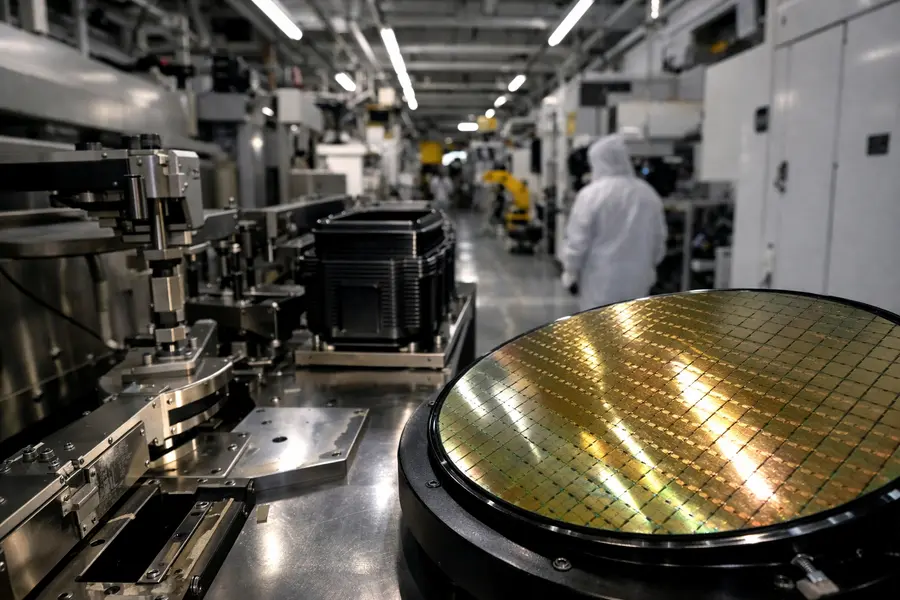
Ternus's appointment is a deliberate bet on product architecture over operational logistics. As head of hardware engineering since 2020, he oversaw the full transition from Intel processors to Apple's proprietary M-series chips - a strategic pivot that widened the Mac's performance-per-watt advantage over rivals and deepened developer lock-in across the Apple ecosystem. The M1, M2, M3, and M4 generations were direct products of his leadership, each extending Apple's edge in on-device AI processing and reinforcing the tight integration between hardware and software that underpins the company's premium product narrative.
AAPL shares traded roughly flat across the sessions surrounding the announcement, reflecting both institutional confidence in Apple's organizational depth and residual uncertainty about operational continuity at the executive level.
What Gaps Does Cook Leave Behind?
Cook's successor inherits a company he himself reshaped over more than a decade. The outgoing CEO built a supply chain network spanning dozens of countries, negotiated strategic agreements with contract assemblers including Foxconn and Pegatron, and diversified Apple's revenue mix toward high-margin services - a segment generating more than $90 billion annually by 2025. His relationships with Asian manufacturing partners, sovereign wealth investors, and global carrier networks are long-dated and difficult to replicate quickly.
Three operational vulnerabilities stand out for investors tracking AAPL: the pace of India-based manufacturing diversification away from China, the management of Apple's retail network across more than 35 countries, and the company's ability to sustain the carrier subsidy agreements that drive iPhone upgrade cycles. These are domains where Cook's 11 years as chief operating officer before the CEO transition gave him an edge Ternus has not yet demonstrated at comparable scale.
How to Buy Apple Stock
Shares of Apple (AAPL) trade on the Nasdaq and are accessible through any major brokerage or investment platform. The stock is a core constituent of broad index funds including the SPDR S&P 500 ETF Trust (SPY) and the Invesco QQQ Trust (QQQ), meaning investors with diversified equity positions already carry indirect AAPL exposure. The Vanguard S&P 500 ETF (VOO) also holds Apple as one of its largest positions by weight.
The AI Hardware Battleground
The timing of the handoff places Ternus at the center of the AI hardware race defining the next product cycle. Apple's on-device intelligence strategy, anchored by its Neural Engine architecture and Apple Intelligence platform, competes directly with Microsoft (MSFT), Alphabet (GOOG), and a field of AI-native device makers for enterprise and consumer mindshare. Among the major technology executives now leading publicly traded AI-hardware companies, Ternus is arguably the most technically credentialed to make the case for silicon-driven differentiation over cloud-dependent AI approaches.
Nvidia (NVDA) and the broader AI stocks category have attracted the majority of institutional attention in the current cycle, but Apple's vertical integration model - controlling chip design, operating system, and device assembly - represents a structurally distinct strategy that a hardware-first chief executive is well positioned to articulate and extend.Outlook
The Cook-to-Ternus transition closes a chapter defined by supply chain mastery and opens one centered on silicon architecture. The near-term test for the incoming CEO is not the product pipeline - Apple's roadmap through 2027 was largely finalized before the handoff - but operational and stakeholder continuity. Whether Ternus assembles a leadership team that compensates for the supply chain expertise departing with Cook will be the central question for AAPL investors through the end of the fiscal year. Apple's premium product narrative remains intact heading into the new era; sustaining it across economic cycles without Cook's institutional relationships is the longer and more structural challenge ahead.
Mentioned tickers: AAPL, SPY, QQQ, VOO, MSFT, GOOG, NVDA