Pomegra

Amazon (AMZN) missed Q3 2026 revenue and EPS and guided cautiously for the holidays, even as AWS cloud grew 39%, its fastest pace in nearly five years.
- Q3 revenue was $201.9B and EPS $1.89, against consensus of about $202.3B and $1.96.
- AWS revenue rose 39.3% to $46B, with a 38.7% operating margin.
- Trailing free cash flow turned to a $42.4B outflow as capex reached $75.9B in the quarter.
Lead
Amazon.com (AMZN) reported third-quarter revenue of $201.9 billion and earnings of $1.89 per share on Thursday, October 29, missing Wall Street estimates on both lines. It paired the results with fourth-quarter guidance whose midpoints for sales and operating income sit below consensus. In nasdaq amazon trading, shares fell about 6% in extended trading and as much as 7% in premarket trading Friday. Investors focused on a trailing twelve-month free cash flow outflow of $42.4 billion, driven by the artificial intelligence build-out, rather than on a record quarter for profit and cloud growth.
What Did Amazon Report for Q3 2026?
Amazon reported net sales of $201.9 billion, up 12% from a year earlier, and EPS of $1.89, below the $1.96 forecast. Consensus revenue was about $202.3 billion.
Operating income rose 61% to $28.1 billion, above the company's guided range of $22.5 billion to $26.5 billion. The operating margin reached 13.9%, the highest in the company's history.
Amazon Web Services supplied much of that profit. AWS revenue climbed 39.3% to $46 billion, the sixth straight quarter of faster growth, and operating income at the unit reached $17.8 billion. Growth still landed below the 40% to 43% range some investors had priced in.Why Did Amazon Shares Fall Despite Faster AWS Growth?
Amazon shares fell because the earnings miss coincided with evidence that AI spending is outrunning internally generated cash. Operating cash flow for the trailing twelve months rose 29% to $168.3 billion. Purchases of property and equipment, net of proceeds and incentives, rose $94.8 billion over the same period, which flipped free cash flow to an outflow of $42.4 billion.
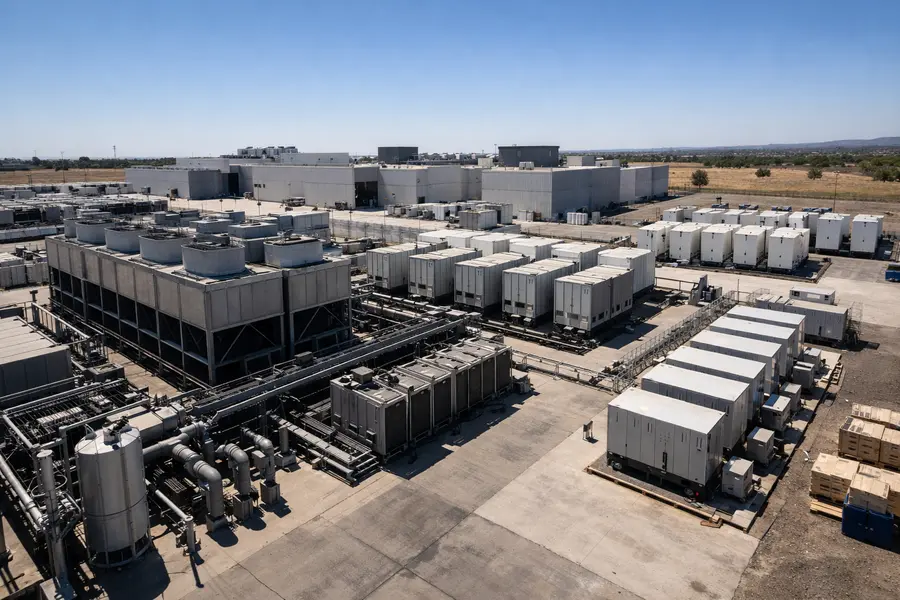
Cash capital expenditures were $75.9 billion in the third quarter alone, mostly tied to AWS and AI capacity. Amazon expects roughly $220 billion of capex in 2026 and has said it will spend meaningfully more in 2027.
The market read was straightforward. Faster growth and a 38.7% cloud margin are the return investors want from that spending, but a sub-consensus top line and EPS shortfall left little cushion while the cash gap widened.
Is Amazon's AI Spending Outrunning Its Cash Flow?
Amazon's AI spending is currently outrunning its free cash flow, though not its operating cash flow. Operating cash generation of $168.3 billion remains large and growing. The shortfall emerges only after capex, which is now being funded by the balance sheet and financing rather than by retained cash.
That structure explains the sensitivity of the stock to small misses. The case for the investment rests on AWS sustaining growth near 40% at high margins as new capacity comes online. Any slowdown in that growth, or a rise in capex without matching revenue, widens the gap between cash earned and cash committed.
What Does the Soft Holiday Forecast Mean?
The fourth-quarter outlook implies continued double-digit growth but at a pace that disappointed the market. Amazon guided net sales to between $240.0 billion and $247.0 billion, growth of 12% to 16% from the fourth quarter of 2025, including an expected 60 basis point drag from foreign exchange.
Operating income is guided to between $28.5 billion and $33.5 billion, compared with $25.0 billion a year earlier. Midpoints for both revenue and operating income fall below consensus, which turned a mixed quarter into a negative reaction.
For retail, the guidance signals a holiday season in which consumer demand holds up but does not accelerate. Profit growth is increasingly dependent on cloud and advertising, with the AWS segment carrying a larger share of consolidated operating income.
Strategic Context
Amazon's results show a company reallocating its economics toward infrastructure. Retail still generates most of the revenue, but AWS now produces a large portion of operating profit, and its growth rate is rising rather than normalizing. That is unusual for a business of this size and supports management's willingness to raise capex.
The cost is a period of negative free cash flow that investors must underwrite. The balance between those two forces will shape how the market values Amazon relative to other large AI spenders, which face similar capex-to-cash tradeoffs.
Outlook
Amazon enters the holiday quarter with guidance for $240 billion to $247 billion in sales and up to $33.5 billion in operating income. The next test is whether AWS growth holds near 40% while capex steps toward roughly $220 billion for 2026 and higher in 2027. Until free cash flow turns positive, the stock is likely to trade on each quarter's cloud growth and capex numbers.
Mentioned tickers: AMZN