Pomegra
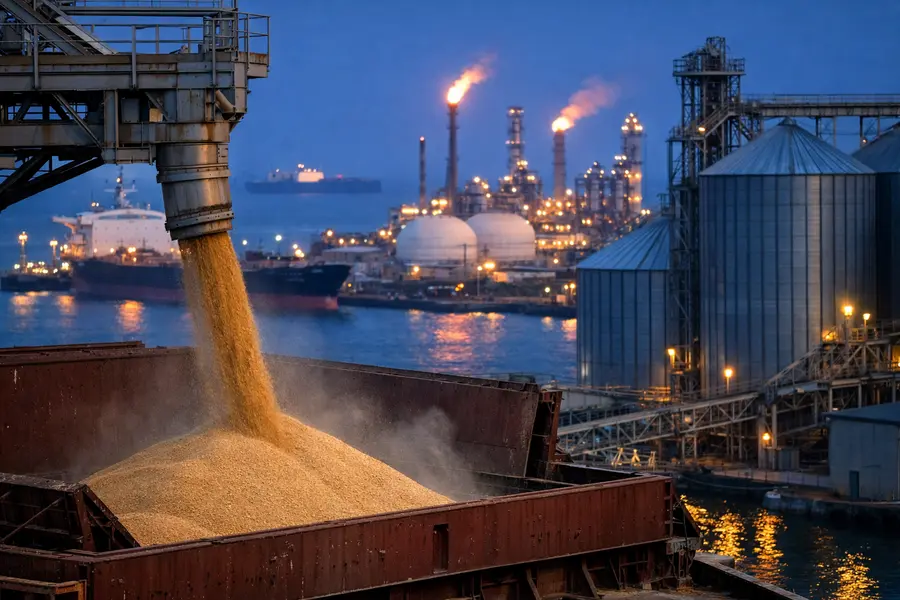
US, Russian and Ukrainian negotiators will meet in Abu Dhabi in early November to discuss an energy ceasefire and reopening the Black Sea grain corridor.
- Trilateral talks are set for the first half of November in Abu Dhabi, after November 4.
- The agenda covers an energy infrastructure truce, a Black Sea grain corridor, prisoner swaps and returning abducted children.
- Brent crude fell 1.2% to $110.36 on the news, and US equity futures rose.
Lead
Negotiators from the United States, Russia and Ukraine are preparing trilateral talks in Abu Dhabi in the first half of November. The Kremlin has said the meeting will take place after November 4, and Kyiv expects it by about November 10. It would be the first formal round since earlier 2026 negotiations lapsed while Washington's attention shifted to the Iran conflict.
The talks will be held at the technical level, not between presidents. Investors tracking the MOEX Russia index, global grain trade and energy markets are watching them closely. Brent crude has traded above $100 a barrel for much of October, and any deal on energy infrastructure or Black Sea shipping would change that supply picture.
What Is on the Agenda in Abu Dhabi?
The agenda centers on a three-part US plan: a mutual halt to strikes on energy infrastructure, reopening the Black Sea grain corridor, and renewed trilateral talks. Ukrainian President Volodymyr Zelenskyy has said Kyiv is ready to agree to a mutual stop on attacks on energy facilities.
The plan followed visits by US envoys Steve Witkoff and Jared Kushner to Moscow and Kyiv. Witkoff also met Russian President Vladimir Putin in St. Petersburg. Technical teams are expected to work on an energy and maritime ceasefire, exchanges of military and civilian captives, and the return of Ukrainian children taken to Russia.
The two sides differ on scope. Putin has said the talks should produce long-term security arrangements for a final settlement, not a short truce. Zelenskyy has asked for security guarantees, 10-year military funding and a role for European states. On October 23, Russia and Ukraine each released 270 prisoners of war, a sign that humanitarian channels still work.
Why Does the Black Sea Grain Corridor Matter?
The Black Sea grain corridor matters because Ukraine is a major exporter of wheat, corn and sunflower oil, and its Black Sea ports are the cheapest route to buyers in the Middle East, North Africa and Asia. Attacks on ports and shipping lanes have raised insurance costs and cut export volumes. Those costs reach importers as higher food prices.
A maritime moratorium would lower war-risk premiums, restore revenue for Ukraine's farm sector and ease pressure on the national budget. It would also cut shipping uncertainty for Russia's own grain and fuel exports from its Black Sea terminals. Witkoff has described the distance from an energy and Black Sea understanding to a full ceasefire as relatively short, though Moscow has not accepted that framing publicly.
How Are Energy Markets Reacting?
Energy markets reacted with a sharp pullback. On October 26, WTI crude futures fell 1.58% to $101.81 a barrel and Brent fell 1.20% to $110.36. Nasdaq futures rose 0.68%, S&P 500 futures 0.45% and Dow futures 0.31%. Spot gold recovered above $4,000 an ounce after its worst weekly performance in five months.
The relief was short-lived. Brent returned to about $116 on October 28 as Houthi attacks and restricted shipping through the Strait of Hormuz kept the Middle East risk premium high. Russia-linked supply is a second variable. Washington has temporarily eased limits on Russian diesel exports and is weighing relief for sanctioned shadow fleet tankers to bring down record freight rates. News of that review pushed Brent down 2.2% to $103.78 on October 15.
Sanctions on Rosneft (ROSN) and Lukoil (LKOH) have widened the discount on Russia's Urals grade to Brent to about $20 a barrel, the widest this year. An energy ceasefire would reduce strikes on refineries, pipelines and export terminals on both sides, but it would not lift those sanctions.
Geopolitical Dimension
The talks open as US policy toward Russia combines pressure and relief. Sanctions on Russian oil producers remain, while waivers aimed at lowering fuel and freight costs have started to appear. That reflects how the Gulf crisis has changed Washington's priorities. Stable oil supply now carries more weight in US decisions than it did a year ago.
For Moscow, an energy truce would protect refining and export infrastructure that Ukrainian drones have targeted. For Kyiv, it would shield a power grid weakened by repeated strikes ahead of winter. Both sides gain from a limited deal, which explains why this track is advancing while territory and security guarantees, the harder questions, stay unresolved.
What Could Derail the Talks?
Three factors could derail the talks. The first is sequencing: Moscow wants a durable settlement, while Kyiv and Washington want a quick energy and maritime truce as a first step. The second is verification, since any halt on strikes needs monitoring. The third is competing demands on US attention, with the Iran conflict and Houthi attacks absorbing diplomatic and military resources. Earlier rounds in 2026 produced little progress, and Zelenskyy has said Russian follow-through remains uncertain.
Outlook
The Abu Dhabi round is the most concrete diplomatic step in months, and an energy and Black Sea agreement is the most achievable result. A deal would lower shipping risk, support Ukrainian grain exports and cut supply risks for oil products over the next three to twelve months. A broader settlement remains distant. For markets, headlines from Abu Dhabi will compete with Gulf supply risks, with Brent likely to follow whichever dominates.
Mentioned tickers: ROSN, LKOH