Pomegra
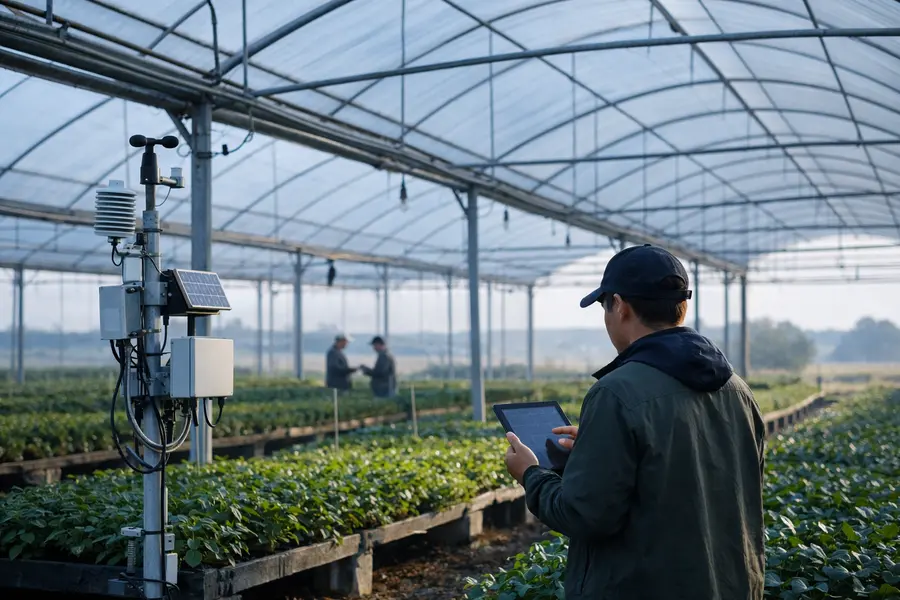
Brazilian agritech Vereda raised a R$30M (about $5.5M) seed round co-led by Canary and Valor Capital Group, backing a commission-only model for selling crop inputs to farmers.
Key Takeaways
- Vereda closed a R$30M (about $5.5M) seed co-led by Canary and Valor Capital Group; valuation is undisclosed.
- It is a16z Speedrun's first agribusiness investment, and the founders are the program's first Brazilians.
- The startup is about a year old, with roughly 10 partner manufacturers and 4 autonomous sales agents.
Lead
Vereda, a Rio Verde, Goiás startup founded in late 2025, raised R$30M in a seed round announced in early November 2026. Canary, the Brazilian venture firm, and Valor Capital Group, the US-Brazil investor, co-led the round. a16z Speedrun, the early-stage program of Andreessen Horowitz, also participated, along with undisclosed angel investors from agribusiness, finance and tech. Vereda did not disclose the valuation.
The company sells agricultural inputs such as crop protection products and seeds on behalf of manufacturers. It takes a commission, holds no inventory and carries no credit risk. Its pitch to farmers is a price more than 30% below what traditional resellers charge.
What Does Vereda Actually Do?
Vereda acts as a commercial agent for input makers, connecting them directly to mid-sized producers farming around 2,000 hectares. Its proprietary AI system, called Vera, runs through WhatsApp and turns a farmer's request into a product recommendation and a commercial proposal. Salespeople can also log field visits by audio, and the system generates documents automatically.
Sales run through a mix of in-house staff and autonomous agents, a structure the company compares to independent investment advisors. Today it has four such agents. Its partner list covers about 10 manufacturers, including Agrichem, Ourofino, CHDS, Casa Bugre, Fava Sementes and Hinove. Operations center on southwest Goiás, with sales reaching Mato Grosso and Tocantins.
Who Is Behind the Company?
The founders are João Pedro Aguiar de Souza and Pedro Galindo, both 24 and both University of Southern California alumni. Souza studied finance and public policy, and Galindo studied administration and AI applications. João Vieira da Silva Filho joined in the first month as partner and commercial director.
Why Is Distribution Under Pressure?
Brazil's input distributors carry heavy inventory, extend crop-cycle credit to farmers and concentrate credit risk in a small number of clients. That model has produced recent judicial recovery filings from distributors including Sagra Insumos, Prime, Sefert and Soyagro. Vereda argues the intermediary should stop functioning as a bank.
"There is a consensus that the sector needs a new model, but we don't see anyone doing something structurally different," Souza said. The thesis is that manufacturers keep their direct relationships and financial institutions price the credit, while Vereda handles the sale.
Can a Commission Model Scale in Brazilian Agribusiness?
It can, but the obstacles are specific. Sector observers have flagged four of them: scaling without inventory, logistics and credit as assets; financing costs that could erase the price advantage; fragmented deliveries to mid-sized farms; and the loyalty of non-exclusive agents. The last is an old problem. AgriConnection began with a similar premise and gradually took on the traits of a traditional distributor.
A seed round of this size also implies modest expectations at this stage. R$30M funds a regional team and a financing pilot, not a national rollout. Vereda says its margins already match those of traditional distributors without the balance-sheet exposure, a claim the company has not backed with published revenue.
How Will the Money Be Used?
Vereda plans to consolidate its Goiás operations through 2027, add manufacturers and farmers, and grow its commercial team and agent network. A second phase brings financial institutions, trading companies and credit funds into the platform. A financing pilot is under way in the 2026/27 off-season, and the company intends to scale it in the 2027/28 cycle and enter other agricultural regions.
Outlook
Vereda has a year of operating history, a 10-manufacturer network and backing from two regional specialists plus a16z Speedrun. The test comes in the 2027/28 crop cycle, when financing scales and the company must show that agents stay loyal and that farmers still save money once credit costs are counted. The distributor failures of 2026 give the model a clear opening, but they do not prove it works.