Pomegra
Sanders and top Democrats are pressing for a national data center moratorium, and AI stocks fell sharply on Thursday despite a likely Trump veto.
- The S&P 500 fell 4.4% on Thursday, its worst day since the April 2025 tariff shock.
- Nvidia dropped 9.3% and AMD 17.3% as investors sold names tied to data center demand.
- A moratorium would face a Trump veto, but local ballot wins have made the AI buildout a political risk.
Lead
Sen. Bernie Sanders called for a "national data center moratorium now" after Democratic wins in Tuesday's midterm elections, and other senior Democrats echoed the demand. AI stocks sold off on Thursday, November 5, 2026. The S&P 500 fell 334.89 points, or 4.4%, to 7,353.73. The Nasdaq composite lost 5.5% to 24,315.00, and the Dow Jones Industrial Average dropped 3.4%, or 1,833.06 points, to 51,523.06.What Are Democrats Demanding?
Democrats are demanding a pause on new data center construction until federal safeguards for workers, consumers and the environment are in place. Sanders said Americans do not want technology companies "wrecking the environment, gutting jobs." Rep. Yassamin Ansari of Arizona called a pause on AI development a top priority for the first day of the new House session. Rep. Greg Casar of Texas, who chairs the Congressional Progressive Caucus, backed her call.
Sanders and Rep. Alexandria Ocasio-Cortez had already introduced the AI Data Center Moratorium Act in March. The proposal would halt construction until national protections are enacted.
Several Democratic winners ran against data center expansion. Senate winner Sherrod Brown of Ohio said, "I do not work for data centers." Pennsylvania Gov. Josh Shapiro signed an August executive order slowing development. Texas gubernatorial candidate Gina Hinojosa promised a moratorium on approvals pending protective legislation. Texas holds 27% of planned national data center capacity.
Why Did AI Stocks Sell Off So Sharply?
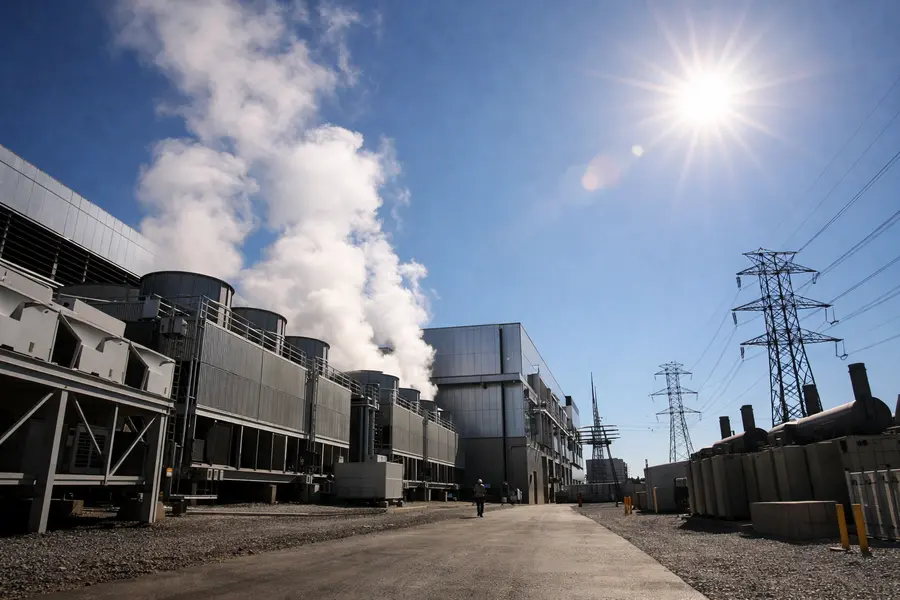
AI stocks sold off because Tuesday's results raised the prospect that governments could force pauses in data center construction, which underpins demand for chips, power equipment and cloud capacity. Voters have also objected to higher power bills linked to data centers.
The CNBC Voter Poll found that 56% of voters called AI and data centers a crucial or major factor in their decision. Of those voters, 65% backed Democratic congressional candidates. Data center measures appeared on ballots in at least 41 jurisdictions across 10 states, and voters approved restrictions in 40 of them.
Can a National Data Center Moratorium Become Law?
A national moratorium is unlikely to become law in the near term, because President Donald Trump holds veto power for two more years and a federal pause would need to clear a presidential veto. Democrats are also split. Some fear that a ban would slow AI development and weaken national security.
The risk to the AI buildout runs through states and localities. Zoning limits, permit freezes and utility-rate rules can slow projects without any federal action. Estimates from major banks suggest that a significant share of planned capacity, including roughly 30% of expected 2028 additions by one estimate, could face delay or cancellation.
Market Context
The S&P 500 decline was its steepest since President Trump's "Liberation Day" tariffs rattled markets in April 2025. Nvidia is now down 2.6% year to date. The selloff hit chipmakers, neoclouds and power suppliers together, which shows how much of the AI trade depends on continued construction.
Outlook
Federal action on a data center moratorium remains a long shot while Trump holds the veto. The immediate pressure on AI stocks comes from state and local restrictions, utility costs and the political cost of AI infrastructure for elected officials. The new House session in January will show how many Democrats back a pause, and quarterly capital spending updates from hyperscalers will show whether construction plans change.