Pomegra
Vienna-based Tumbleweed raised €6.9M led by PactVC, Austria's largest SpaceTech seed round, four months after launching Austria's first commercial satellite.
Key Takeaways
- Tumbleweed raised €6.9M in seed funding led by PactVC, the largest SpaceTech seed round in Austria.
- Its first satellite, Oasis Alpha, launched July 7, 2026 on SpaceX Transporter-17.
- Three missions with more than 10 customers are planned for 2027. Valuation was not disclosed.
Lead
Tumbleweed, a Vienna-based SpaceTech startup, announced a €6.9M seed round on November 3, 2026. PactVC led the round. The company calls it the largest SpaceTech seed round in Austrian history. The announcement comes four months after Tumbleweed put Austria's first commercial satellite into orbit.
The company sells access to microgravity as a service. Research groups and manufacturers ship experiments to Tumbleweed, which handles space certification and flight, then returns data during the mission. Mission bookings start at €15,000.
What Is Tumbleweed Building?
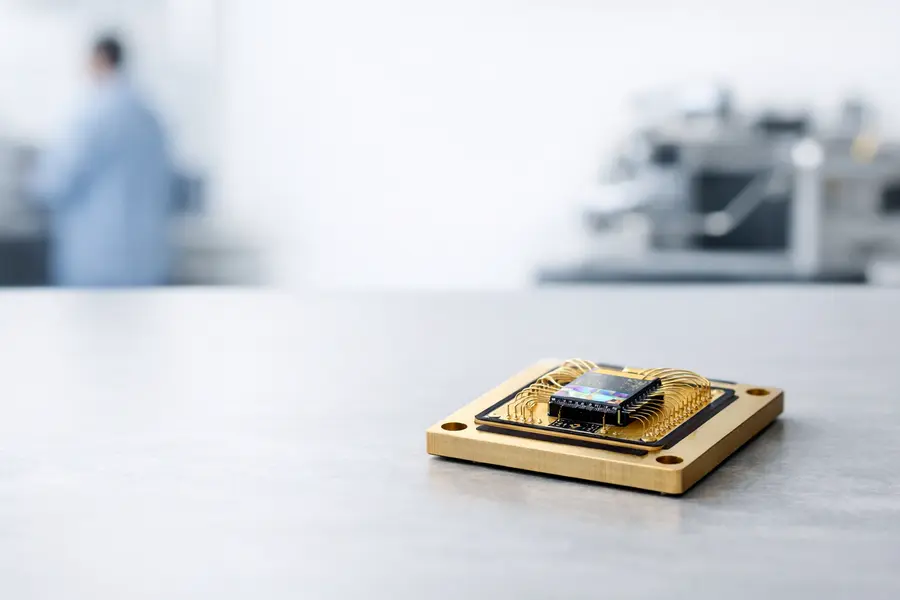
Tumbleweed builds modular payload containers, called Pods, and the spacecraft that carry them. Each Pod is fault-isolated, so a customer's experiment cannot endanger the host satellite or other payloads. That isolation is what allows Tumbleweed to pre-certify the hardware once instead of forcing each customer through a separate approval process that can take years.
The target customer is a lab or R&D team that has never flown anything. The company says its approach is five times faster and one-tenth the cost of running comparable experiments on the International Space Station. That comparison comes from Tumbleweed itself and has not been tested across a large customer base.
The three founders are Julian Rothenbuchner, who serves as CEO, Guillaume Brault and Leonhard Goliasch. Rothenbuchner began the Team Tumbleweed project in 2016, and the company was founded in 2024. The 25-person team is split between Delft, where technology development sits, and Vienna, which handles customer support, operations and legal work.
What Did the First Satellite Actually Prove?
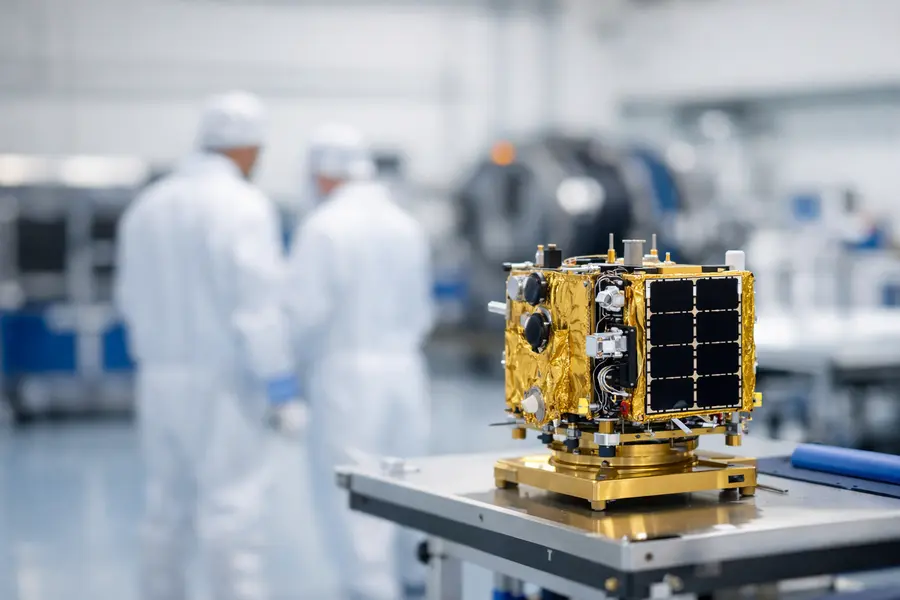
Oasis Alpha, a 3.6-kilogram CubeSat, launched on SpaceX Transporter-17 on July 7, 2026. It carried experiments from four first-time space users: Delft University of Technology, which tested autonomous intelligent systems; the European Space Resources Innovation Centre, which studied phase transitions; Mass Balance, which ran a cell biocatalysis experiment; and the Spring Institute for Forests on the Moon.
The launch demonstrated that the Pod concept can get through a launch provider's certification. Getting there was not smooth: Tumbleweed's first two certification proposals to SpaceX were rejected before a third was accepted. A single flight with four customers is a thin base for a commercial claim, but it is the evidence the seed investors were asked to underwrite.
Who Backed the Round and at What Valuation?
PactVC led the round. Munich-based Vanagon Ventures, Prototype Capital, EWOR and a group of international investors and business angels also took part. Prototype Capital had backed Tumbleweed at an early stage, so the round includes a returning investor. The valuation was not disclosed.
More than a third of the 25-person team also invested their own money. That is a modest signal of internal confidence, though the amounts were not disclosed. Prototype Capital's Andreas Klinger described the appeal in simple terms: instead of years of preparation to get a satellite into space, a customer orders one of Tumbleweed's boxes.
At €6.9M, the round is large for an Austrian seed but small against the cost of building and flying multiple spacecraft. Launch slots are bought per mission, and the company will need follow-on capital if its 2027 schedule holds.
What Comes Next for Tumbleweed?
The money funds three missions in 2027 serving more than 10 customers, drawn from medical, biotech and agritech sectors. It also accelerates Oasis Beta, a next-generation orbital platform. Payloads are due to return to Earth from 2028, which would let customers recover physical samples instead of only receiving data.
Tumbleweed has also signed a memorandum of understanding with French launcher SIRIUS Space Services for Pod compatibility testing. The deal would give it a second launch route beyond SpaceX. The Vienna team is expected to grow by roughly 70% by the end of 2026.
Rothenbuchner has framed the long-term goal as making microgravity a widely accessible industrial resource, with pharmaceutical development, including cancer treatments, as the headline use case. That remains an ambition rather than a result. The 2027 missions will show whether paying customers return after a first flight.
Outlook
Tumbleweed has a flown satellite, four first-time customers, a lead investor in PactVC and a booked 2027 manifest. It does not yet have disclosed revenue, a published valuation or a return capsule. Oasis Beta and the 2028 sample-return plan are the next technical tests. Repeat bookings from the first customers will show whether Pod-based microgravity access works as a business.