Pomegra
German quantum startup Quint Computing raised a €9.1M seed round led by Vsquared Ventures to cut error-correction costs with a new superconducting chip design.
Key Takeaways
- Quint Computing raised €9.1M in a seed round led by Vsquared Ventures; valuation was not disclosed.
- An EU grant of €2.2M lifts total funding to about €11.3M.
- Its chip design targets up to 100x lower physical error-correction overhead.
Lead
Quint Computing, a quantum hardware startup spun out of Friedrich-Alexander-Universität Erlangen-Nürnberg (FAU), announced on November 3, 2026 that it has raised €9.1M ($10.2M) in a seed round. Vsquared Ventures led the financing. The company, founded in October 2025, will use the money to build a superconducting quantum chip architecture that suppresses errors at the hardware level. Handelsblatt described the round as the largest first financing for a German quantum computing company at such an early stage.
Who Backed the Round?
Vsquared Ventures led, with Quantonation, Nucleus Capital, Faber, Vanagon Ventures and ZOHO.VC joining. Mikko Möttönen, a co-founder of Finnish quantum maker IQM, invested as an individual. Quint has not disclosed its valuation or the split between investors.
A seed round of this size, roughly 14 months after incorporation, shows that quantum hardware investors still pay up for credentialed academic teams before any commercial product exists. It also shows that the money is concentrating in a few specialist funds, not spread across generalist venture firms.
What Does Quint Actually Build?
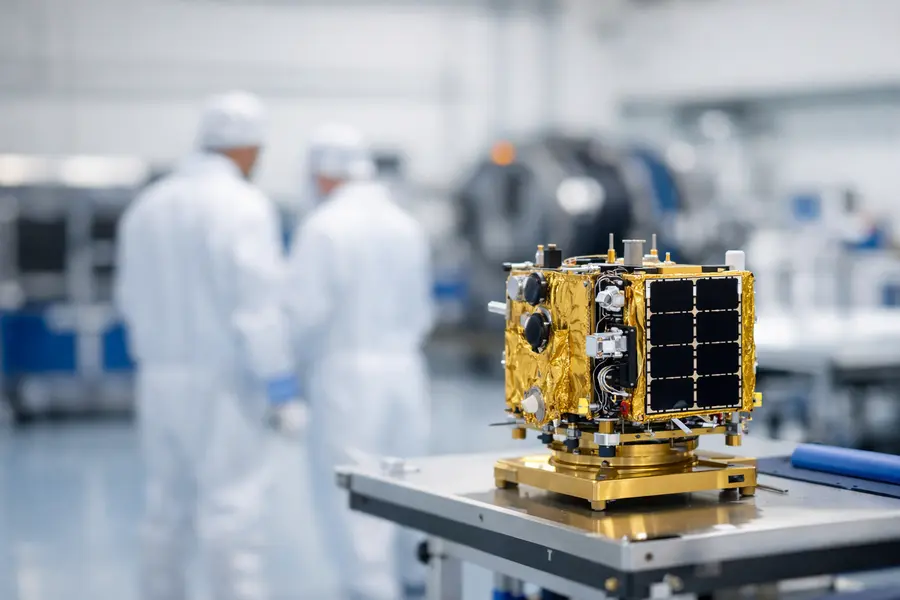
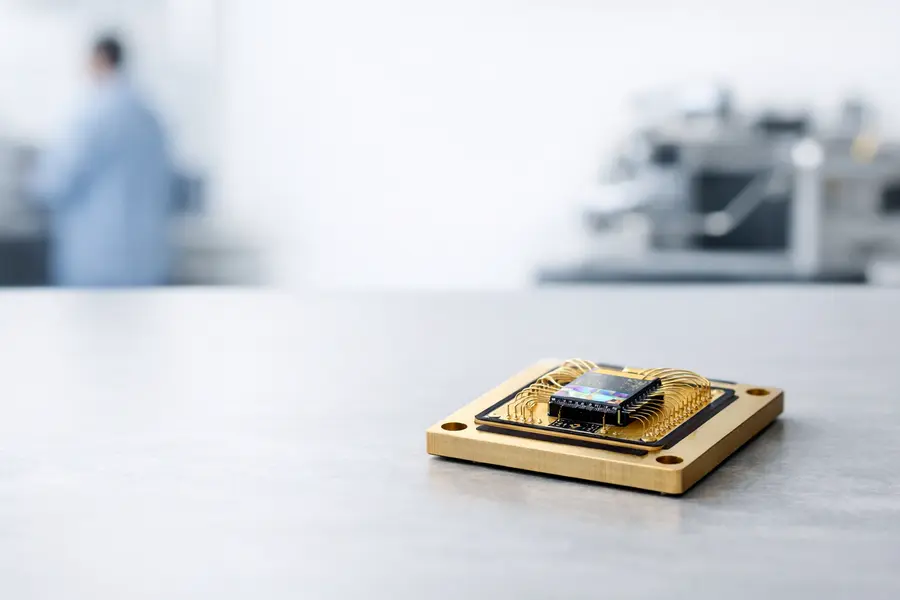
Quint builds superconducting quantum chips that use continuous electrical stabilization to suppress error mechanisms in the physical circuit. Most competing approaches rely on stacking many physical qubits into error-correcting codes. Quint's architecture is designed to cut the physical error-correction overhead by up to a factor of 100, according to the company.
That claim matters because error correction is the main cost driver in quantum computing today. Every physical qubit spent on redundancy is one that cannot do useful work. A chip that produces fewer errors at the source would need fewer qubits to reach the same reliability, which lowers hardware cost and system complexity.
The company holds a patented design and plans to work with contract manufacturers instead of running its own fabrication. It has named chemistry and pharmaceuticals as target sectors, with industrial pilot projects planned alongside Bosch, BASF and Boehringer Ingelheim.
Who Is Behind the Company?
Prof. Christopher Eichler serves as CEO, Prof. Michael Hartmann as CTO and Dr. Jona Stinner as CFO. Hartmann previously worked on Google's quantum team. The company is based in Erlangen and belongs to the Munich Quantum Valley ecosystem. Its advisory board includes Prof. Florian Marquardt, Dr. Reinhard Ploss and Dr. Markus Hoffmann.
Quint also holds a €2.2M European Innovation Council Pathfinder grant. Together with the seed round, that brings total capital to about €11.3M. The team currently numbers 10, with a target of about 40 specialists by 2028.
Can the Chip Design Scale?
The open question is whether the error-suppression gains hold as qubit counts grow from a handful to hundreds. A 100x reduction in overhead is a design target, and the company has not published data showing it at scale. Results on small test devices frequently fail to carry over once control wiring, fabrication variation and crosstalk enter the picture.
Quint also faces rivals with far larger budgets. Google and IBM run superconducting programs with deep engineering benches, and European peers such as IQM have raised substantially more. Quint's pitch is narrower: it sells a chip-level improvement that could, in principle, be licensed or built into other systems. That positioning lowers the capital needed, but it also makes the company dependent on foundry partners and on customers willing to adopt a new architecture.
What Comes Next for Quint?
Over the next 12 to 24 months, Quint is expected to expand its team, advance its processor prototypes and begin pilots with industrial partners. The first measurable test will be published error rates on multi-qubit devices. A follow-on Series A would likely depend on those results, and on whether pilot customers move from evaluation to paid contracts.
For Germany, the round adds another funded entrant to a national field that includes planqc, eleQtron and others, backed by public programs and the Munich cluster. European investors have so far favored hardware startups with university roots, and Quint fits that pattern.
Outlook
Quint enters the field with €9.1M, a €2.2M EU grant, a patented architecture and a claim of up to 100x lower error-correction overhead. None of that is proven beyond the lab. The next year of device data and pilot results will show whether the design reduces cost at scale or remains an academic result.