Pomegra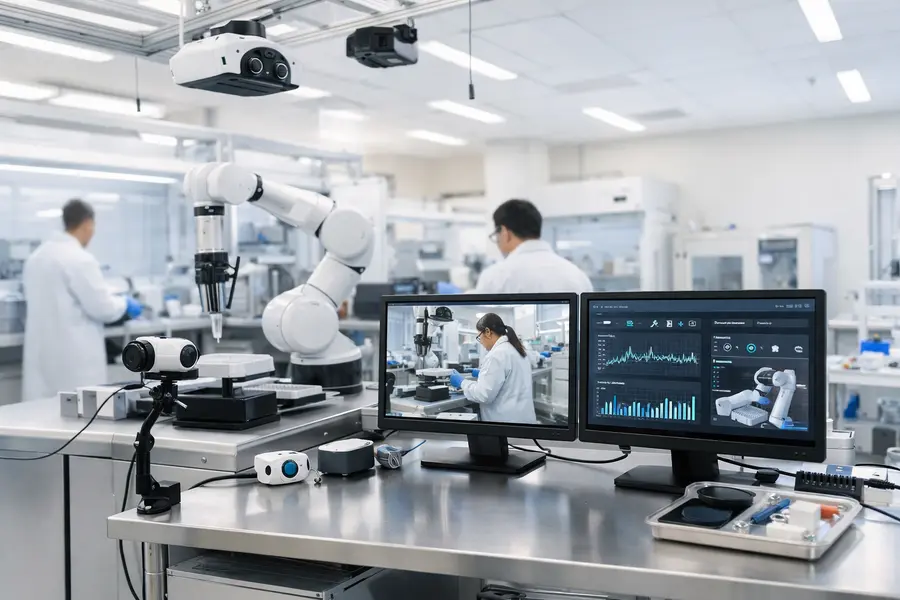
Transfyr exits stealth with a $25M seed led by General Catalyst, deploying sensors and multimodal AI to capture the lab work that never makes it into scientific papers.
- General Catalyst led the $25M seed; Lux Capital, Breakout Ventures, Factory, Neo, SV Angel, MVP Ventures, Underscore VC, and Lyda Hill also participated.
- The platform passively captures operator actions, equipment telemetry, environmental conditions, and protocol deviations - the tacit knowledge behind experimental outcomes.
- Co-founders include Dr. Renee Wegrzyn, founding director of ARPA-H, and Anna Marie Wagner, formerly SVP at Ginkgo Bioworks.
What Transfyr Actually Does
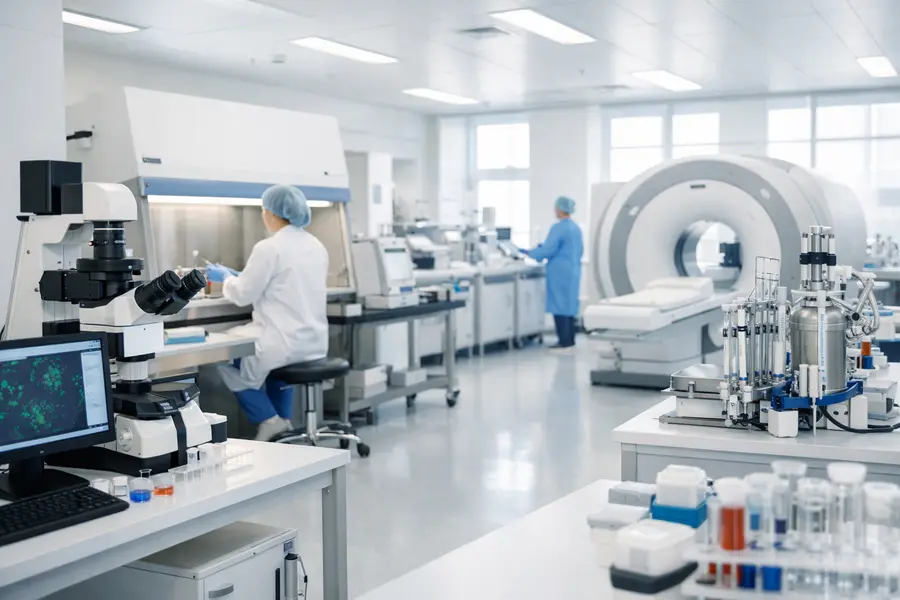
Transfyr, based at The Engine in Cambridge, Massachusetts, emerged from stealth on August 26, 2026, with $25 million in seed funding. The company builds what it calls a physical AI observability layer for laboratories: an integrated stack of sensors and multimodal AI models that sits inside a lab and records what scientists do - not what they report they did.
The distinction is the entire thesis. Published protocols omit the ambient temperature that drifted two degrees. Electronic lab notebooks miss the pipetting technique that the most experienced researcher uses but never writes down. Those gaps, compounded across thousands of experiments, are why so much science fails to reproduce and why robotic lab systems keep underperforming. Transfyr treats that missing information as a data problem and deploys hardware to collect it.
The platform captures operator intent and actions, equipment telemetry, supply chain variables, and environmental context. That metadata feeds into root cause analysis, protocol optimization, and standardized transfer documents. The longer-term target is building robotic-level instructions from human-generated workflows, which puts the company directly in the path of automated drug discovery and manufacturing.
Why Did This Round Get to $25 Million?
The seed amount is large enough to signal that General Catalyst and co-investors are underwriting a hardware-plus-software buildout, not a pure software bet. Sensor stacks, wet lab operations, and proprietary training data cost money before any enterprise contract closes. Transfyr operates its own in-house wet lab in Cambridge, where it generates foundational training data and tests its sensor stack against real experimental workflows. That in-house capacity suggests the company is not waiting on customer access to build a dataset.
The $25 million also reflects the investor calculus around lab automation as a market. Robotic lab platforms have struggled to generalize because they were trained on idealized protocols rather than how science is actually performed. If Transfyr can build what it describes as the world's largest multimodal dataset of scientific execution, it holds a structural advantage that would be hard to replicate. That claim is exactly what this round is meant to fund - and exactly what investors will be measuring against in the next 18 months.
Valuation was not disclosed.
What Does the Founding Team Signal?
The co-founders are chosen for credibility in two specific domains. Anna Marie Wagner ran AI and corporate development at Ginkgo Bioworks, a company that spent years attempting to systematize biological experimentation at scale and learned, expensively, where automation hits its limits. Dr. Renee Wegrzyn served as the founding director of ARPA-H, the federal agency created to fund high-risk biomedical research. That combination - operational experience inside a high-throughput biology company, and government-level exposure to the reproducibility problem as a national research inefficiency - gives the company access to both early enterprise customers and institutional credibility.
The founding team's profile also hints at the initial target market. Ginkgo built for pharmaceutical and industrial biology customers. ARPA-H funds biomedical research. Early customers are likely in drug discovery, manufacturing process development, and federally funded academic labs where reproducibility carries compliance weight.
Who Does Transfyr Displace?
The nearest comparables are electronic lab notebook vendors, process analytical technology providers, and general laboratory information management systems. None of those were built around passive, AI-interpreted capture. They require scientists to enter data. Transfyr's pitch is that the act of entry is where the important details get lost. Whether customers accept the sensor-in-the-lab model - with its implied surveillance dynamic and data security questions - is the adoption risk that no amount of seed funding resolves on its own.
Outlook
Transfyr has the funding, the team pedigree, and a real problem with no clean incumbent solution. The next test is whether pharmaceutical and biotech customers will install sensors in environments where proprietary process knowledge is the competitive moat. Converting pilot agreements into enterprise contracts, while delivering a dataset that actually improves reproducibility metrics, is the work that a $25 million seed buys time to attempt. A Series A will follow if the data holds.