Pomegra
Tractian's $130M Series D, led by Sapphire Ventures, values the industrial AI company at $1.4B and roughly doubles its December 2024 valuation.
Key Takeaways
- Tractian raised $130M in a Series D at a $1.4B valuation, led by Sapphire Ventures with M&G's Catalyst co-leading.
- Annualized recurring revenue passed $100M in September 2026, up 90% year over year.
- The previous round, in December 2024, valued the company at $720M.
Lead
Tractian, the Atlanta-based maker of sensors and AI software that predict industrial machine failures, raised a $130M Series D announced on October 23, 2026. Sapphire Ventures led the round and M&G's Catalyst growth strategy co-led it, at a $1.4B valuation. The company says annualized recurring revenue crossed $100M in September, growing 90% from a year earlier.
The round makes Tractian a unicorn seven years after its 2019 founding in Brazil. It also brings total funding to about $309M.
Who Else Invested in the Round?
Existing and new backers filled out the round beyond the two leads. Participants include N47, General Catalyst, Bosch Ventures, 53 Stations, Monashees, Endeavor Catalyst, Norte Ventures and Y Combinator.
Sapphire also led the Series C. A repeat lead writing a larger cheque at a higher price is the cleanest signal available that the earlier bet is performing. Bosch Ventures is a more particular name on the list: Bosch sells industrial equipment and sits close to the maintenance buyers Tractian targets.
What Does Tractian Actually Sell?
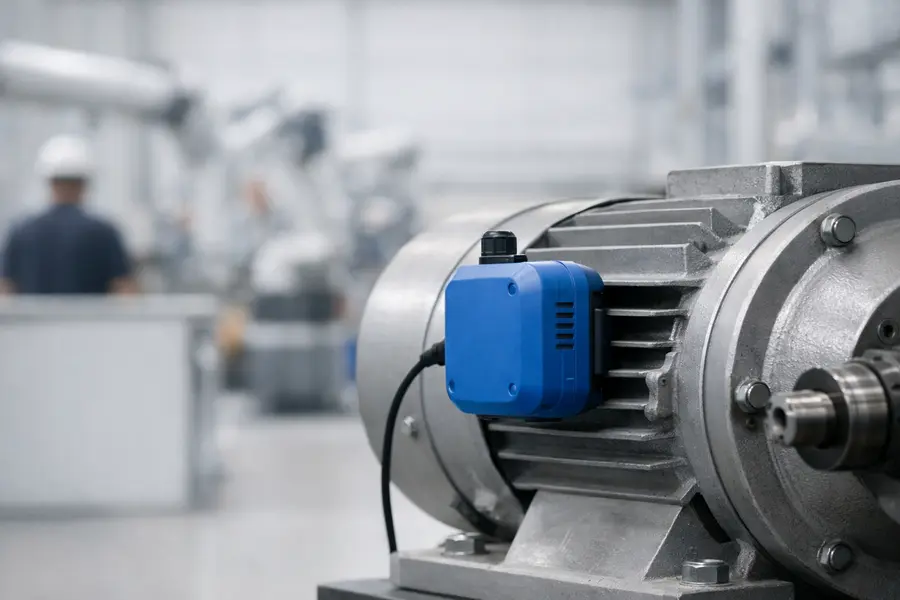
Tractian retrofits existing industrial machines with sensors that capture vibration, temperature, ultrasound and other signals, then runs AI models on that data to flag impending failures. The aim is to cut unplanned downtime, which is expensive in plants where a single stopped line can cost more than the monitoring contract. The company also sells maintenance management software and electrical monitoring.
More than 2,000 facilities use the platform, with customers including Coca-Cola, Whirlpool, Cummins and Embraer. Food and beverage is its largest sector. Data centers and other critical infrastructure are the fastest-growing segment. Roughly half of revenue comes from the US, with Brazil the other main market.
The company holds FedRAMP High authorization, ISO 27001 and ISO 9001 certifications, which matter for sales into government and regulated industries.
Why Did the Valuation Nearly Double in Under Two Years?
Revenue growth explains most of it. Moving from a $720M valuation in December 2024 to $1.4B in October 2026 is a step of roughly 1.9x, while ARR is reported to have grown 90% in the past year alone. At $1.4B and just over $100M of ARR, the round prices Tractian at roughly 14 times recurring revenue, a multiple that is high for industrial software but modest against many AI-labelled peers growing at similar rates.
The "physical AI" label also helps. Investors have been paying up for companies that attach machine learning to hardware and real-world operations. That framing carries risk: hardware-heavy models carry lower gross margins than pure software, and the company has not disclosed margins.
Where Will the Money Go?
Tractian plans to put the capital into research and development over a five-year horizon. Priorities include training larger models on its sensor data and buying Nvidia processors to run them. The company customizes open-source models, including Nvidia's Nemotron, to analyze machine signals.
The compute spending signals a bet that its proprietary dataset, collected across thousands of machines, becomes more valuable as models grow. That thesis is plausible, but unproven at scale. Competitors in condition monitoring, including established industrial automation vendors, can also pair sensor data with their own models.
What Comes Next for Tractian?
Three variables decide whether the $1.4B mark holds. The first is sustained growth: holding 90% expansion becomes harder as ARR moves well beyond $100M. The second is the data center segment, where demand for uptime is high and buyers are well funded, but where large incumbents are also active. The third is whether physical AI spending translates into measurable gains in prediction accuracy that customers will pay more for.
An IPO is not on the table in any announcement. Another private round or a strategic partnership with a large industrial group appears more likely in the near term, given Bosch's presence on the cap table.
Outlook
Tractian enters its eighth year with a $1.4B valuation, more than $100M in ARR and a repeat lead investor. The Series D funds a multi-year push into model training and compute. The test now is whether growth and margins hold as the company scales beyond its current base of about 2,000 facilities.