Pomegra
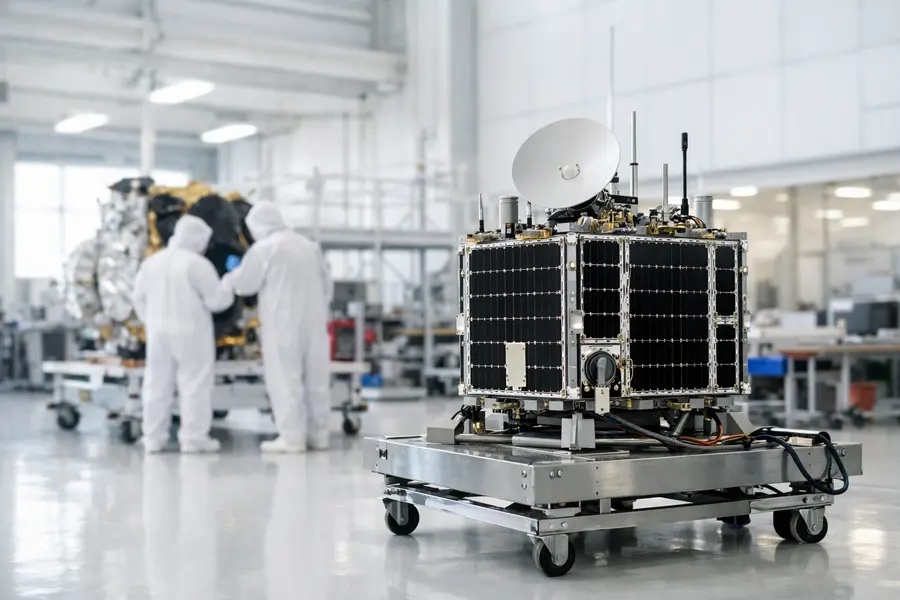
Xona Space Systems raised a $250M Series D at a $2.45B valuation led by Future Ventures to build a commercial GPS alternative for autonomous machines.
Key Takeaways
- Xona raised $250M at a $2.45B valuation; Future Ventures led with $78.5M.
- The round closed seven months after a $170M Series C, lifting total funding past $570M.
- Six Pulsar satellites launched October 20, 2026; beta service starts in early 2027.
Lead
Xona Space Systems, a Burlingame, California startup building satellite navigation for autonomous machines, announced a $250M Series D on October 22, 2026, at a $2.45B valuation. Future Ventures, the firm co-founded by early SpaceX investor Steve Jurvetson, led the round and contributed $78.5M. The raise brings total capital since Xona's 2019 founding to more than $570M, and it arrived two days after the company put six production Pulsar satellites into orbit on a SpaceX rideshare mission.
What Does Xona Actually Sell?
Xona sells positioning, navigation and timing (PNT) from low Earth orbit, as a commercial layer that runs alongside government-operated GPS. Its Pulsar network is designed to broadcast signals up to 100 times stronger than conventional GPS, with accuracy better than 2 centimeters and encrypted authentication meant to resist spoofing. The stronger signal is also meant to reach indoors, which GPS generally does not.
The target customers are machines that cannot tolerate a bad position fix: self-driving vehicles, drones, robots and industrial equipment. The company's long-term plan calls for a constellation of 258 satellites orbiting below the GPS fleet. It competes with the US government's free GPS service, which means Xona must persuade customers to pay for performance that a free signal does not deliver.
How Fast Has the Money Come In?
Xona has raised capital at a quick pace: $250M in October follows a $170M Series C that closed about seven months earlier, in April 2026. That sequence implies two things. Demand from prospective customers, or at least from investors, increased after the Federal Communications Commission authorized full commercial deployment of the Pulsar constellation in August 2026. It also implies that building a satellite factory costs more than a typical software growth round.
Skepticism is warranted on one point. The announcement names no paying customers and discloses no revenue, and the beta service has not started. A $2.45B valuation therefore prices regulatory progress, hardware milestones and the size of the opening in navigation, not commercial traction. The Series D tests how much of that gap investors will fund before contracts appear.
Earlier backers include Craft Ventures, ICONIQ, Woven Capital and Samsung Next. Xona has not named the other new and existing investors that joined the Series D.
Why Does the Timing Matter?
The timing matters because GPS jamming and spoofing have become a routine operational problem for aviation, shipping and military users, which has raised the value of a second, harder-to-disrupt signal source. Xona's pitch is that a stronger, authenticated LEO signal reduces that exposure. A commercial network also has no obligation to wait for the government to modernize GPS.
The company also hit its hardware targets. Its Pulsar-0 demonstration satellite, launched in 2025, completed more than 500 transmissions. The October launch of six satellites is the largest batch so far, and four of them are expected to support the beta service from early 2027. CEO Brian Manning, a former SpaceX engineer who co-founded the company with fellow Stanford aeronautics and astronautics alumni, described the shift from an empty warehouse at the start of the year to a working satellite factory.
Where Will the Money Go?
The proceeds will go mainly to production. Xona wants to build 50 spacecraft a year by the end of 2027, with a longer-term goal of turning out several satellites a week from the Burlingame facility. Two of the six satellites just launched were designed and built entirely in-house.
Manufacturing rate is the central constraint. A 258-satellite constellation at 50 per year implies more than five years of production before replacements, and that is before any satellite fails or reaches end of life. Faster deployment depends on launch availability and on how soon the beta converts into paying contracts.
What Comes Next?
The next milestones are concrete. Beta service is scheduled for early 2027 in multiple countries, with early commercial customers following the same year. The first customer announcements will show whether autonomous-vehicle, robotics and drone makers will pay for a signal they can currently get free, or whether Pulsar's early revenue comes from defense and critical infrastructure instead.
Competitors and government programs could narrow the opening. Any upgrade to GPS resilience, or a rival commercial LEO navigation network, would pressure the premium Xona is counting on. If the beta performs as the company states, the more likely constraint is production and launch pace, not demand.
Outlook
Xona has secured the capital, the FCC authorization and the first production satellites, and has seven months of fundraising momentum behind it. What it lacks is disclosed revenue or named customers. The 2027 beta and the satellite production rate will determine whether the $2.45B valuation holds.