Pomegra
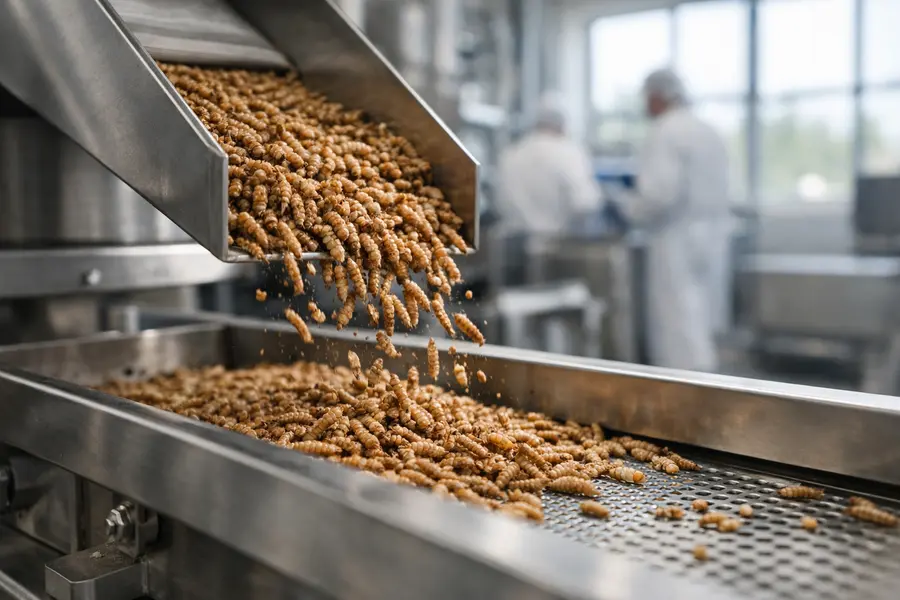
Finnish insect-protein maker Volare raised €7.1M at a €74.4M post-money valuation to fund a second factory, days after opening its 5,000-tonne Pori plant.
Key Takeaways
- Volare raised €7.1M via Springvest at €2.80 per share, a €74.4M post-money valuation.
- Its €15M Pori plant produces up to 5,000 tonnes of protein and 2,000 tonnes of oil a year.
- A second plant with about five times the protein capacity is slated to start construction in 2027.
Lead
Volare, a Finnish deep-tech company that turns food-industry side streams into insect protein, raised €7.1M on October 26, 2026. It also inaugurated Volare 01, its first industrial-scale facility, in Pori, Finland. The round ran through the investment platform Springvest and included new and existing backers, among them Maki.vc. The money goes toward a second factory and expansion in Europe and beyond.
How Big Is the Round, and What Does It Value Volare At?
The round values Volare at €74.4M post-money, or €63.8M pre-money, at a share price of €2.80. The company has not labelled the round with a stage such as Series A or B. Springvest is the channel for the raise, and no single lead investor has been named.
The valuation sits against a heavy capital history. In May 2025 Volare closed a €26M package from Maki.vc, Firstminute Capital, Springvest, the Finnish Climate Fund, Finnvera and Norion Bank, covering plant construction and technology work. The new €7.1M is therefore a top-up of about 27% on that package, not a fresh bet on an unproven concept.
What Does the Pori Plant Actually Do?
Volare 01 breeds black soldier fly larvae on locally sourced food-industry side streams and processes them into protein meal, insect oil and fertilizer. The 10,000-square-metre site is a converted newspaper printing facility. It was built within a €15M capital budget and runs with four people per shift.
Volare claims a dry process that cuts energy use for end-product processing by about 30%. It also says its capital expenditure is four to ten times lower than that of other insect producers, with roughly half the full-time staff. These are company figures and have not been independently verified.
Commercial sales began in 2022 from a demo-scale site. The company reports that a large share of the new capacity is already sold. Customers include aquafeed producer Skretting, an unnamed global chemical company, pet-food brands Alvar Pet and VAFO Group, and trout-feed supplier Alltech Fennoaqua. Chief executive Jarna Hyvönen, who took over in June 2025, said the plant "proves that our technology and production model work at industrial scale."
Why Is a Second Factory Coming So Fast?
Volare is building a second plant because the first one is already largely contracted, and scale is the only route to its cost target. The company wants production costs near €1,000 per tonne at scale. Insect meal currently sells for roughly €3,800 to €6,000 per tonne, against about €1,815 for fishmeal and €541 for soy.
The second plant is planned at about five times the protein capacity of the first. Construction is expected to start in 2027, outside Finland and near partner facilities. Volare says it is in talks with global food, beverage and agricultural companies. The company points to a possible exit between 2027 and 2030 through an IPO, private equity or an industrial acquisition.
What Does the Sector's Track Record Say?
The sector has a poor record with large plants. French rival Ÿnsect raised more than $600M and still entered liquidation in December 2025. That history makes Volare's lean-capex pitch the central question: a €15M plant at 5,000 tonnes is a very different bet from the multi-hundred-million-euro builds that failed.
The counterweight is regulation and demand. EU rules restrict post-consumer waste and most animal by-products as feed, which keeps insect protein a permitted route for aquafeed and pet food. Insect oil is also gaining competitiveness as regulatory pressure builds on alternative oils.
What Is Left to Prove?
Three things stand out. Volare must show the plant hits nameplate output at the claimed unit costs. It must convert offtake agreements into repeat volume at prices buyers accept against soy and fishmeal. And it must raise far more than €7.1M for a plant five times larger, presumably from strategic partners rather than crowdfunding-style channels.
The company says productivity at its operations has improved by 50% over four years, a useful sign, though not proof of margin at industrial scale.
Outlook
Volare enters its second financing phase with a working plant, named offtakers and a valuation of €74.4M. The 2027 construction start for a larger overseas plant will depend on partner commitments and on whether Pori's unit economics hold. Ÿnsect's collapse keeps investor scrutiny on capital intensity, which is where Volare is trying to differentiate.