Pomegra
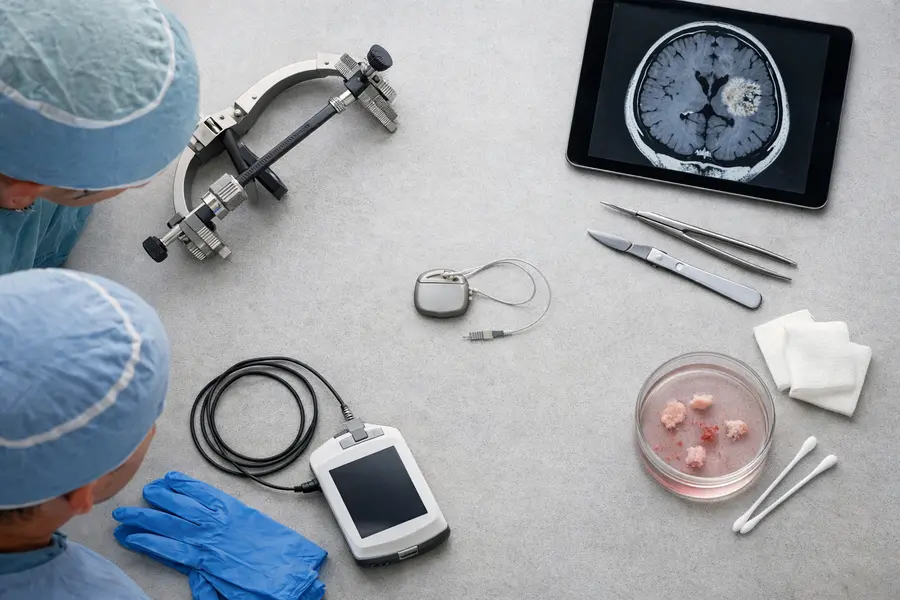
Coherence Neuro closed a $45M Series A co-led by Founders Fund and the OpenAI Startup Fund to take its SOMA brain-tumor implant into its first long-term human glioblastoma trial.
Key Takeaways
- Coherence Neuro raised $45M in a Series A co-led by Founders Fund and the OpenAI Startup Fund; valuation is undisclosed.
- The money funds a long-term glioblastoma trial targeted for 2027, plus an FDA Breakthrough Device designation application.
- The round follows a $10M seed from November 2025, so total disclosed funding now stands at $55M.
Lead
Coherence Neuro, a San Francisco neurotechnology company, announced a $45M Series A on October 22, 2026, co-led by Founders Fund and the OpenAI Startup Fund. The company will use the capital to run its first long-term human trial of an implantable therapy for glioblastoma, the most aggressive form of primary brain cancer. It will also file for FDA Breakthrough Device designation and widen its preclinical work to pancreatic cancer and other tumor types.
Lux Capital, 8VC, Timeless, Olive Capital and Ahren joined as new investors. Returning backers Blackbird, Possible, Topology, Artesian, XEIA, Xtal and Divergent also took part. Two Neuralink clinicians, head neurosurgeon Matthew MacDougall and principal investigator Rory Murphy, invested as angels.
What Does Coherence Neuro Actually Build?
Coherence Neuro builds a closed-loop implant that reads electrical activity from a brain tumor and responds with targeted electrical stimulation. The planned device, called SOMA, is described as coin-sized, and its design carries up to 16 thin threads. A removable over-ear wearable supplies power and memory, and a companion app lets patients and clinicians track data and symptoms.
The pitch is adaptive treatment. Models trained on animal studies are meant to predict tumor progression or recurrence from the recorded signals, and stimulation would then adjust as the tumor changes. Standard glioblastoma care is fixed: surgery, radiation and chemotherapy, with little feedback between scans. The company is competing for that gap, not for the surgery itself.
The company was founded in Australia in 2022. Ben Woodington is chief executive and Elise Jenkins is chief technology officer.
What Has Been Tested in Humans So Far?
Only a temporary, intraoperative probe has reached patients. That device, CIPHER, is a flexible thin-film probe used during surgery in the CIPHER study (NCT07465796) at Royal Melbourne Hospital. The study plans 10 patients and began recruiting on May 22, 2026. Three patients have been recorded so far, for roughly 30 minutes each while on the operating table.
That is a recording exercise, not a therapy test. SOMA, the chronic implant that would actually deliver stimulation, has not yet been implanted long-term in a person. The Series A is meant to cover that step, with the trial targeted for 2027.
Why Is This Round Labeled Series A and Not Seed?
The company calls it a Series A, while WIRED described it as a seed round. The label matters less than the arithmetic: a $45M raise follows a $10M seed by under a year and arrives before any chronic implant has gone into a patient. That is a large bet on a platform and a team, with human efficacy data still absent.
Valuation was not disclosed. Without it, outside observers cannot tell how much of the company the new money bought, or how steeply the price moved from November 2025.
Why Did OpenAI's Fund Back a Brain-Cancer Implant?
The OpenAI Startup Fund co-led because the thesis rests on machine-learning models interpreting tumor signals, and the fund backs AI-dependent companies outside OpenAI's own products. Data access is the obvious concern for a neural-recording company with an AI-linked investor. Woodington has said nothing in the company's contracts gives OpenAI access to brain or health data.
Founders Fund, the other co-lead, has a long record in deep-tech and health bets. Its presence alongside Lux Capital and 8VC points to a syndicate comfortable with long timelines and regulatory risk. Neuralink-linked angels add surgical and implant-trial credibility, though they do not substitute for clinical results.
What Are the Risks Ahead?
The main risk is clinical, not financial. Glioblastoma has a long history of failed therapies, and a closed-loop stimulation approach must show benefit in humans over the standard of care. Electrical stimulation for tumors has little precedent in implantable form, and animal-trained prediction models may behave differently in patients.
Regulatory steps add time. The planned Breakthrough Device designation application would, if granted, bring more frequent FDA interaction, but it does not shorten the evidence requirement. A first long-term trial is also likely to enroll few patients, so early readouts will speak mainly to safety and signal quality.
Outlook
Coherence Neuro now holds $55M in disclosed total funding, a Series A led by two well-known backers, and a stated plan for a 2027 chronic implant trial in glioblastoma. The next markers are the CIPHER study's completion of its 10 patients, the Breakthrough designation filing, and the first SOMA implantation. Until a patient carries the device for months, the round prices a hypothesis about adaptive tumor therapy, not a demonstrated treatment.