Pomegra
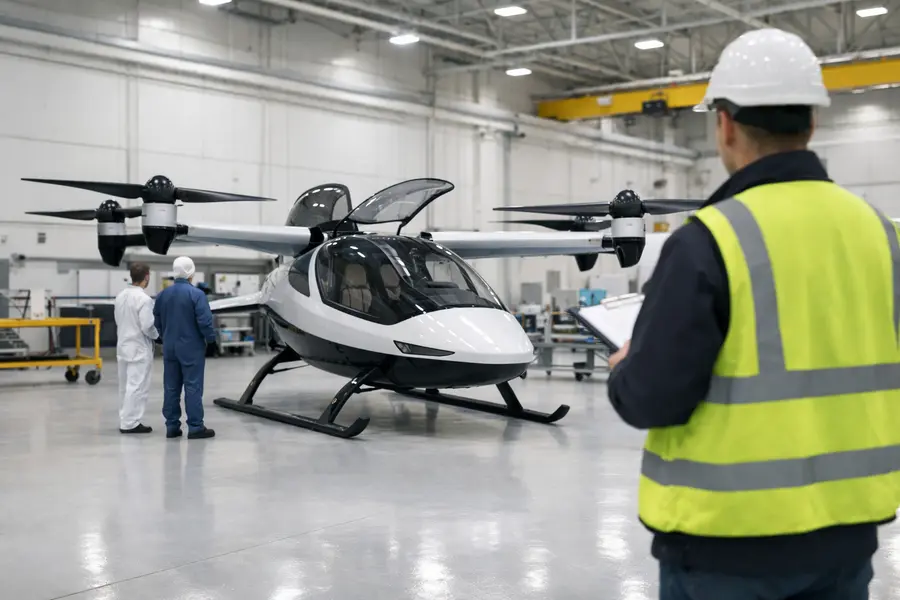
UK eVTOL maker Skyfly Technologies closed an €8.91M seed led by HICO Investment Group to certify the two-seat Axe and develop its hybrid Longbow drone.
Key Takeaways
- Skyfly closed a €8.91M (about $10M) seed round on October 20, 2026, led by HICO Investment Group with Archangel participating.
- The Axe targets FAA light sport certification, with first customer deliveries planned for 2027.
- Skyfly lists 61 private customers on its order book. Valuation was not disclosed.
Lead
Skyfly Technologies, an Oxfordshire developer of electric and hybrid-electric vertical take-off aircraft, has raised a €8.91M seed round, equal to $10M. The company announced the close on October 20, 2026. HICO Investment Group, a Singapore-based growth equity investor, led the round, and the defence-focused venture fund Archangel took part. Skyfly did not disclose the valuation or the size of any earlier funding.
The money is earmarked for three jobs: completing certification of the Axe, growing the team and production capacity in the UK and the US, and speeding up the hybrid propulsion system behind the Longbow.
What Is Skyfly Building?
Skyfly is building two aircraft from one airframe concept. The Axe is a two-seat electric aircraft with eight fixed-angle electric motors for hover and a winged layout for cruise. The company quotes a range above 100 miles, a cruising speed of 100 mph and a flight time of 60 to 90 minutes.
The Longbow is the unmanned sibling. It is hybrid-electric, with a stated range above 400 miles and the same 200kg payload. Skyfly pitches it at cargo resupply, intelligence and surveillance work, medical evacuation and logistics for defence and government customers.
Skyfly was founded in 2019 and builds in a 10,000 sq ft facility in Thorpe Mandeville, Oxfordshire. It also operates from the SunTrax facility in Auburndale, Florida. CEO Michael Thompson leads the company.
Why Does the FAA's MOSAIC Rule Matter Here?
The MOSAIC rules matter because they give a small electric aircraft a certification route that did not previously exist. The rules took effect in July 2026 and create an electric vertically capable aircraft category within light sport aircraft. Thompson said the change "opened a route to market that simply did not exist for electric aircraft before."
That is a narrower and cheaper target than the type certification that air-taxi companies pursue for larger passenger aircraft. A light sport classification limits the Axe to two seats and recreational or private use. In return it avoids the multi-year, nine-figure certification programmes that have strained better-funded eVTOL developers.
How Far Has the Axe Progressed?
The Axe prototype has completed more than 100 piloted flights, including what the company describes as Europe's first airfield-to-airfield eVTOL flight. It holds experimental flight permits in both the UK and the US.
On the commercial side, Skyfly reports 61 private customers on its order book and a reservation price of £1,000 ($1,500). It projects an operating cost of £70 ($90) per flying hour. Those are company figures, and none has been tested against delivered aircraft. Deliveries are scheduled to begin in 2027.
What Does the Defence Angle Add?
The Longbow gives Skyfly a second revenue line that does not depend on consumer demand for a personal aircraft. Archangel's Nelson said the Longbow "addresses clear requirements for unmanned systems moving payloads over significant distances." Archangel is described as Europe's only venture fund dedicated to next-generation defence technology, with a €50M early-stage fund.
A €8.91M cheque is small by eVTOL standards. Skyfly's pitch rests on capital efficiency, and HICO's Hartnoll made the same point: "What Skyfly's team achieved with so little is remarkable: a new aircraft designed and built from scratch."
What Are the Risks Ahead?
The main risks are certification timing, unit economics and funding runway. Skyfly must finish the Part 22-style approval process, turn a prototype into a repeatable production line and deliver on a 2027 schedule, all on a seed round. Hybrid propulsion for the Longbow adds engineering work that the Axe programme does not carry.
A follow-on round is likely before volume production, given the cost of tooling and the US build-out. Whether it comes at a higher valuation will depend on whether first deliveries land on time and on whether the 61 reservations convert to paid orders. Defence procurement cycles also run slowly, so Longbow revenue is unlikely to arrive before the Axe ships.
Outlook
Skyfly has money to finish certification and begin low-volume production, but not much beyond that. The MOSAIC rules give it a plausible route to market, and the Longbow gives it a defence-sector option. The 2027 delivery date is the test of both.