Pomegra
Stockholm's IPercept raised a $16.5M Series A led by Isogon Ventures and 2150 to bring its CNC wear-detection sensors to the US, with 30+ industrial customers.
Key Takeaways
- IPercept closed a $16.5M Series A on September 29, 2026, co-led by Isogon Ventures and 2150.
- Total funding now exceeds $22M, including a €5M seed round from May 2025.
- Valuation, revenue and customer contract values were not disclosed.
Lead
IPercept, a Stockholm-based maker of motion sensors that monitor the mechanical condition of CNC machine tools, announced a $16.5M Series A on September 29, 2026. Isogon Ventures and 2150 co-led the round. Existing backer Luminar Ventures returned, joined by RunwayFBU, J12 Ventures and AI.Fund. The company will spend the money on its US market entry, its first dedicated local hires in sales and deployment, and add-on software applications for its CNC data platform.
What Does IPercept Actually Sell?
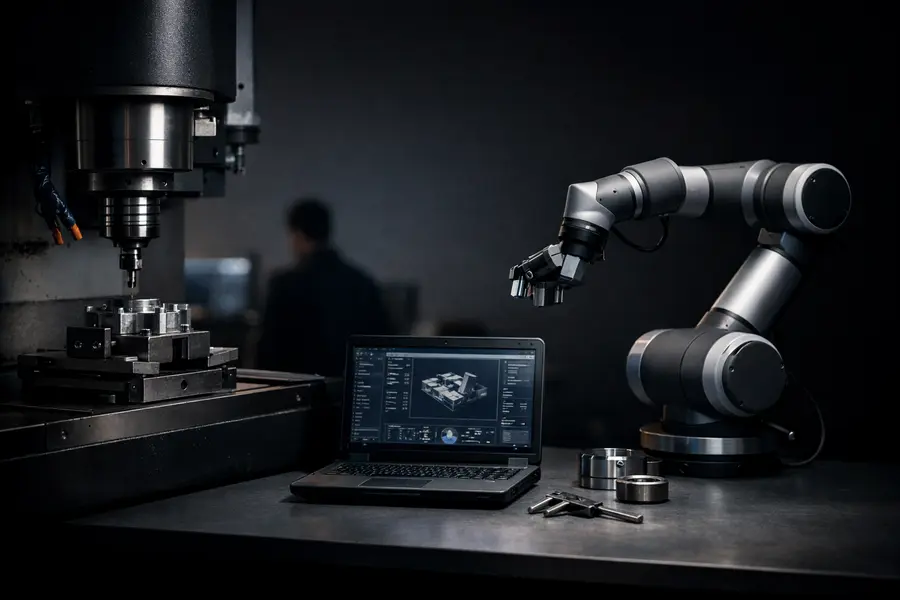
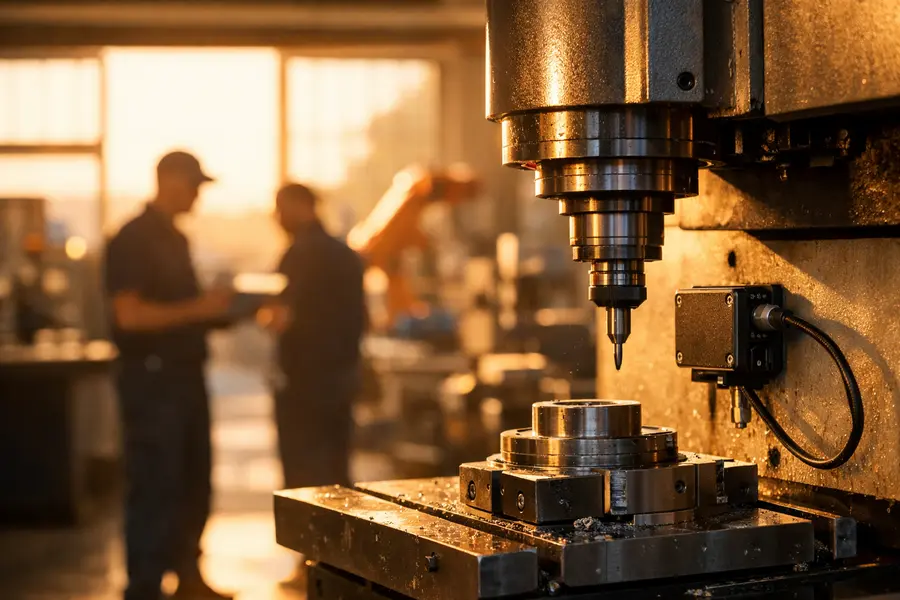
IPercept sells a patented hardware device that mounts on the moving part of a CNC machine and measures motion at micrometre scale. The company converts that signal into condition data for individual components, including bearings, ballscrews, guides and spindles. It describes the wear detection as component-level rather than machine-level.
The device does not connect to the machine controller or the customer's IT network, and the company says it works on any brand, model or age of machine. Installation takes a few hours. That design choice is the commercial argument: a factory with a mixed fleet of old and new machines can deploy it without negotiating controller access or opening a network port.
Who Is Paying for It?
IPercept reports more than 30 enterprise customers, among them Airbus, Bosch, Hitachi Energy, Scania and Volvo. Industrial service companies including Konecranes, Quant, DynaMate and MTT also use the technology, which gives the startup a reseller channel beyond direct sales.
The company has not published revenue, contract sizes or deployment counts. A customer list of large European manufacturers shows that pilots convert, but it does not show how many sensors each customer runs or at what price.
How Does This Round Compare With the Last One?
The Series A is roughly three times the size of the seed. The €5M seed round, led by Luminar Ventures, closed in May 2025, about 16 months before this announcement. Cumulative funding now stands above $22M.
The step-up is plausible for hardware-plus-software industrial companies, where sensor production and field deployment cost more than pure software. Still, the undisclosed valuation leaves open whether investors paid for current revenue or for the US opportunity. The use of funds points to the second: expansion capital rather than a fix for a product that is not yet selling.
Where Does IPercept Sit Among Competitors?
IPercept competes with predictive-maintenance vendors that read different signals. Augury relies on vibration and ultrasound sensors, Samotics analyses electrical signatures, and MachineMetrics connects to machine controllers. IPercept's pitch is that measuring motion directly on the moving structure avoids both controller integration and the need for historical failure data.
That claim is testable only through customer outcomes, such as avoided spindle failures or reduced unplanned downtime. IPercept has not published such figures in connection with the round.
What Comes Next for the Company?
IPercept plans to grow its engineering and data science teams from about 20 to more than 30 people. The US launch is the main commercial test, since American machine shops and aerospace suppliers buy through distributors and service firms that expect local support. Its existing reseller relationships with industrial service companies could shorten that path.
CEO and co-founder Karoly Szipka, who holds a PhD in CNC diagnostics from KTH Royal Institute of Technology, framed the pitch this way: "CNC machine tools make every other machine on Earth, and until now almost nobody could see inside them while they run." Co-founder Andreas Archenti is a chair professor at KTH in industrial dependability, and the company spun out of the university in 2019.
Two outcomes are plausible over the next 18 months. If US pilots convert at the rate European ones apparently did, a Series B built on disclosed recurring revenue becomes realistic. If sales cycles in US manufacturing run longer than planned, the company will lean on its service-partner channel and the remaining runway.
Outlook
IPercept has $16.5M, a hardware design that avoids integration friction, and a customer list that includes several of Europe's largest industrial groups. What it lacks, publicly, is revenue, valuation and outcome data. The US launch over the next year will show whether the sensor approach scales beyond its Nordic and European base.