Pomegra
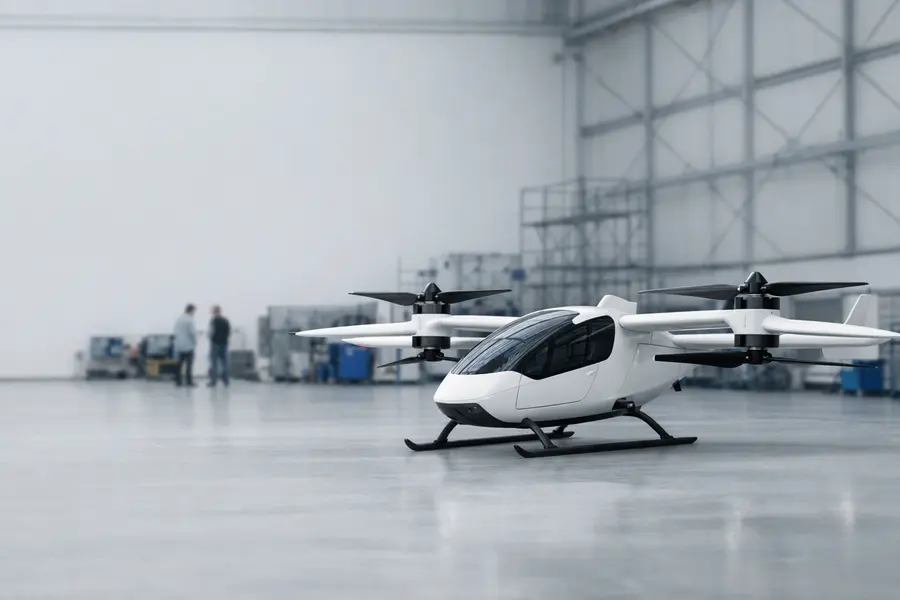
UK eVTOL developer Skyfly Technologies closed an €8.91M seed round led by HICO Investment Group to certify the Axe and build the Longbow defence drone.
Key Takeaways
- Skyfly Technologies closed an €8.91M ($10M) seed round on October 20, 2026, led by HICO Investment Group.
- Archangel, a €50M defence-technology fund, joined; valuation was not disclosed.
- Money goes to FAA light sport certification, UK and US production, and the hybrid-electric Longbow.
Lead
Skyfly Technologies, an Oxfordshire-based developer of electric and hybrid-electric vertical take-off aircraft, announced an €8.91M ($10M) seed round on October 20, 2026. Singapore-based HICO Investment Group led the financing, with Archangel, a €50M early-stage fund focused on defence technology, taking part. Skyfly did not disclose a valuation or the equity sold.
The company, founded in 2019 and based in Thorpe Mandeville, plans to use the capital to finish certification of its two-seat Axe aircraft, add production capacity in the UK and US, and advance the propulsion system for Longbow, an unmanned variant aimed at defence customers. First customer deliveries are scheduled for 2027.
What Is Skyfly Building?
Skyfly is building the Axe, a two-seat electric vertical take-off and landing aircraft for private owners. It uses eight fixed-angle electric motors for vertical lift and fixed wings for forward flight, which removes the tilting mechanisms found on many larger eVTOL designs. Fewer moving parts mean fewer failure points, and a simpler certification argument.
The company quotes a range above 100 miles, a cruise speed near 100 mph, endurance of 60 to 90 minutes and a 200 kg payload. It projects operating costs of about £70 per flying hour. Those are company figures, and none has been independently verified. Skyfly says the Axe prototype has logged more than 100 piloted flights, including what it describes as Europe's first airfield-to-airfield eVTOL flight, and holds experimental flight permits in both the UK and US.
Why Does the FAA MOSAIC Rule Matter to Skyfly?
The FAA's MOSAIC (Modernization of Special Airworthiness Certification) rules matter because they let a light aircraft reach customers without the full type certification that has delayed larger air taxi programmes. The reforms took effect in July 2026, and Skyfly designed the Axe around them. The funding is meant to carry the aircraft through approval as a light sport aircraft under FAA Part 22.
This is a narrower path than the one Joby, Archer and their peers are pursuing. A light sport category limits the aircraft to private, recreational flying, with no air taxi service and a small addressable market of individual buyers. Skyfly reports an order book of 61 private customers worldwide, though it has not said how many have paid deposits or what the Axe will cost.
What Is Longbow and Why Is Archangel Involved?
Longbow is a hybrid-electric unmanned aircraft with a range above 400 miles and the same 200 kg payload as the Axe. Skyfly pitches it at cargo resupply, intelligence and surveillance, medical evacuation and ship-to-shore logistics. The aircraft is enrolled in the UK Ministry of Defence heavy-lift challenge, and no delivery timeline has been announced.
Archangel's presence signals that Skyfly is positioning the Axe airframe as a dual-use platform. Defence buyers pay more per unit and move faster than recreational customers, which is the usual reason civilian aircraft startups add a military variant. The risk is that a company with a seed-sized balance sheet is now running two programmes, one under FAA oversight and one under defence procurement.
Is €8.91M Enough?
For an aircraft company, €8.91M is thin. Certification, tooling and a second production line in the US typically consume far more than a seed round, and the larger eVTOL developers have raised hundreds of millions. Skyfly's argument is that a small, simple aircraft under a lighter rulebook needs less. The 2027 delivery target will test that claim, and a Series A is the likely next step if first aircraft ship on schedule.
The absence of a disclosed valuation also leaves the round hard to benchmark. Without it, investors and customers have only the 61-order book and the flight hours to judge progress.
Outlook
Skyfly now has funding for roughly the next stage of work: completing light sport certification, standing up production on both sides of the Atlantic and maturing Longbow. The milestones to watch are FAA approval of the Axe, the first paid customer deliveries in 2027, and any outcome from the Ministry of Defence heavy-lift challenge. Missing the 2027 delivery date would push the company toward a larger raise on weaker terms, while hitting it would give a seed-stage developer something most eVTOL peers still lack: aircraft in customers' hands.