Pomegra
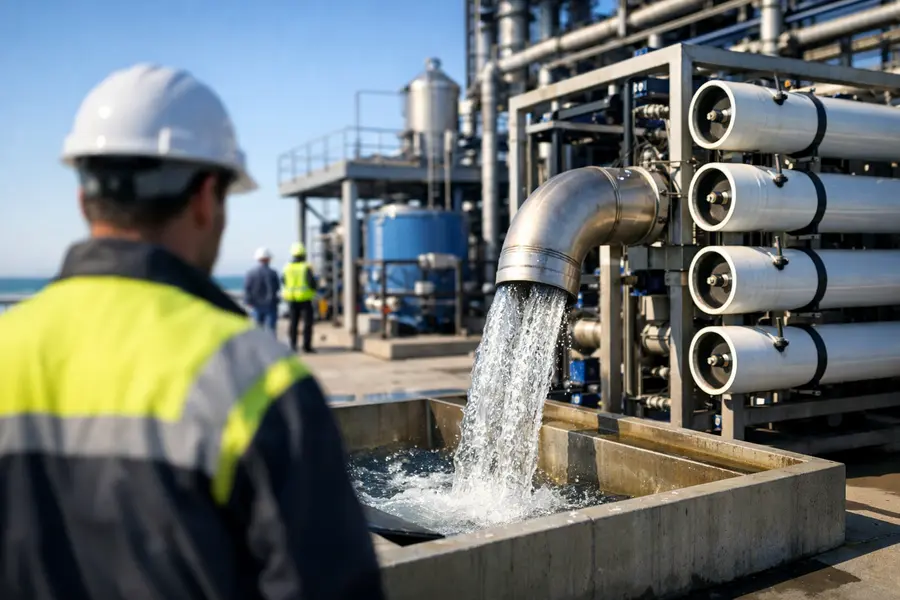
Porto-based Seamoretech closed €1.1M of a seed round to recover freshwater and critical minerals from desalination brine, with a Spain launch planned for 2027.
Key Takeaways
- Seamoretech raised €1.1M in the first closing of its seed round, with Rypples, 7Seas Capital and Crédito Agrícola participating.
- No lead investor or valuation was disclosed; a second closing is expected in the coming months.
- Its forward osmosis process targets brine that desalination plants now discharge into the sea.
Lead
Seamoretech, a Porto cleantech startup, announced on November 2, 2026 that it had secured €1.1M in the first closing of its seed round. The company converts the concentrated saline waste from desalination plants into purified freshwater and minerals including magnesium, calcium, copper and lithium. Investors in the round are Rypples, 7Seas Capital and Crédito Agrícola, alongside four business angels. The company did not name a lead investor and did not disclose a valuation.
What Does Seamoretech Actually Do?
Seamoretech treats brine, the hypersaline byproduct of desalination, as a feedstock rather than waste. Its containerised systems use forward osmosis to pull additional freshwater out of the brine, then recover dissolved minerals from what remains, on a zero liquid discharge basis. The company says the process can double freshwater output from a given plant.
The startup also claims the approach uses 50% less energy than reverse osmosis and cuts operating costs by 30%. It puts emissions up to 80% below conventional mineral mining. These are company figures, and the announcement does not say whether independent testing has verified them at commercial scale.
Founded in 2021 by Sofia Delgado and Eva Sousa, Seamoretech is a spin-off of the University of Porto's Faculty of Engineering (FEUP). Delgado is the chief executive.
Who Is Backing the Round, and What Does It Signal?
The round is a first closing, which means the €1.1M is a partial raise rather than a completed seed. The investor group mixes ocean and climate specialists with a Portuguese cooperative bank, a pattern common in early hardware-heavy deep tech outside the main venture hubs. The absence of a named lead suggests a syndicated, tranche-by-tranche raise rather than a single investor setting terms.
The size is modest for a company building industrial equipment. Water and minerals processing typically requires pilot plants, long procurement cycles and utility or industrial customers willing to host trials. One tracker lists cumulative funding of about €3M including this tranche, which implies earlier grant or equity money of roughly €1.9M. The company has not confirmed that figure.
How Will the Money Be Used?
The funds go toward industrialising the technology and preparing a commercial launch in Spain in 2027. Spain has one of Europe's largest desalination fleets, which makes it a logical first market for a brine product. Seamoretech has described a demonstration collaboration there and is developing pilot opportunities in Spain and Egypt, though it has not named a customer.
Delgado said the company aims to "scale our technology, accelerate our market entry, produce freshwater at a lower cost, and establish a European reference in critical raw materials recovery, while helping protect marine ecosystems."
Why Does Brine Matter to Critical Minerals Supply?
Brine matters because it concentrates elements that Europe imports in large volumes. Lithium, magnesium and copper all appear on the European Union's critical raw materials agenda, and policymakers have pushed for domestic sources and recycling. Desalination brine is already collected at plants, so the extraction challenge is chemical rather than geographic.
The counterargument is concentration. Desalination brine holds far lower lithium levels than dedicated salt lake or hard rock sources, and recovery economics depend on throughput, selectivity and the market prices of each mineral. Revenue may initially come more from the freshwater uplift and avoided disposal costs than from the minerals themselves. Whether the mineral streams reach saleable purity at plant scale is the open question for the 2027 deployment.
What Comes Next for Seamoretech?
The next milestones are the second seed closing, a Spanish demonstration and the first commercial contract. A larger raise would likely depend on pilot data that confirms the energy and cost claims outside the lab. Competition includes established membrane and brine-concentration suppliers as well as other mineral-from-brine startups, most of which are also pre-scale.
Outlook
Seamoretech has a small seed, an unrevealed valuation and a clear commercial target in Spain for 2027. The technical claims are specific and testable, which will make pilot results the deciding evidence. A second closing in the coming months will show whether investor appetite extends beyond the initial syndicate.