Pomegra
Shield AI will pay up to $5.3B for radar maker Echodyne and raise $2.5B at a $28.8B valuation, betting that counter-drone sensors will drive defense demand.
Key Takeaways
- Shield AI will pay $4.8B at closing and up to $500M more tied to performance targets for Echodyne.
- The $2.5B raise includes a $1B Series H at a $28.8B valuation, up from about $14.4B in March 2026.
- Closing is expected in early 2027, pending regulatory approvals; the new funding depends on the deal closing.
Lead
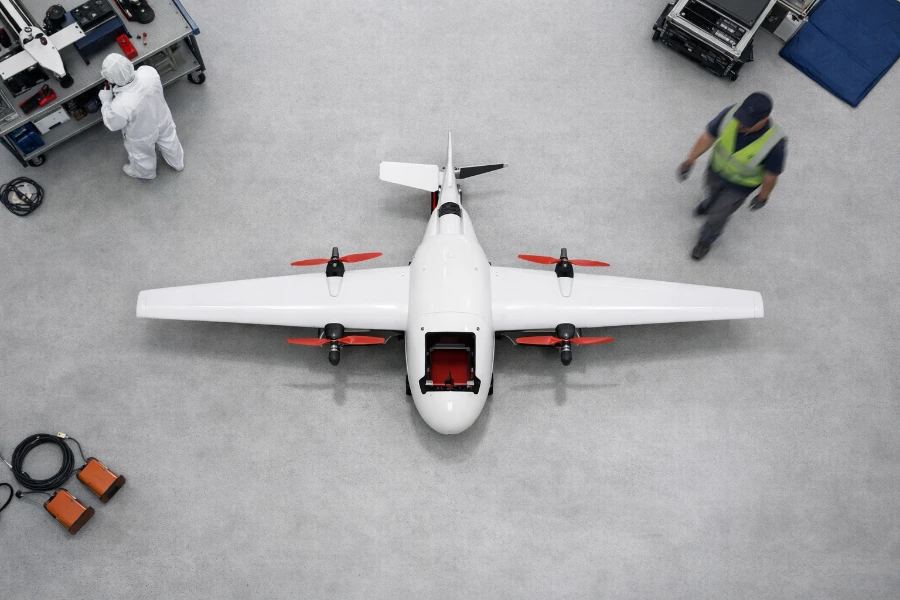
Shield AI, the San Diego defense technology company behind the V-BAT drone, agreed on November 5, 2026 to acquire Echodyne, a Kirkland, Washington maker of compact radar. The price is up to $5.3B: $4.8B at closing and as much as $500M contingent on performance. It is Shield AI's fifth acquisition and its largest. It is also believed to be the second-largest acquisition of a venture-backed private company in Washington state history, behind Okta's $6.5B purchase of Auth0 in 2021.
How Is Shield AI Paying for Echodyne?
Shield AI is financing the deal with a $2.5B package announced alongside it. The package has three parts: a $1B Series H equity round, $1B of structured equity from funds managed by Blackstone, and $500M of debt from JPMorgan Chase. The Series H values the company at $28.8B post-money.
The round was co-led by Disruptive and Innovation X Capital. Participants include Advent, JPMorganChase's Strategic Investment Group, Snowpoint Ventures, Apandion and Center15 Capital. Shield AI has raised about $5.4B in equity to date, and its backers include Andreessen Horowitz and Point72.
Why Did the Valuation Double So Quickly?
The valuation roughly doubled in eight months, from about $14.4B in March 2026. That is a steep rise for a company whose headcount also doubled in a year to nearly 2,300. The new equity is also conditional: it arrives only if the Echodyne deal closes. The structure ties investor money directly to the acquisition rather than to general operations. Part of the $28.8B figure therefore prices in Echodyne's radar business, which Shield AI does not yet own.
The structured equity and debt components also mean the headline raise is not all common-style growth capital. Blackstone's $1B typically carries terms that differ from a priced round, and the JPMorgan loan adds fixed obligations. Shield AI has not disclosed revenue or profit figures for either company, so the price cannot be tested against earnings.
What Does Echodyne Bring?
Echodyne builds radars using metamaterials electronically scanned array (MESA) technology, a design that detects and tracks small drones in a compact, relatively low-power package. Its customers span defense, government and commercial users in more than 40 countries. The company runs an 86,350-square-foot Kirkland facility that can produce about 30,000 radars a year.
Its most visible recent win came in September, when the Pentagon's Joint Interagency Task Force 401 awarded Echodyne a $250M contract to supply counter-drone technology to US forces over 36 months. Echodyne is backed by Bill Gates, among others. Neither company has disclosed Echodyne's revenue or headcount.
Strategic Context
This is a strategic purchase, not an acquihire. Shield AI makes autonomy software (Hivemind), the V-BAT drone and the X-BAT AI-piloted fighter, which are products that need to sense their surroundings. Owning a radar supplier gives it a sensor line it controls, plus manufacturing capacity it did not have.
CEO Gary Steele said the deal "dramatically accelerates our efforts to meet growing customer demand for multi-mission capabilities." He also described it as the company's first step into dual-use hardware, with civilian uses such as public safety alongside military sales. Echodyne CEO Eben Frankenberg will stay on and report to Steele. Echodyne will operate as a business unit inside Shield AI's mission systems division and will keep selling MESA radars as standalone products to integrators and other customers, including firms that compete with Shield AI.
That last point matters for the price. Echodyne's value rests partly on being a neutral supplier, and a parent that builds rival platforms could test that neutrality.
What Comes Next for the Deal?
Closing is expected in early 2027, subject to regulatory approvals. Because Echodyne is a US supplier to a US-based buyer, the approval path looks more routine than a cross-border deal, though the companies have not detailed the review.
The performance-linked $500M gives Echodyne's owners a reason to hit delivery targets, including the JIATF-401 contract. If counter-drone spending continues, the earnout is likely to be paid. If procurement slows, Shield AI keeps $500M. The next test is whether Shield AI can integrate a 40-country radar business without alienating customers who buy Echodyne to pair with other vendors' systems.
Outlook
Shield AI is converting a doubled valuation into its largest purchase, financed by equity, structured capital and debt that all depend on one closing. The strategic logic is clear: sensors, autonomy and airframes under one roof. The open questions are price discipline without disclosed financials, how Echodyne's customers react to a new parent, and whether the June-to-November rise in Shield AI's valuation holds once the deal closes in early 2027.