Pomegra
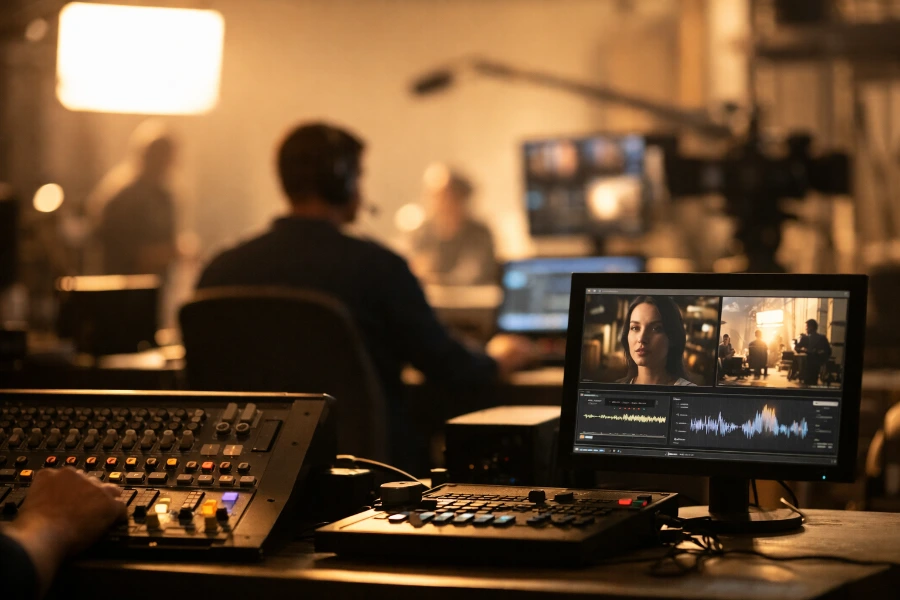
Fal, the San Francisco inference platform for AI image, video and audio models, doubled its valuation to $16 billion in seven months with a $1.3 billion Series F led by Bessemer.
Key Takeaways
- Fal raised a $1.3B Series F at a $16B valuation, up from $8B in April 2026.
- Bessemer Venture Partners led. Nvidia, Sound Ventures, HOF Capital and T. Rowe Price joined.
- Annualized revenue passed $800M earlier this year, putting the valuation near 20x.
Lead
Fal announced on November 3, 2026 that it closed a $1.3 billion Series F at a $16 billion valuation. Bessemer Venture Partners led the round, and Bessemer partner Talia Goldberg is joining the board. The company will spend the money on computing capacity and hiring. It has 185 employees.
The round arrives seven months after a $350 million Series E at $8 billion. Together the two rounds total $1.65 billion. Including a $140 million raise at $4.5 billion in December 2025, Fal has taken in more than $1.9 billion in under a year.
What Does Fal Actually Do?
Fal runs a cloud platform that hosts generative media models behind a single API. Customers include entertainment studios, advertising agencies and game developers. The company serves both open and closed models, and it post-trains them to run faster.
Fal was founded in 2021 by CEO Burkay Gur, a former Coinbase machine learning leader and Oracle engineer, and CTO Gorkem Yurtseven, a former Amazon developer. It competes with inference providers such as Baseten, Fireworks AI and Modal. Fal concentrates on media workloads, particularly video, rather than text.
Why Did Fal's Valuation Double in Seven Months?
Demand outran supply. Gur said that over the summer the company "hit a point" where it could not serve its customers and had to rate-limit them. Annualized revenue crossed $800 million earlier in 2026.
Video generation is compute-heavy, and each new model release from a lab sends developers to platforms that can run it on day one. Fal has built its position on that speed to market, including partnerships with video model developers. Capacity is the constraint, and this round buys more of it.
How Rich Is a 20x Revenue Multiple?
The $16 billion price is roughly 20 times the revenue Fal has reported. Revenue has grown fast, but the multiple is aggressive for a business that rents out GPU capacity. Gross margins in inference remain thin because compute is the largest cost, and that cost is paid to chip and cloud suppliers.
Nvidia's participation adds a wrinkle. The chipmaker is both a supplier of the hardware Fal depends on and an investor in the company. Such arrangements tie the capital to future hardware spending, which is a pattern across the AI infrastructure sector.
The step-up from $4.5 billion to $8 billion to $16 billion in about 11 months also shows how quickly investors have repriced the category. The April valuation now looks like a midpoint rather than a ceiling. Whether the Series F price holds depends on revenue continuing to compound at its current pace.
What Are the Risks Ahead?
The main risk is concentration in a fast-moving model market. If the leading video and image models change, or if their developers sell directly to enterprises, Fal's role as an aggregator could narrow. Open-weight models help Fal, since anyone can host them, but they also lower the barrier for rivals.
Compute availability is the second risk. Rate-limiting customers is a revenue ceiling, and the new capital only helps if Fal can secure GPUs on workable terms. Pricing pressure is the third, since inference costs per generation have tended to fall as models and hardware improve.
What Comes Next for Fal?
Expect Fal to spend heavily on capacity through 2027 and to add headcount well beyond 185. A larger balance sheet also gives it room to sign longer compute contracts and to strike more exclusive launch deals with model developers. A further private round or a listing is possible, though no timeline has been given.
Outlook
Fal has grown from a $4.5 billion valuation in December 2025 to $16 billion in November 2026, backed by $800 million in annualized revenue and a lead investor in Bessemer. The proposition is simple: demand for generative media inference exceeds supply. The open question is whether margins and model-market dynamics support a valuation near 20 times revenue once capacity catches up.