Pomegra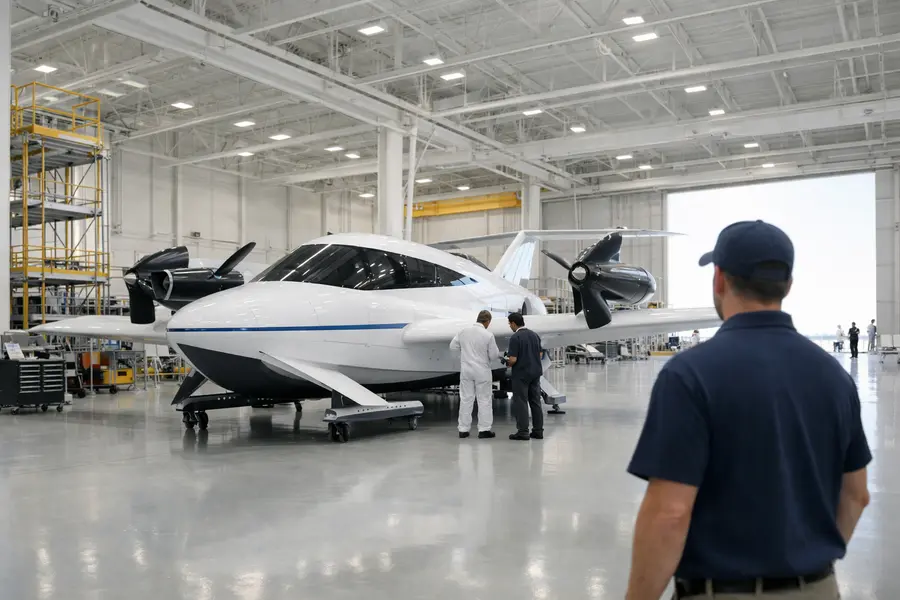
Rhode Island seaglider maker REGENT Craft closes a $240M Series B - the state's largest VC raise - co-led by defense investors Mare Liberum and AE Ventures to fund full Viceroy production.
- REGENT's $240M round, split evenly between equity and debt, brings total capital raised to $340M, quadrupling its $60M Series A from October 2023.
- Co-led by Mare Liberum and AE Ventures; Erebor Bank - the defense-tech lender co-founded by Palmer Luckey - provided the $120M debt tranche.
- A US Marine Corps contract, now worth $15M after two expansions, backs military seaglider development alongside commercial orders.
Lead
REGENT Craft closed a $240 million Series B on August 27, 2026, making it the largest venture capital raise in Rhode Island history - a record REGENT itself previously held with its $60 million Series A in October 2023. The North Kingstown-based company builds seagliders, all-electric wing-in-ground-effect craft that skim just above the water surface at up to 180 mph. The new capital goes directly toward commissioning its 255,000-square-foot manufacturing facility at Quonset Business Park and completing the first crewed flight of its 12-passenger Viceroy prototype.
What Is a Seaglider?
Seagliders are not aircraft and are not boats. They lift off the water using retractable hydrofoils, then transition into wing-in-ground-effect flight - sustained by the aerodynamic cushion that forms between a wing and a surface when the gap closes to roughly one wingspan. The result is aircraft-like speed without the regulatory overhead of aviation, operating in a legal gray zone that REGENT has spent years helping to define with the US Coast Guard and international maritime bodies. The Viceroy seats 12 passengers, carries cargo, and runs entirely on battery power, with an initial range target that covers high-frequency coastal and island routes - ferry corridors where the economics of diesel-powered conventional craft are deteriorating.
Why Does the Round Structure Matter?
The $240 million consists of $120 million in equity and $120 million in debt, an unusual split for a company that has not yet entered serial production. The equity portion was co-led by Mare Liberum and AE Ventures, both defense-focused funds with portfolios built around emerging maritime and aerospace platforms. The debt tranche came from Erebor Bank, a federally chartered, FDIC-insured institution co-founded by Palmer Luckey, the entrepreneur behind defense contractor Anduril. That Luckey's bank is providing the debt - not a traditional aerospace lender - signals how tightly REGENT's commercial and military narratives are now intertwined.
For context, the $60 million Series A valued the company before production tooling, before a government contract, and before a physical factory. The Series B implies a substantial step-up, though REGENT has not disclosed a post-money valuation. The half-debt structure keeps dilution lower for existing shareholders while giving lenders a senior claim on assets - a bet that the factory and the Marine Corps relationship are bankable collateral.
What Is REGENT's Military Business?
REGENT Defense, a subsidiary launched in July 2025, is the formal vehicle for military adaptation of the Viceroy platform. The US Marine Corps Warfighting Lab signed its initial $4.75 million agreement with REGENT in October 2023 to test seaglider technology in littoral environments - shallow coastal zones that strain conventional amphibious shipping. That contract has since grown to a total value of $15 million across two extensions, covering trials that include medical evacuation scenarios. The Marine Corps sees seagliders as candidates for high-speed, low-signature troop and cargo movement with no runway requirement - a capability gap that conventional landing craft and rotary-wing aircraft each only partially fill.
Manufacturing Milestone
The 255,000-square-foot Seaglider Manufacturing Facility at Quonset Business Park has been built; REGENT completed construction and called it the world's first seaglider factory. The Series B funds the transition from empty building to running production line. Alongside the capital close, REGENT is anticipating the first fully aerial crewed flight of the Viceroy prototype - a milestone that, if successful, would allow the company to move from testing to customer deliveries on a defined schedule. Commercial pre-orders have been placed by ferry operators in Europe and North America, though delivery timelines remain tied to production ramp.
Outlook
REGENT enters the production phase with $340 million in total capital, a functional factory, a growing defense contract, and a prototype expected to complete its first human flight imminently. The main question - whether a wing-in-ground-effect craft can be manufactured reliably and certified commercially at scale - remains open. Defense revenue provides a cushion while commercial certification proceeds, but the company is now burning at a rate commensurate with a manufacturing operation, not a development program. The next funding decision will likely hinge on whether the Viceroy's crewed flight and initial production cadence meet schedule, and whether commercial operators convert pre-orders to firm contracts once regulatory pathways solidify.