Pomegra
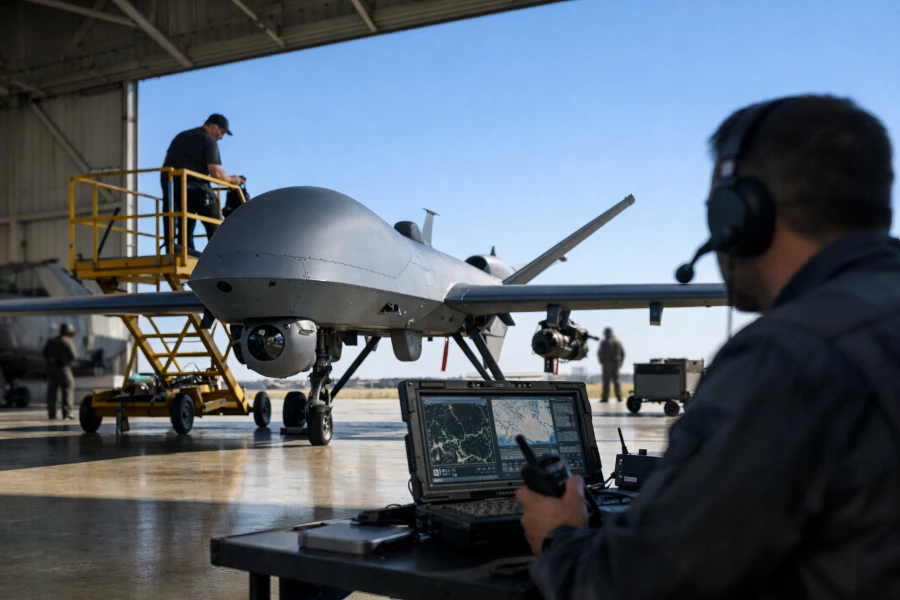
Primordial Labs, a New Haven defense software startup, raised an $18M Series A led by Ballistic Ventures to put natural-language control on drones and combat vehicles.
Key Takeaways
- Primordial Labs raised $18M in Series A funding on Nov. 10, 2026, led by Ballistic Ventures.
- Existing investors Squadra Ventures and Lockheed Martin Ventures also took part; valuation is undisclosed.
- Its Anura software runs on 12+ crewed and uncrewed platforms, with a General Dynamics Land Systems teaming deal.
Lead
Primordial Labs, based in New Haven, Connecticut, announced an $18M Series A on Nov. 10, 2026. Ballistic Ventures led the round, and existing backers Squadra Ventures and Lockheed Martin Ventures participated. The company did not disclose its valuation, prior funding totals or headcount.
The money goes toward engineering, product and growth hiring. It will also fund delivery of Anura, the company's natural language command and control (NLC2) platform, on U.S. Department of War programs already under contract. Primordial also plans to extend the software into new platforms, domains and allied markets.
What Does Primordial Labs Actually Build?
Primordial Labs builds Anura, a software layer that sits between a human operator and the machines that operator controls. A soldier states a goal in plain English, by voice or text, and the software translates it into coordinated tasks across the system. The aim is to cut the interface complexity and training time that come with operating drones, vehicles and aircraft.
Anura is already integrated on more than 12 crewed and uncrewed platforms across land and air domains. It is sold to Army small uncrewed aircraft system units through the Army UAS Marketplace. License deliveries have also gone to Army and U.S. Special Operations Command units.
The company was founded in 2021 by CEO Lee Ritholtz and CTO Adrian Pope. Both previously worked at Lockheed Martin, including at its Skunk Works advanced programs division and its Artificial Intelligence Center.
Who Is Buying It?
The buyers are mostly Army and Air Force programs, plus one large prime contractor. Primordial holds two SBIR Phase III awards, which allow follow-on contracts without fresh competition. One covers Army rotary-wing aircraft and the other covers the Air Force MQ-9 ground control station.
On Oct. 7, 2026, General Dynamics Land Systems signed a master teaming agreement with the company. The deal aims to bring natural-language control to ground combat vehicles, including the Abrams tank. That agreement came about five weeks before the funding announcement and gave investors a named prime as a channel.
Lockheed Martin Ventures' presence on the cap table is worth noting. The company's founders came from Lockheed, and the corporate venture arm of a major prime is now an investor. That gives Primordial credibility with integrators, though it raises a fair question about how neutral the software is across competing primes' platforms. The General Dynamics deal suggests it can work across them.
Why Did Ballistic Ventures Lead This Round?
Ballistic Ventures, a firm known for cybersecurity investing, led because it sees Primordial's team and its open-architecture design as the draw. Co-founder and general partner Roger Thornton said that "it always starts with the team, and Lee and Adrian are exceptional technical founders."
Strategic advisor General Timothy Haugh, a former head of U.S. Cyber Command, singled out the company's use of the Modular Open Systems Approach. That Pentagon-backed standard is meant to let software plug into different hardware without vendor lock-in. For a startup selling into vehicles built by other companies, adherence to it matters more than a polished demo.
A cybersecurity-focused lead also fits the product's risk profile. Software that translates spoken commands into actions on armed or uncrewed systems widens the attack surface, and the firm's security background is relevant to that exposure.
How Does $18M Compare With the Rest of Defense Tech?
An $18M Series A is modest next to the nine-figure rounds that autonomy and drone makers have drawn in recent years. Primordial sells software rather than hardware, which keeps capital needs lower. The company has said little about revenue, so the round's size cannot be measured against traction.
The hiring plans offer one gauge of scale. The company's website listed 25 open roles, all fully remote, across engineering, business development, marketing, finance and recruiting. Ritholtz said on LinkedIn that more than 20 roles were posted, with roughly 20 more expected within a week.
The harder question is competitive. Voice and language interfaces for military systems are attracting larger autonomy vendors, and prime contractors can build their own. Primordial's defense is that it already has integrations, SBIR Phase III vehicles and a teaming agreement in place.
What Comes Next for Natural-Language Military Control?
The next test is whether Anura moves from licenses and pilots into programs of record. The Abrams integration with General Dynamics is the clearest near-term milestone, followed by deliveries on the existing Army and Air Force awards. Allied-market expansion, which the company named as a goal, would require export approvals and customer-by-customer integration work.
Reliability will draw scrutiny. A natural-language command that misreads an instruction in a combat setting carries consequences that a chatbot error does not. Buyers are likely to demand clear human-in-the-loop controls and test records before wider rollout.
Outlook
Primordial Labs has $18M, a lead investor with security credentials, a prime contractor teaming agreement and two SBIR Phase III awards. What it has not shown publicly is revenue, valuation or prior funding. The year ahead will show whether Anura becomes a standard control layer across military platforms or stays a niche tool for early adopters.