Pomegra
Project Omega closed an $80M Series A led by B Capital to recover strontium-90 and other materials from spent nuclear fuel and sell radiovoltaic power systems.
Key Takeaways
- Project Omega raised an $80M Series A on Nov. 10, 2026, led by B Capital; valuation was not disclosed.
- The round follows a $12M seed from February 2026, bringing disclosed funding to about $92M.
- Proceeds go to X Series product manufacturing and construction of a first fuel recycling facility.
Lead
Project Omega, a Newport, Rhode Island company, announced an $80 million Series A on November 10, 2026. B Capital led the round. The startup uses high-temperature, non-aqueous pyroprocessing to separate spent fuel into reusable components, including strontium-90, and plans to turn those isotopes into long-duration radiovoltaic power sources. It did not disclose a valuation.
Participating investors include noa VC, 645 Ventures, Starship Ventures, Mantis Ventures, Decisive Point, Virta Ventures, Pace Ventures, Essential Capital and Washington Harbour Partners. The company also named other backers with experience in nuclear technology and national security.
What Does Project Omega Actually Do?
Project Omega recycles used nuclear fuel with pyroprocessing, an electrochemical method that works in molten salt rather than in the water-based solvents used in conventional reprocessing. Its process uses a molten lithium oxide and lithium chloride salt. The company says it can cut the volume of nuclear waste by up to 90% and shorten the isolation period for the remaining waste from roughly 300,000 years to about 300 years.
The recovered material has several uses. Recycled uranium can serve as feedstock for advanced reactors, and isotopes can go to medical and scientific markets. Strontium-90 is the product the company is building around first, because its radioactive decay can be converted directly into electricity.
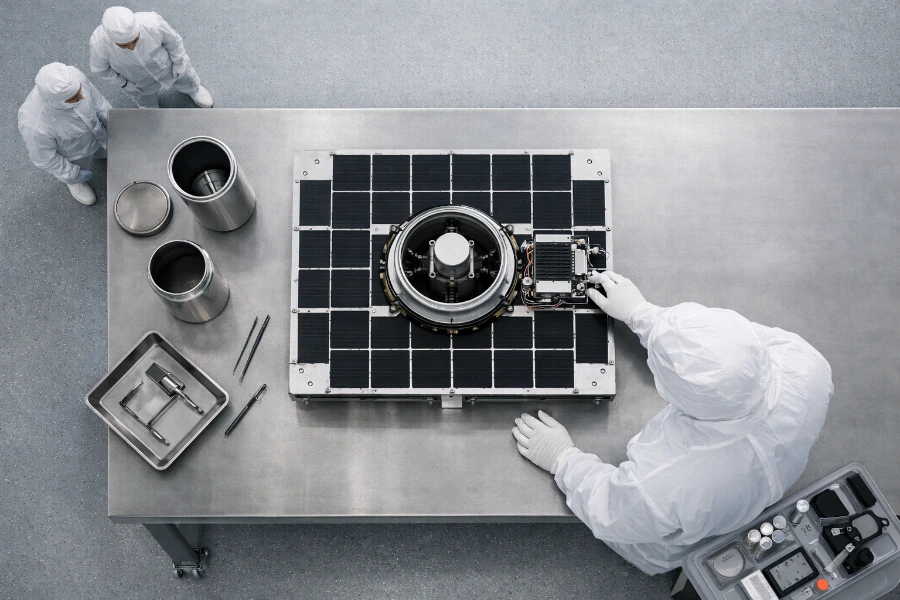
Radiovoltaic systems are solid-state devices with no moving parts. They produce small amounts of power for years, which suits sensors, autonomous systems, spacecraft and undersea platforms. The company has pointed to those uses, and to defense customers in particular.
Who Is Behind the Company?
Dr. Stafford Sheehan is the CEO and a chemical physicist. He previously co-founded Air Company, which makes fuels and chemicals from carbon dioxide, and Catalytic Innovations, a Yale spinout. Project Omega was founded in 2025.
Sheehan has framed the pitch around domestic fuel supply. "The country's nuclear renaissance will not happen without the fuel," he said, describing a vertically integrated strategy built on abundant domestic feedstock.
How Does the Funding Compare With the Seed Round?
The Series A is more than six times the company's $12 million seed round, which Starship Ventures led in February 2026. The gap between the rounds is under nine months. That pace suggests investors are paying for government validation and the size of the feedstock stockpile more than for a commercial product. Project Omega has not announced revenue or a commercial customer.
The company's credibility rests on federal research ties. It collaborates with Idaho National Laboratory under the Advanced Research Projects Agency-Energy's CURIE program. Researchers at Pacific Northwest National Laboratory have produced a stable electrical current from strontium-90, which supports the radiovoltaic concept. The company is also associated with DARPA's Rads to Watts program for radioisotope power systems.
Where Will the Money Go?
The $80 million is earmarked for two things. One is manufacturing and technology development for the X Series, a modular line that combines batteries, generators and intelligent controls. It is designed first for solar and wind installations, with isotope power planned as a later addition. The other is construction of the company's first-stage nuclear fuel recycling facility.
The sequencing matters. X Series hardware can ship before isotope supply is established, which gives the company a product to sell while the recycling plant is built. The plant is the harder part. Facilities that handle spent fuel carry long licensing timelines, and the company has not published a construction schedule or a site.
What Are the Risks and Open Questions?
The main risk is regulatory. Pyroprocessing has been demonstrated at national laboratory scale, but a privately owned commercial plant handling US spent fuel has few precedents. Access to the fuel itself is also unresolved, since most commercial spent fuel sits at reactor sites under federal responsibility, and the terms of any supply arrangement have not been disclosed.
Economics are the second question. Strontium-90 power sources compete with batteries and with other radioisotope options, and early demand will probably come from defense buyers willing to pay a premium. Whether civilian markets follow depends on unit cost, which Project Omega has not published.
Outlook
Project Omega enters the next phase with about $92 million in disclosed funding, a lead investor in B Capital and federal research partnerships that give its technical claims some outside support. The next milestones to watch are site selection, regulatory filings for the recycling plant and the first X Series deliveries. Until fuel access and licensing are settled, the radiovoltaic business remains a plan funded ahead of its supply chain.