Pomegra
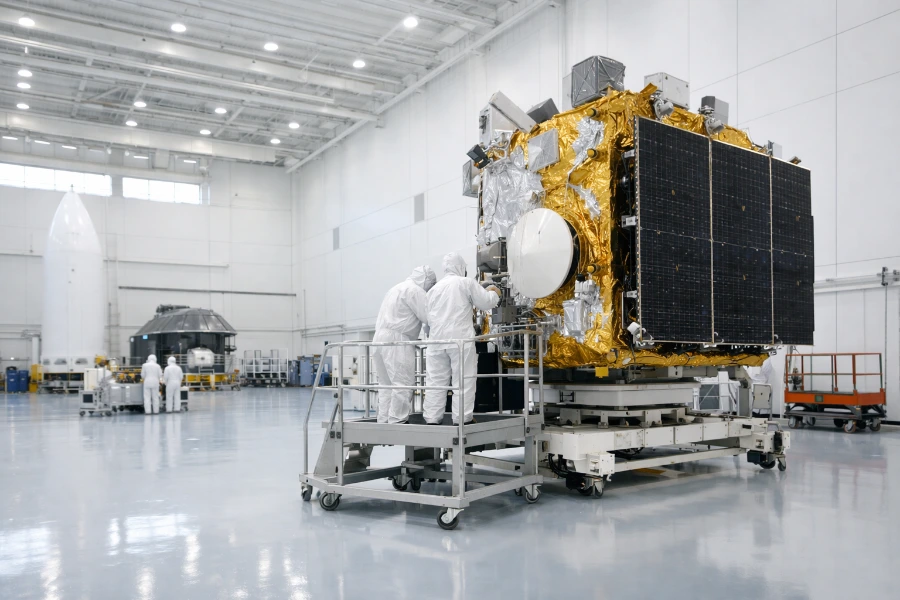
Nominal, the Austin hardware-testing software maker, raised a $240M Series C at a $3B valuation, triple its March 2026 mark, led by Lightspeed and Insight.
Key Takeaways
- Nominal raised $240M in a Series C led by Lightspeed Venture Partners, with Insight Partners co-leading, at a $3B valuation.
- The valuation tripled from $1B in March 2026, and company revenue more than tripled this year.
- More than 80 organizations use the platform, including five of the seven largest US defense contractors.
Lead
Nominal announced on November 9, 2026 that it closed a $240M Series C at a $3B valuation. Lightspeed Venture Partners led the round, and Insight Partners co-led. The Austin, Texas company builds software that engineers use to test and validate aircraft, rockets, drones, autonomous vehicles, nuclear reactors and factory systems.
The price step is steep. Nominal was valued at $1B in a March extension round, so the company has tripled its valuation in roughly eight months.
Who Else Backed the Round?
The investor list reads as a roll call of defense-adjacent and growth-stage money. Returning and new backers include Lux Capital, Sequoia Capital, General Catalyst, Founders Fund, Avenir, Salesforce Ventures, M13 and Lockheed Martin Ventures. Red Glass Ventures, PSP Growth and Deployment Capital also appear among participants.
Lockheed's presence matters more than a typical strategic check. It is a customer-side investor in a company whose pitch is that prime contractors test hardware too slowly.
What Does Nominal Actually Sell?
Nominal sells a software layer that pulls test data from disconnected systems into one place, then applies AI to analyze it. The platform ingests sensor readings, logs, video and simulation output, automates test workflows, and uses AI agents, including a product called Nominal Analyst, to investigate anomalies.
The target is the loop between a test and the next design change. In aerospace and defense, that loop often runs through spreadsheets, custom scripts and tools built in-house by individual programs. Nominal displaces that patchwork, and in some accounts the legacy data-acquisition software that vendors bundle with test hardware.
CEO Cameron McCord, a former US Navy submarine officer and Anduril alumnus, said hardware engineering is getting its AI moment, with operational value that goes beyond speeding up existing workflows.
How Strong Is the Traction?
The company reports more than 80 commercial and government customers, including five of the seven largest defense contractors. Named customers include Anduril Industries, which has more than 300 engineers on the platform, Huntington Ingalls Industries and hypersonic aircraft maker Hermeus. Revenue has more than tripled in 2026, though Nominal has not disclosed absolute figures.
Government money is part of the story. In October, the US Air Force awarded Nominal a $71.2M Strategic Funding Increase, known as STRATFI, tied to Collaborative Combat Aircraft development. STRATFI awards require matching outside capital, which makes a large private round useful for the contract as well as the balance sheet.
Is a 3x Valuation Jump Justified?
The jump is large, and the revenue base is undisclosed, so the multiple cannot be checked from outside. A tripling of revenue explains part of the move. The rest reflects the market's appetite for defense technology and for AI applied to physical-world engineering, where buyers have budgets and few incumbents offer a modern alternative.
The skeptical reading is concentration risk. A handful of defense primes and well-funded defense startups account for much of the named customer base, and procurement cycles in that sector can stall on budget timing. Defense software has also drawn heavy investment this year, which raises the bar for proving that the revenue is recurring rather than program-driven.
Where Will the Money Go?
Nominal plans to spend on AI agent development, applications across the full machine lifecycle, expansion into new industries and regions, and acquisitions. It has already acted on the last item: it acquired Fid Labs earlier in 2026 and announced the purchase of Pull Systems on November 6. Offices now run from Austin to Los Angeles, New York, Seattle, Washington D.C. and London.
Buying smaller tooling companies suggests Nominal wants to own more of the test stack rather than sit on top of it. That strategy invites competition from established test-and-measurement vendors and from the in-house software teams of its largest customers.
Outlook
Nominal now holds a $3B valuation, a fresh war chest and a government-backed contract, with revenue growth that it says outpaces its price tag's rise only in part. The next test is whether growth holds once customers move beyond the defense primes and early-adopter startups. Further acquisitions and a wider commercial base in energy and manufacturing would show whether the platform extends past aerospace. Nominal's valuation will rest on those numbers once they become public.