Pomegra
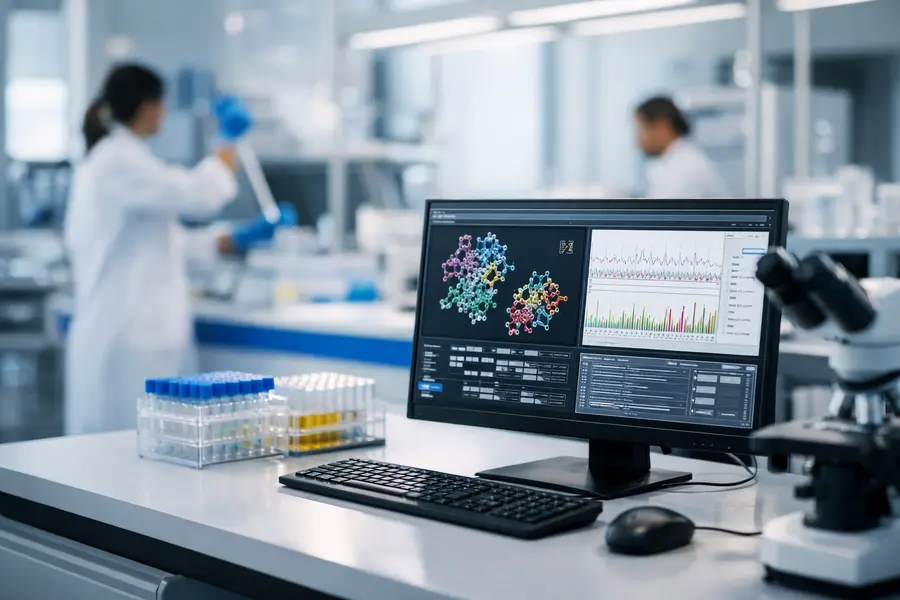
OpenAI acquired Orchestra Bio, a four-year-old maker of AI agents for drug developers, on October 20, 2026, adding operations software to its Rosalind life sciences suite.
Key Takeaways
- OpenAI announced the Orchestra Bio deal on October 20, 2026; the price was not disclosed.
- Orchestra raised about $20 million in seed funding from Andreessen Horowitz, 8VC, Insight Partners and Definition Capital.
- Orchestra's team and technology will join Rosalind, which counts Moderna and Novo Nordisk among its customers.
Lead
OpenAI said on Tuesday, October 20, 2026, that it had acquired Orchestra Bio, a San Francisco startup founded in 2022 by Ashoka Rajendra. Orchestra builds AI agents that handle the administrative and logistical work inside drug development programs, from tracking finances to resolving clinical trial scheduling problems. OpenAI did not disclose the purchase price or deal structure.
The buyer is folding Orchestra's staff and software into Rosalind, its life sciences product line. It is a strategic purchase of a product category rather than a pure acquihire, because OpenAI is taking a working software layer along with the people who built it.
What Does Orchestra Bio Actually Do?
Orchestra Bio sells agent software that monitors studies and research campaigns across a drug development program. According to OpenAI's description, the agents track trials, flag which timelines are affected when something goes wrong, such as a failed production batch, and surface options for what to do next.
That is project management rather than molecule design. Drug development in the US typically takes 10 to 15 years, and delays often come from siloed systems and handoffs between teams, not only from the underlying science. Orchestra emerged from stealth in August 2025 pitching biotech founders software paired with guidance on financial management and long-term planning.
How Much Did Orchestra Raise, and From Whom?
Orchestra raised roughly $20 million in total, all of it seed funding, from Andreessen Horowitz, 8VC, Insight Partners and Definition Capital. No Series A has been reported, and no valuation was published at any stage.
For a startup less than a year out of stealth, a sale to OpenAI is a fast exit. With the price undisclosed, it is impossible to say whether investors earned a multiple on the $20 million or took a soft landing. The open question for founders in the same position is whether being absorbed by a model lab is a better outcome than competing with one.
Why Did OpenAI Buy It?
OpenAI wants Rosalind to be more than a model that answers biology questions. Rosalind has two parts: GPT-Rosalind, which handles biological and chemical queries, and Rosalind Workbench, which connects the model to lab tools and data. Orchestra adds the layer that links scientific findings to trials, decisions and next steps.
The customer base gives the logic some weight. GPT-Rosalind launched in April 2026 for vetted US enterprise customers, and Moderna and Novo Nordisk are among its known users. A pharma company that already runs experiments through Rosalind has a plausible reason to also route its trial scheduling and budget tracking through it.
Strategic Context
The deal fits a pattern of OpenAI buying into health and life sciences during 2026. In January it launched ChatGPT Health and acquired Torch, a medical records startup. It also announced an academic plan for Rosalind five days before the Orchestra news.
Anthropic is moving the same way and has spent more. It bought Coefficient Bio for a reported $400 million in April 2026, launched Claude Science in June and set up a wet lab in September. Well-funded discovery specialists such as Isomorphic Labs, which has raised $2.1 billion, and Chai Discovery, valued at $3.8 billion, work on the molecule side. OpenAI, by buying Orchestra, is going after the operations side instead.
What Comes Next for AI in Drug Development?
Expect the next competition to be over workflow rather than model benchmarks. Discovery models are improving across the industry, but pharma budgets are also consumed by trial logistics, supply problems and planning, which are less glamorous and more repeatable. Software that lowers those costs is easier to sell to a chief financial officer than a promise of faster discovery.
Risks remain. OpenAI has not said how many Orchestra customers it will keep, how many employees are joining, or when the product will be available inside Rosalind. Pharmaceutical buyers are cautious about data handling, and trial operations involve regulated records. Integration into a vetted enterprise product will likely be slower than the announcement suggests.
For other startups building on top of foundation models, the deal sends a mixed signal. Model labs are willing to buy vertical products that prove demand, which gives founders an exit path. The same behavior shows that any vertical with traction can become a lab's own product line.
Outlook
OpenAI's purchase of Orchestra Bio moves Rosalind from a research assistant toward a platform that covers drug development operations. The undisclosed price and absence of customer or headcount data limit what can be concluded about the deal's value. The next signals to watch are Orchestra's features appearing inside Rosalind, new pharma customers, and whether Anthropic answers with its own operations-focused purchase.